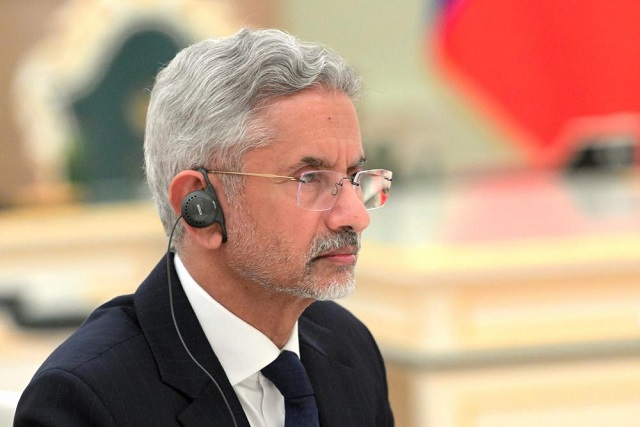
India’s Foreign Minister S. Jaishankar has sharply criticised European leaders for what he described as a hypocritical and condescending approach to global partnerships, particularly with countries like India. Speaking at the Arctic Circle India Forum on Sunday, Jaishankar declared that India seeks “partners, not preachers” on the world stage — a clear rebuke of Western attitudes toward the South Asian giant.
“When we look out at the world, we look for partners, not preachers – particularly preachers who do not practice at home what they preach abroad,” Jaishankar said, addressing a forum aimed at discussing India’s role in Arctic cooperation and broader global issues.
The remarks come amid growing tensions and strategic divergence between India and some Western countries over issues ranging from the Russia-Ukraine conflict to trade policy and regional security. Jaishankar was particularly pointed in calling out Europe’s struggles with “strategic autonomy,” saying the continent remains uncomfortably dependent on external powers — on the US for security, on Russia for energy, and on China for trade.
He suggested that Europe’s inability to reconcile this dependence with its advocacy of strategic independence highlights a deeper inconsistency in Western foreign policy. “There has to be some understanding, there has to be some sensitivity, there has to be a mutuality of interest and a realization of how the world works,” he said. “These are all works in progress to differing degrees with different parts of Europe.”
In remarks that echoed India’s longstanding stance on non-alignment and multipolarity, Jaishankar contrasted Western diplomacy with India’s more pragmatic approach, especially in relation to Moscow. He said attempts by Western countries to isolate Russia diplomatically — such as excluding Moscow from peace discussions about its own war in Ukraine — “challenged the basics of realism.”
Instead, Jaishankar championed what he called “Russia realism,” rooted in decades of stable and cooperative bilateral relations. He emphasized that India and Russia enjoy a “mutually beneficial partnership,” with Russia serving as a reliable resource provider and India as a vital consumer — a relationship New Delhi is keen to maintain despite international pressure.
India has steadily expanded its oil imports from Russia since the outbreak of the Ukraine war, even as many Western nations imposed sanctions. This move has raised eyebrows in Washington and European capitals but underscores India’s intent to pursue an independent foreign policy. Jaishankar has repeatedly defended these choices, arguing they are grounded in India’s national interests, not geopolitical alignment.