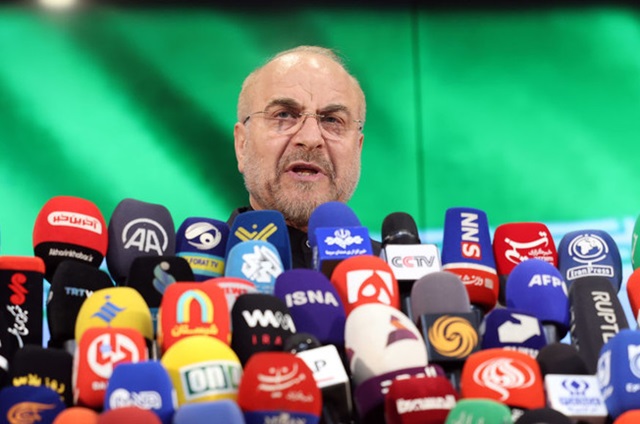
Iran has followed through on its pledge to accelerate its nuclear program after the International Atomic Energy Agency (IAEA) passed a critical resolution targeting the country’s nuclear activities. On Sunday, Mohammad Bagher Ghalibaf, the speaker of Iran’s parliament, announced the inauguration of new advanced centrifuges for uranium enrichment, marking a significant step in Tehran’s response to international pressure.
The resolution, passed by the IAEA’s Board of Governors on Thursday, condemned Iran’s lack of transparency regarding its nuclear operations. The motion was approved by 19 votes in favor, with 12 abstentions and Venezuela opting not to vote. China, Russia, and Burkina Faso opposed the resolution. Prior to the vote, the United Kingdom, France, and Germany issued a joint statement expressing concern that Iran’s nuclear program posed a threat to international security. The United States also criticized Tehran’s nuclear activities, calling them “deeply troubling.”
In reaction, Ghalibaf told Iran’s parliament that the IAEA’s resolution reflected a “politically unrealistic and destructive approach” by Western nations toward Iran’s nuclear ambitions. He accused the United States and other Western powers of using Iran’s nuclear activities as a pretext for “illegitimate actions” and claimed that the motion undermined the credibility and independence of the IAEA.
“Their dishonesty and bad faith have disrupted the constructive atmosphere we were building for strengthened cooperation between Iran and the agency,” Ghalibaf stated, emphasizing that these “politically charged and nonconstructive decisions” were pushing countries like Iran to take actions outside of the IAEA’s protocols to ensure their national security.
In an address to the parliament, Ghalibaf confirmed that Iran would deploy new advanced centrifuge systems for uranium enrichment, a move he described as a direct response to the IAEA’s actions. He urged IAEA member states to resist Western influence on the agency and called for international nuclear cooperation to remain free from political interference.
Iran’s ambassador to the IAEA, Mohsen Naziri Asl, also criticized the resolution, labeling it “politically motivated.” Iran has long maintained that its nuclear program is intended solely for peaceful purposes, despite persistent Western concerns that it could be a cover for developing nuclear weapons. The 2015 nuclear deal between Iran and six world powers had placed limits on Iran’s nuclear activities in exchange for sanctions relief. However, the agreement unraveled in 2018 after the United States withdrew from the deal under then-President Donald Trump.
Since then, Iran has progressively advanced its nuclear enrichment capabilities, and according to IAEA Director General Rafael Grossi, Tehran is now close to reaching the threshold necessary for weaponization. Iran’s Foreign Minister, Abbas Araghchi, had warned the IAEA earlier this month that a resolution condemning Iran’s nuclear program would prompt a strong response. He reiterated that Iran is open to renegotiating the 2015 agreement, but only if the West is willing to negotiate on mutually beneficial terms.