The escalating conflict between Israel and Iran has sent jet fuel prices soaring to unprecedented levels, doubling the cost of sorties and transforming the economics of the Israeli Air Force’s operations. With fuel costs now exceeding $200 per barrel, a single fighter jet round trip to targets in Iran can cost between $30,000 and $40,000, according to industry and military sources. The financial burden is compounded by Israel’s obligation to fuel U.S. aircraft stationed in the region, forcing the Defense Ministry to supplement domestic production with imported jet fuel.
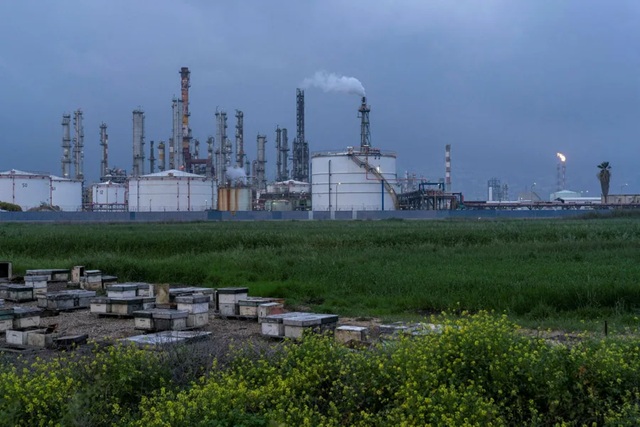
Last week’s Iranian missile strike on the Bazan refinery in Haifa offered Tehran’s Revolutionary Guards a morale boost, providing visuals of damaged infrastructure for public consumption. However, the attack appears to have had little tangible effect on Israel’s fuel market. While the refinery itself sustained only minor damage repairable within 24 hours, an external gas pipeline belonging to the state-owned Israel Natural Gas Lines (INGL), which supplies Bazan with natural gas, will require several days of repair. Bazan remains Israel’s primary jet fuel producer, and the rapid restoration of operations underscores the security implications of safeguarding energy infrastructure during wartime, Haaretz reported.
On the commercial front, the war has dramatically reshaped the jet fuel market. In response to soaring demand, the Defense Ministry issued a tender to import jet fuel and is expected to release an additional tender to purchase fuel directly from Bazan and the Ashdod Refinery. These tenders highlight the massive financial flows now coursing through Israel’s fuel sector due to the war.
Initially, the conflict depressed the jet fuel industry. The near-total suspension of civilian air traffic caused a sharp drop in domestic demand, affecting major producers such as Bazan and the Ashdod Refinery, as well as marketers like Paz Oil and Dor Energy. Jet fuel accounts for a significant share of these companies’ revenues. Paz Oil’s 2025 reports indicate that 28 percent of its income comes from fuel sales, primarily jet fuel supplied to airlines and the Israeli Air Force, with Mercury Aviation Israel, a joint venture between SkyTanking Holding GmbH and Dor-Alon Israel, as its main competitor.
This decline in civilian demand has been more than offset by the military surge. The roughly 1,500-kilometer distance between Israel and Iran translates into jet fuel costs of $15,000-$20,000 per fighter sortie, depending on mission duration and target location. Over three weeks of fighting, escalating fuel prices pushed jet fuel from roughly $100 per barrel to over $200. Cumulatively, Israel has spent hundreds of millions of shekels on jet fuel in recent weeks, a dramatic increase from peacetime operations.
The conflict has, paradoxically, bolstered revenues across the entire sector. Demand is driven not only by Israeli Air Force operations but also by U.S. aircraft refueling, with settlements between the Israeli Ministry of Defense and the U.S. Department of Defense expected at a later date. In many cases, the increased revenue from military operations has offset losses from reduced civilian air traffic, stabilizing profits for both refiners and fuel marketers.
Preparations for wartime jet fuel consumption began before the outbreak of hostilities. The Ashdod Refinery’s third-quarter 2025 report showed a production increase to 99,000 tons of jet fuel—13 percent of total output—compared to 86,000 tons in the same period of 2024. Despite these preparations, the intensity and duration of the current conflict have pushed Israel’s jet fuel production to its limits, necessitating supplemental imports. Analysts expect refinery profits to rise further as tenders for both local and imported fuel are priced at post-war market rates.
Even under normal circumstances, jet fuel is more profitable than simpler fuels such as diesel or gasoline. During the current conflict, the refining margin—the gap between crude oil and jet fuel prices—has widened from roughly $20 per barrel to $80-$90. While Israeli refineries are currently selling fuel based on pre-war inventories, upcoming tenders scheduled for April are expected to reflect the higher wartime margins, creating a windfall for producers.
The Defense Ministry has emphasized that fuel supply is being managed daily to meet evolving operational demands, combining local procurement with imports. In response to the recent tender for jet fuel imports, the Manufacturers Association of Israel highlighted the strategic importance of domestic production, emphasizing that local refineries are essential for Israel’s energy independence and operational reliability during emergencies. The association urged continued prioritization of “blue and white” procurement to avoid dependence on foreign suppliers, a principle they describe as “strategic and existential.”
As the conflict continues, Israel’s dependence on high-cost jet fuel underscores the intersection of energy and security in modern warfare. The rapid escalation in fuel prices, combined with unprecedented military demand and the necessity to refuel allied aircraft, has created both financial strain and opportunity for Israel’s energy sector. Haaretz reporting highlights that while infrastructure resilience has mitigated some of the risks posed by missile strikes, the broader economic impact of the war on Israel’s fuel market will be felt for months, shaping both defense planning and energy policy.