The assassination of President John F. Kennedy on November 22, 1963, has continued to captivate and perplex the American public for over six decades. Despite the official conclusion of the Warren Commission, which asserted that Lee Harvey Oswald acted alone, countless theories have flourished, suggesting a much broader conspiracy. Recent declassifications of government files have reignited the debate, raising new questions about the potential involvement of various powerful entities, including the CIA, Mossad, the U.S. military-industrial complex, and even the so-called “deep state.”
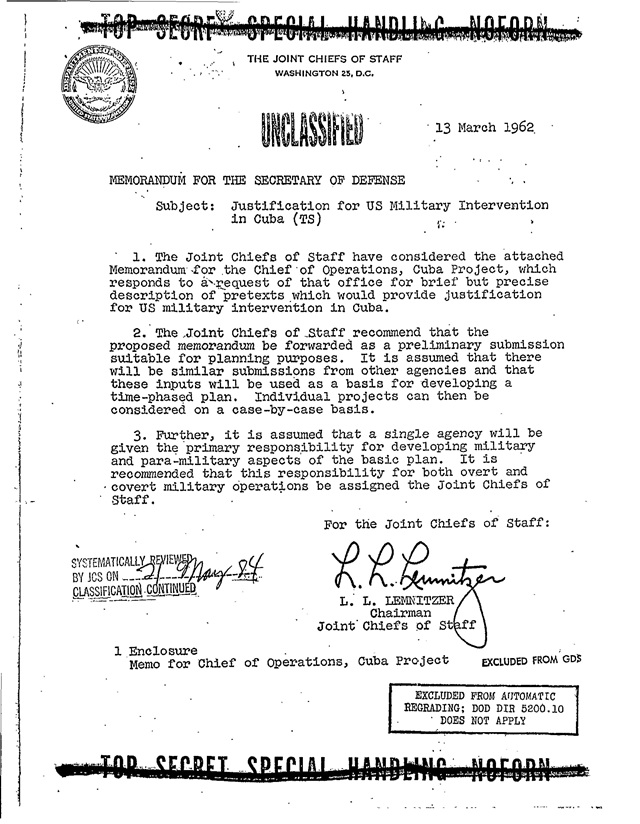
One of the most startling revelations in the declassified documents is the existence of Operation Northwoods, a secret CIA plan from 1962 that proposed staging terror attacks on American soil and blaming Cuba to justify a U.S. invasion. This included ideas like sinking a U.S. ship in Guantanamo Bay. Though the plan was never implemented, the discovery of such a scheme casts doubt on the official narrative of Oswald as the lone assassin and suggests that powerful factions within the U.S. government were capable of executing covert operations to manipulate public opinion and justify military action.
Among the many theories surrounding Kennedy’s assassination, the possibility of CIA involvement is often discussed in connection with his perceived reluctance to fully embrace Cold War tactics. Kennedy’s efforts to scale back U.S. military presence in Cuba and his diplomatic overtures to the Soviet Union were seen by some in the intelligence community as a direct threat to their operations. The fact that Kennedy had clashed with the CIA over the failed Bay of Pigs invasion and other covert operations, along with his push for détente, may have led some to consider drastic measures to prevent him from altering the course of U.S. foreign policy.
Some theories also implicate Mossad, the Israeli intelligence agency, particularly due to Kennedy’s stance on Israel’s nuclear program. Kennedy’s insistence that Israel not develop nuclear weapons was seen as a challenge by some within the Israeli government, and some speculate that Mossad might have had an interest in removing him from power. While there is little direct evidence linking Mossad to the assassination, the tensions surrounding Kennedy’s policies in the Middle East provide fertile ground for such speculation.
Further complicating the mystery is the involvement of the U.S. “deep state”—an alleged network of unelected officials and military-industrial elites who wield significant influence over national policy. Some theorists argue that a faction within this shadow government saw Kennedy’s efforts to reduce American military engagement in Vietnam and his advocacy for peace with the Soviet Union as a direct threat to their interests. Kennedy’s opposition to escalating the Vietnam War, along with his public rejection of Cold War dogma, may have created enemies within the defense industry and military leadership, who stood to profit from continued conflict.
In addition to intelligence agencies and military factions, the possibility of mafia involvement remains a strong part of the conspiracy narrative. The Kennedy administration, particularly through Attorney General Robert F. Kennedy, had launched an aggressive crackdown on organized crime, and some believe that the mafia retaliated by orchestrating the assassination. The notion that powerful crime syndicates had the means and motive to carry out such a high-profile attack adds another layer of complexity to the debate.
Then there is the question of whether President Lyndon B. Johnson had a role to play. Johnson, who became president following Kennedy’s death, had long harbored ambitions for the office, and some speculate that he might have been complicit in the assassination to fulfill his political aspirations. While evidence for such claims is scant, the rapid shift in power after Kennedy’s death has made Johnson’s potential involvement a topic of discussion.
The official account of a lone gunman continues to be supported by the government, but decades of released and declassified documents, such as those pertaining to Operation Northwoods, have cast doubt on the certainty of that story. The final batch of classified JFK files, released by former President Donald Trump, promises to bring even more information to light, but how much clarity they will offer remains uncertain. Some believe that the information contained in these documents will finally reveal the truth, while others worry it may only fuel more speculation.
Kennedy’s death continues to be one of the most scrutinized and mysterious events in modern American history. While declassified files may offer further insights, the multitude of theories—spanning from the CIA and Mossad to the mafia and deep state—suggest that the true story may never be fully understood. What is clear, however, is that the assassination of JFK was not merely the tragic end of a presidency; it was a pivotal moment that continues to shape the narrative of American history, leaving the question of who was truly behind it still open to interpretation.