


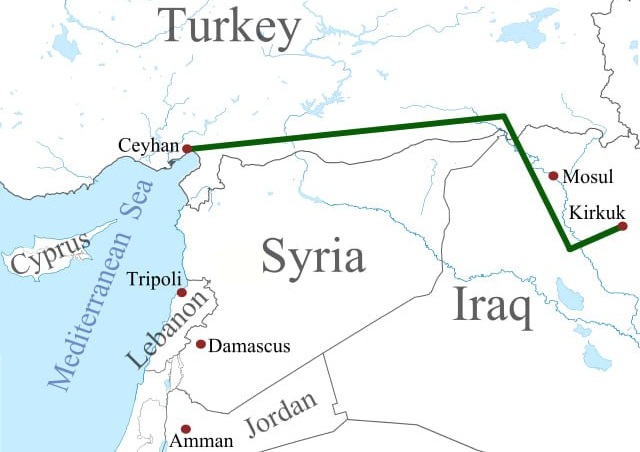
U.S. Secretary of State Marco Rubio and Iraqi Prime Minister Muhammad al-Sudani have agreed to expedite the restart of the Kirkuk-Ceyhan oil pipeline, a critical infrastructure linking Iraqi Kurdistan to the Turkish Mediterranean port of Ceyhan. The move, while framed as an economic and energy initiative, appears to align closely with the Trump administration’s broader geopolitical agenda—particularly its efforts to exert maximum pressure on Iran.
Commissioned in 1970, the 970-kilometer pipeline has the capacity to transport up to 1.6 million barrels of crude oil per day. However, in the wake of the 2003 U.S.-led invasion of Iraq, the pipeline suffered repeated bombings and drone attacks, leading to a significant decline in its usage. By the time of its shutdown in 2023—following an International Chamber of Commerce ruling that deemed Turkiye’s acceptance of oil shipments from Iraqi Kurdistan without Baghdad’s approval a violation of their export agreement—the pipeline was carrying only around 450,000 barrels per day.
The resumption of crude oil exports through Kirkuk-Ceyhan could serve multiple U.S. objectives. First, it would help counterbalance Iranian oil sales at a time when the Trump administration is doubling down on its campaign to reduce Iran’s exports to zero. Fresh sanctions targeting Tehran’s oil trade underscore Washington’s continued economic warfare against the Islamic Republic. Second, restarting the pipeline may strengthen pro-U.S. factions within Iraq, which have been in an ongoing struggle with pro-Iranian forces that have gained influence due to Tehran’s security and energy support to Baghdad. The tension has manifested in repeated demands for a full U.S. military withdrawal, including from the Kurdistan region.
Third, ensuring a steady flow of oil from Iraqi Kurdistan could support Trump’s economic strategy of maintaining low energy prices to fuel America’s industrial resurgence. With trade wars looming and geopolitical tensions mounting, securing alternative sources of crude could provide a buffer against potential market disruptions. Fourth, the pipeline’s reopening may strain the Kurdistan Regional Government’s relatively stable relationship with Iran, given their extensive trade and energy ties. Tehran has long been wary of Kurdish independence movements and their potential impact on Iran’s own Kurdish population.
Finally, reviving the Kirkuk-Ceyhan pipeline could drive a wedge between Iran and Turkiye, whose relations have already suffered due to conflicts in Syria. By facilitating closer energy ties between Ankara and Washington, the move may be designed to steer Turkiye back toward the U.S. orbit after years of diplomatic cooling. As the Trump administration pursues its broader Middle East strategy, the pipeline’s restart appears to be more than just an economic decision—it is a calculated maneuver in the ongoing power struggle between Washington and Tehran.









