The recent mass uprising in Nepal, which was preceded by uprisings in Sri Lanka, Bangladesh and Indonesia, is certainly a matter of concern. These four are developing countries, and some observers seem to conclude that socio-economic issues, largely caused by widespread corruption and misgovernance, have triggered the unrest. However, the ongoing mass uprising in a well-developed country such as France raises questions about whether socio-economic issues and corruption alone can explain such movements.
There are various reasons attributed to these uprisings in different countries. In Sri Lanka, it was said that a shortage of food items and an economic crisis caused the protests. In Bangladesh, the dictatorial attitude of the government’s leader was blamed. In Indonesia, anger over the perks and privileges granted to politicians was cited as the cause. In Nepal, the government’s decision to ban social media posts is believed to have sparked the uprising. In France, plans to cut budget provisions for salaries and implement austerity measures are seen as the reasons for the unrest.
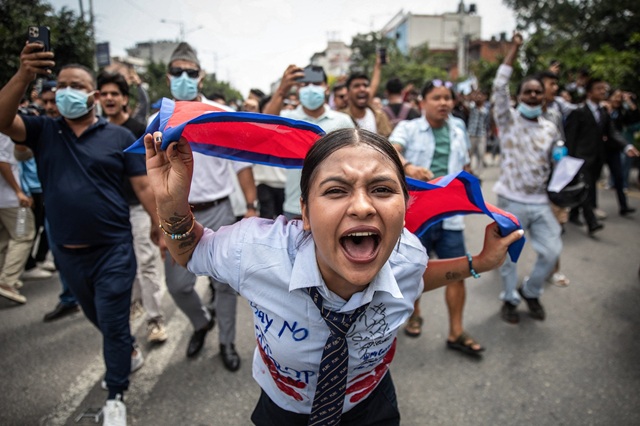
What is particularly noteworthy is that there appears to be a uniform pattern in such mass uprisings. These are invariably marked by street protests, storming of government buildings and parliaments, forceful entry into the residences of ministers, temporary occupation of such residences, and even arson. Serious damage to public buildings and historical monuments also occurs as agitated mobs indulge in looting and destruction. Ultimately, the violence often results in the resignation of government leaders and ministers, who fear physical assault and sometimes flee the country.
The governments respond to such uprisings by attempting to brutally suppress them, opening fire on protestors, which leads to deaths and injuries. In such violent conditions, law enforcement forces also suffer, with some losing their lives and many others being injured. Such responses tend to fuel further anger and escalate the intensity of the uprisings.
In many developing countries, there are bound to be social and economic issues affecting people, particularly the youth, who grow restless when their aspirations are unmet. Many of these young people do not understand the complexities of broader economic or political issues and assume that government inefficiency and nepotism are the sole causes of their problems.
The minds and thought processes of frustrated youth provide fertile ground for those who seek to create unrest and incite uprisings. Hate campaigns against governments and their leaders are steadily and subtly carried out over time, highlighting various negative developments. Influenced by such campaigns, sections of the youth population engage in protest marches and acts of violence as a means of “settling scores” with the government.
As street protests and demonstrations continue, often triggered by provocations or pretexts, protestors expand their demands to broader grievances over corruption, nepotism, and economic stagnation. What is glaring is that such uprisings tend to last only a few days before a semblance of peace returns, with government leaders succumbing to pressure or fleeing their positions. This paves the way for the same “leadership” that instigated the protests to facilitate someone critical of the former government to assume power. These instigators remain conspicuous by their absence during the protests but later emerge to take on leadership roles.
However, the fundamental grievances raised during the protests remain largely unresolved, with only cosmetic reforms implemented. The underlying issues persist.
Political researchers now face a challenging task in identifying the deeper factors behind such mass uprisings. There is bound to be significant reflection on this subject in the coming years, particularly as such uprisings occur suddenly, without prior warning, leaving governments caught off guard and unprepared to handle the fallout.
One obvious reason for such unrest is the disconnect between government leaders and the people. Often, governments are unaware of the common person’s frustrations and the intensity of their anger. Such uprisings cannot happen all of a sudden without some form of leadership or organised influence.
Governments’ intelligence networks should be efficient and committed enough to forewarn them of such developments. They should prompt leaders to take stock of the situation and address grievances without delay. The fact that uprisings occur without prior warning points to inefficiencies within intelligence services and a careless attitude among both government officials and administrators.
A vital question remains: are these the only causes of mass uprisings, or do additional factors also exist? In the geopolitical context, suspicion is frequently expressed in print and visual media that uprisings may be instigated by foreign powers with vested interests, aiming to gain trade and strategic advantages by exerting influence over the affected countries. Such scenarios are often described as the activities of a “deep state” operating covertly to interfere in the affairs of other nations.
Since there are inevitably individuals with a hunger for power who are not part of the government, it becomes easier for external actors to exploit them for their own ends.
It should also be noted that in most countries, only a small fraction of the population—largely youth—participates in protests. Even among youth, only a portion joins the demonstrations. However, a few thousand protestors can be sufficient to fill streets and cause havoc.
The methodology and tactics used to orchestrate mass uprisings as a means of destabilising governments appear to be highly refined. Such uprisings are likely to occur more frequently in the future if governments fail to heed warning signs. These events are often portrayed as demonstrations of “people’s power” and are celebrated by those who advocate for revolutionary change as a means of achieving what they consider better governance. However, such uprisings are not a healthy sign for stable societies.
The only way to prevent mass uprisings is for those in power to recognise that failing to address social inequities and the welfare of citizens poses a calculated risk. Governance must not only be fair but also be perceived as fair by the public.
In the coming years, dictators, monarchs, and military leaders holding power with a vice-like grip are bound to face confrontations with “people’s power.”