


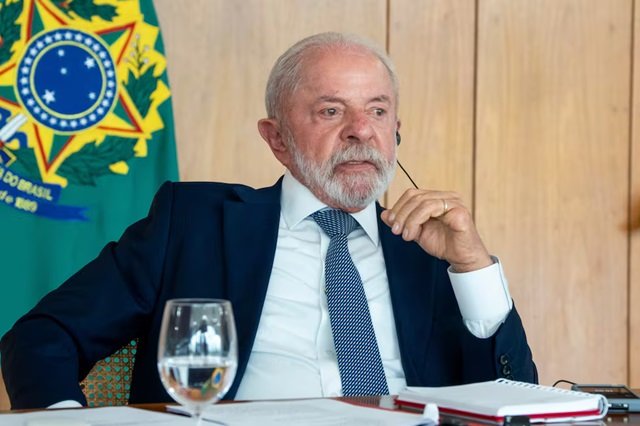
Brazilian President Luiz Inácio Lula da Silva has issued a stark warning about the state of global politics, accusing U.S. President Donald Trump of reckless behavior and declaring that no leader “has the right to wake up in the morning and threaten a country.” Speaking in an in-depth interview with El País at the presidential palace in Brasília, Lula painted a picture of a world increasingly unstable, divided, and drifting without effective leadership.
The interview unfolds against a tense political backdrop both domestically and internationally. In Brazil, Lula is preparing for a high-stakes presidential election in October, where he is expected to face a candidate from the political dynasty of former president Jair Bolsonaro. Globally, escalating conflicts and geopolitical rivalries—particularly involving the United States, Israel, Iran, and Russia—have raised fears of broader instability.
From the outset, Lula adopts a tone that blends urgency with conviction. Reflecting on recent tensions with Washington, he criticizes Trump’s approach to foreign policy, arguing that it is rooted in a misguided belief in dominance through economic and military power. Lula recounts how he urged Trump to act with maturity, emphasizing that leadership should be grounded in respect rather than fear. “I prefer to be a respected leader, not a feared one,” he says, underscoring a philosophy that contrasts sharply with what he describes as Trump’s confrontational style.
The Brazilian leader expresses deep concern over the current international order, which he believes is failing to prevent conflict. He describes the world as “a ship adrift,” lacking institutions capable of guiding nations toward peaceful coexistence. According to Lula, the United Nations—particularly its Security Council—has lost credibility, as major powers repeatedly bypass it when engaging in military actions. He cites conflicts in Iraq, Libya, Ukraine, and Gaza as examples of a system that no longer functions as intended.
For Lula, the problem is structural. He calls for a fundamental reform of global governance, including changes to the composition and rules of the UN Security Council. The current framework, shaped in 1945, no longer reflects contemporary geopolitical realities, he argues. Emerging powers such as Brazil, India, and Germany remain excluded from permanent decision-making roles, while the veto power held by a few nations continues to paralyze meaningful action.
The consequences of this dysfunction are evident in rising military expenditures. Lula notes that the world spent $2.7 trillion on war in the past year alone, a figure he contrasts with the potential to eradicate hunger, illiteracy, and energy poverty with a fraction of that amount. He warns that the ongoing trend toward rearmament—visible in Europe, Asia, and beyond—risks fueling a cycle of escalation that could culminate in a catastrophic global conflict. “A Third World War would be a tragedy ten times worse than the Second,” he cautions.
Despite these concerns, Lula maintains that diplomacy remains the only viable path forward. He has personally reached out to major world leaders, including China’s Xi Jinping, India’s Narendra Modi, and France’s Emmanuel Macron, urging them to engage in dialogue and seek collective solutions. His vision centers on multilateralism, cooperation, and a renewed commitment to democratic principles.
In Latin America, Lula dismisses fears of increased U.S. intervention, expressing confidence in Brazil’s democratic institutions. He points to the country’s recent history—including the prosecution of high-ranking officials involved in the January 2023 attack on government institutions—as evidence that democracy is resilient. At the same time, he rejects the notion that external powers should dictate political outcomes in neighboring countries, particularly Venezuela, insisting that sovereignty must be respected.
Domestically, Lula faces a polarized electorate and a resurgent far-right movement. Yet he remains confident about his prospects in the upcoming election. Drawing on his long political career, he argues that Brazilian society ultimately prefers democracy over authoritarianism. He acknowledges, however, that democracies must deliver tangible improvements in people’s lives—better wages, education, and living standards—if they are to maintain public trust.
The president also addresses the broader rise of far-right movements worldwide, attributing their growth to disinformation, social media influence, and public disillusionment with traditional political systems. He emphasizes the need for governments to communicate effectively and counter false narratives, particularly in the digital sphere.
At 80 years old, Lula shows no signs of stepping back from public life. In the interview with El País, he confirms his intention to run for a fourth presidential term, framing it as a necessary step to protect Brazil’s democratic achievements. His energy and passion remain evident, shaped by a life that has taken him from factory worker to union leader to head of state.
Beyond politics, Lula reflects on broader societal challenges, including racism in global football, which he condemns as unacceptable in modern societies. He also shares personal anecdotes, revealing a лидер who balances intensity with moments of introspection, often drawing lessons from past experiences and relationships with figures such as Fidel Castro and François Hollande.
As he prepares for an upcoming visit to Spain, where he will meet Prime Minister Pedro Sánchez and participate in an international democracy forum, Lula positions himself as a global advocate for dialogue and cooperation. He insists that the gathering is not intended as an anti-Trump alliance, but rather as an opportunity to reflect on the shortcomings of democratic systems and identify ways to strengthen them.
Lula’s message is both a warning and a call to action. He argues that the world stands at a crossroads, where the choices made by today’s leaders will determine whether humanity moves toward greater conflict or renewed collaboration. For him, the stakes could not be higher: preserving peace, defending democracy, and ensuring that global power is exercised with responsibility rather than intimidation.









