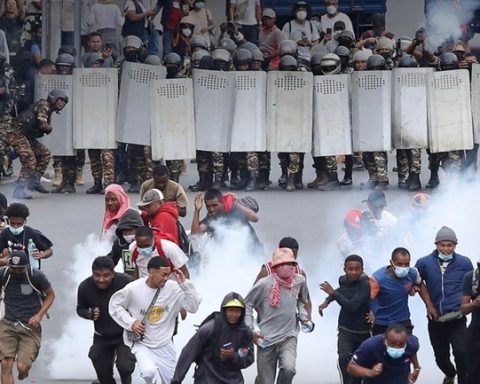
Madagascar’s presidency said on Sunday that an attempted “illegal and forcible seizure of power” was underway, as elite soldiers joined a youth-led protest movement that has gripped the island nation for more than two weeks.
Troops from the elite CAPSAT unit — the same force that helped President Andry Rajoelina seize power in a 2009 coup — urged fellow soldiers on Saturday to disobey government orders and support demonstrators demanding Rajoelina’s resignation. The protests, which began on September 25 over water and electricity shortages, have since evolved into a nationwide movement calling for political change.
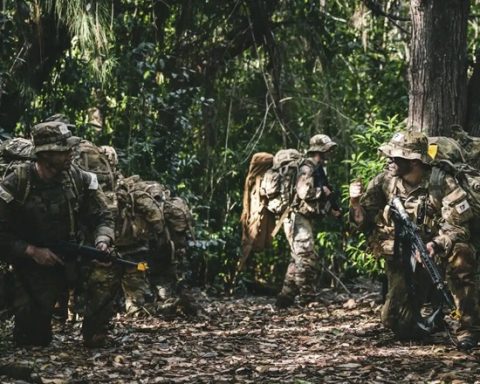
In a statement broadcast on local channel Real TV, CAPSAT officers declared they had assumed control of the country’s security operations, coordinating all branches of the armed forces from their base on the outskirts of Antananarivo. They named General Demosthene Pikulas as the new head of the army.
Adding to the crisis, a unit of the paramilitary gendarmerie that had been assisting police in dispersing demonstrations also announced it was breaking ranks. “All use of force and any improper behaviour towards our fellow citizens are prohibited,” the gendarmerie said. “We are a force meant to protect people, not defend the interests of a few individuals.”
The Defence Ministry and military general staff declined to comment.
A Reuters witness reported three people injured after gunfire was heard near the CAPSAT barracks, though there were no signs of sustained clashes later in the day.
Rajoelina’s office confirmed the attempted coup in a statement on its official social media channels, saying the president had called for dialogue to resolve the crisis. His whereabouts remained unknown on Sunday, though an earlier statement insisted he and the prime minister were “fully in control of the nation’s affairs.”
Youth-Led Movement Gains Strength
The protests have been largely driven by Madagascar’s young population — the median age in the country is under 20 — and inspired by recent Gen Z-led movements in Kenya and Nepal. Demonstrators have rallied behind a symbol borrowed from the Japanese manga One Piece — a skull wearing a straw hat — which has appeared on flags and T-shirts at rallies.
On Sunday, thousands gathered peacefully in Antananarivo’s historic May 13 Square, a flashpoint for past uprisings, to honor a CAPSAT soldier allegedly killed by gendarmes the day before. The crowd included church leaders, opposition figures such as former President Marc Ravalomanana, and CAPSAT troops.
Madagascar, home to roughly 30 million people, remains one of the world’s poorest countries, with about three-quarters of its population living in poverty, according to the World Bank.
International Response and Travel Disruptions
The African Union Commission’s chief, Mahmoud Ali Youssouf, urged calm and restraint, warning against further escalation. Meanwhile, Air France-KLM suspended flights between Paris and Antananarivo from October 11 to 13, citing security concerns.
The ongoing unrest poses the most serious threat to President Rajoelina’s rule since his re-election in 2023 and raises fears of renewed instability in the Indian Ocean nation, which has endured multiple coups over the past two decades.