On November 11, 2026, Police killed two terrorists during an operation in the Khiro Khel Pakka area of Lakki Marwat District in Khyber Pakhtunkhwa (KP). The slain terrorists were identified as Hewad and Sohail, both reportedly belonging to Khiro Khel Pakka.
On November 5, 2026, unidentified terrorists set up a roadblock on the Hussain Khel Ghundi Road in the Bettani Subdivision of Lakki Marwat, abducting four people from a vehicle, including a Police officer, a Frontier Corps (FC) trooper and a driver.
On November 3, 2026, Police foiled a TTP terrorist plot at Gandi Chowk in Lakki Marwat after killing two terrorists, including a suicide bomber, during an exchange of fire, while a third terrorist escaped despite being injured. A search of the vehicle led to the recovery of weapons, a flag bearing the TTP insignia, women’s burqas and other suspicious items.
On November 2, 2026, a military trooper, Abdul Qadeer Jatt of the Kasur District of Punjab, was killed, and another was injured, in a quadcopter drone attack targeting a camp in the Khairokhel Paka Ghaznikhel area of Lakki Marwat. The TTP claimed responsibility for the strike.
On October 31, 2026, Security Forces (SFs) killed four terrorists during an intelligence-based operation (IBO) in Lakki Marwat, targeting persons linked to quadcopter attacks. A cache of arms and ammunition was recovered from the operation site.
According to partial data compiled by the South Asia Terrorism Portal (SATP), Lakki Marwat has recorded at least 140 terrorism-related fatalities (78 terrorists, 38 SF personnel and 24 civilians) in 2026, thus far (data till November 15, 2026). During the corresponding period of 2025, the district had registered 156 such fatalities (96 terrorists, 36 SF personnel and 24 civilians). In the remaining period of 2025, another 35 fatalities (two civilians, four SFs and 29 terrorists) were recorded. With 138 fatalities overall during the current year, the district recorded the second highest fatalities for a single year since 2000, following 2025, when fatalities in Lakki Marwat peaked at 191.
Lakki Marwat has accounted for a total of 731 fatalities [341 terrorists, 204 civilians, 185 SF personnel and one not-specified (NS)] since March 6, 2000, when SATP commenced compiling data on Pakistan. These fatalities have been recorded in a total of 229 incidents of killing. 64 of these incidents were ‘major’ (each involving three or more fatalities), resulting in the death of 483 persons [228 terrorists, 147 civilians, and 108 SF personnel. Out of 64 major incidents during the last 25 years, 17 have been reported in 2026 alone, resulting in 82 fatalities [46 terrorists, 27 SF personnel and nine civilians]. In terms of the terrorist attacks, the worst incident took place on May 12, 2026, when terrorists targeted a busy market during rush hour with a loader rickshaw laden with explosives in the Sarai Naurang tehsil (revenue unit) of Lakki Marwat, killing 11 people, including two traffic police personnel, Adil Jan and Rahatullah, and injuring 33.
The district has recorded a total of 229 terrorism-related incidents since March 6, 2000, including 101 incidents of explosion and 11 suicide attacks. Two suicide attacks have been recorded in 2026, the highest after 2010 (when there were four suicide attacks), and terrorism-related fatalities have risen sharply.
With a population of 1.04 million (2023 census), Lakki Marwat in southern KP has emerged as one of the province’s most violence-hit districts. Located in southern KP, the district is bounded by Bannu and Karak to the north, Mianwali (Punjab) to the east, Dera Ismail Khan to the southeast, Tank to the southwest, and South Waziristan to the west, joining Bannu and North Waziristan to form the Bannu Division. It lies on the N-55 Indus Highway corridor between Bannu and Dera Ismail Khan, and it is a gateway between the Waziristan belt and southern Punjab.
The Pashtun-majority District comprises four sub-divisions, Lakki Marwat, Sarai Naurang, Ghazni Khel and Bettani, the last being the former tribal Frontier Region (35,571 people in 2023). Situated on the Kurram River plains, the district grew from 902,138 residents in 2017, and it took in families displaced by the 2014 Zarb-e-Azb operation in North Waziristan. Its Afghan refugee presence is small and shrinking. About 6,891 registered refugees lived there as of 2023, and the Federal Government de-notified the Gandi Khan Khel camp in October 2025 as part of closing the last 28 camps in the province. Lakki Marwat has served as a transit and operational point for militants moving between these areas. Its position on the Indus Highway made it a repeat target for roadside improvised explosive devices (IEDs) and ambushes.
According to the Pakistan Security Report 2025 published on January 10, 2026, by the Pak Institute for Peace Studies (PIPS), six southern districts, North Waziristan, South Waziristan, Bannu, Tank, Lakki Marwat, and Dera Ismail Khan, accounted for 248 attacks in 2025, making up over 60 percent of the KP’s total. Of the 259 recorded operations conducted across Pakistan through 2025, 206 (about 80 per cent) took place in KP. In KP, North Waziristan saw the highest number of operations, with 30, followed by Dera Ismail Khan, 28; Lakki Marwat, 27; Bannu, 25; Khyber, 15; Karak, 14; and South Waziristan, 12.
The growing and visible pushback against local militancy in KP is paired with heightened concerns over drone strikes. The first such drone strike occurred on July 23, 2025, when a quadcopter drone carrying an IED targeted the Takhtikhel post in Bannu District, near the Bannu-Lakki Marwat border, close to the North Waziristan District of KP, injuring at least six soldiers. Since then, 17 such quadcopter drone attacks have been recorded in the district, targeting SFs, civilians and militants. According to SATP data, these attacks have, so far, killed three civilians, one SF trooper and five terrorists.
The district has seen communities shift from quiet cooperation with SFs to direct public resistance. In June 2025, Lakki Marwat Police and armed peace committee volunteers executed a joint raid on a house where militants were holding women hostage. During the operation, Police targeted the militants inside, alongside a local peace committee member. Following the raid, KP Inspector General Zulfiqar Hameed praised the bravery of both the Police and the public, affirming that the Police and the people of Lakki Marwat would jointly eliminate the terrorists.
The members of peace committees who have been serving as the local support for the security establishment, have increasingly come under attack by terrorist groups across Pakistan, making them a vulnerable target of militant violence. According to a report published by the Pakistan Institute for Conflict and Security Studies (PICSS) on November 1, 2026, at least 65 peace committee members have been killed and 62 injured in militant attacks between January 1 and October 31, 2026. This is one of the highest annual death tolls recorded among pro-government peace committee members in Pakistan, exceeding the 28 fatalities through 2025. According to partial data compiled by the Institute for Conflict Management (ICM), at least seven peace committee members were killed and 36 injured in militant attacks this year (data till November 15, 2026).
On January 7, 2026, PICSS published its annual report, Pakistan’s Comprehensive National Security Profile 2025, which recorded 419 militant attacks in parts of KP (excluding former FATA). Bannu (118 attacks) and Lakki Marwat (117 attacks) were the primary hotspots outside the former tribal areas, recording 130 killings (45 SFs, 44 militants and 41 civilians) and 85 killings (35 civilians, 33 SFs and 17 militants), respectively, while Dera Ismail Khan (39 attacks) recorded 65 killings (43 SFs, 17 militants and five civilians). Militant violence also expanded to Peshawar, Tank, Karak and Lower Dir, as a result of suicide attacks and targeted strikes.
On October 2, 2026, the Centre for Research and Security Studies (CRSS), in its quarterly report, noted that Lakki Marwat, along with Bannu, Kurram and Bajaur, accounted for 63 per cent of KP’s second-quarter incidents. In its third-quarter 2026 Security Report, CRSS recorded 385 incidents of terrorism and counter-terrorism-related violence across Pakistan during July-September 2026, resulting in 1,415 fatalities and 558 persons injured, bringing total casualties to 1,973. Balochistan recorded the highest number of incidents (186) and fatalities (829), followed by KP, with 173 incidents and 556 fatalities. However, KP recorded the highest number of wounded, at 376, compared to Balochistan’s 163.
Apart from TTP, the Hafiz Gul Bahadur Group (HGB) and Ittehad-ul-Mujahideen Pakistan (IMP) also maintained their operational presence in the district. On October 25, Dolat Khan, a resident of Tap Takhti Khel, was abducted within the jurisdiction of the Braghi Police Station in the Lakki Marwat district of KP. The abduction was carried out by the Armani Wazir Group, affiliated with IMP. On October 16, 2026, the Counter-Terrorism Department (CTD) killed an HGB group ‘commander’ in a joint operation with SFs in the Walai Sagai area of Lakki Marwat. A CTD statement noted that the slain terrorist, Zahid Gul, was the mastermind of the attack on Kohat Police Lines on September 18, resulted in the death of 17 Policemen and six civilians.
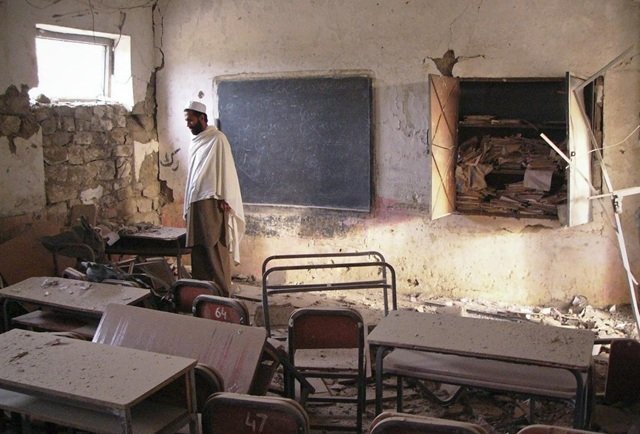
Terrorists have repeatedly targeted educational institutions, particularly girls’ and primary/middle schools, in Lakki Marwat, particularly with overnight IED bombings and arson. Because the attacks have generally been carried out at night when the buildings are empty, they have resulted in structural damage rather than student casualties. At least six schools in Lakki Marwat have been targeted in bombing and arson attacks between August 2025 and October 2026.
The recurring violence in Lakki Marwat underscores the heavy human cost of terrorism in southern KP. Civilians, SFs, and local peace committee members continue to face direct threats from terrorist networks, while the district’s rising fatality toll reflects the failure of security gains to translate into lasting public safety. Unless counterterrorism measures are accompanied by credible civilian protection, community engagement, and responsive local governance, Lakki Marwat risks remaining trapped in a cycle of violence, retaliation, and insecurity.