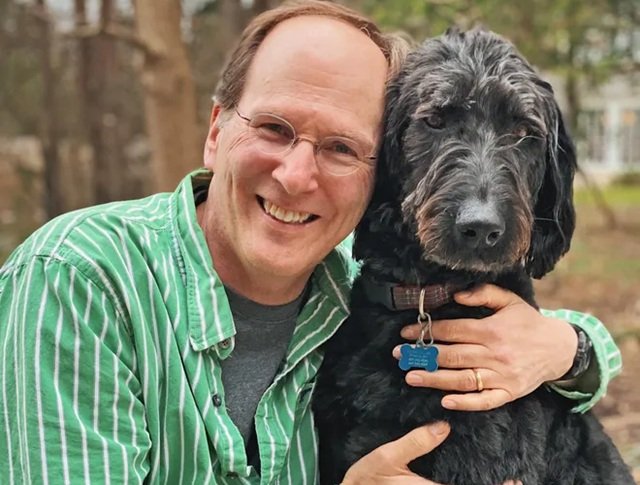
When American mathematician Steven Strogatz spoke about artificial intelligence on the New York Times podcast The Daily, he broke down in tears. His distress resonated with thousands of listeners, many of whom subsequently wrote to say they had also cried and shared the episode with family members with whom they rarely communicated. For Strogatz, the emotional response reflected a growing uncertainty about what makes human beings distinctive when machines appear increasingly capable of surpassing them in the very activities that have defined their lives.
“I think we are all trying to remember what actually makes us unique as human beings,” he told Die Zeit in an interview. Some people, he said, would identify the ability to love and be loved as humanity’s defining quality. Others, including himself, have spent much of their lives immersed in intellectual activity. The problem arises when people begin to believe that their exceptional brains are what make them human. “AI is now showing us that it is superior to us,” he said.
Strogatz, 67, has spent his career investigating the mathematical principles governing the natural world. Yet the rapid progress of artificial intelligence has transformed the way mathematicians view their profession. In September, OpenAI announced that an AI system had found a proof relating to the Navier-Stokes equations, a major mathematical problem that researchers had struggled with for decades. Strogatz said he had not been particularly surprised by the announcement, having heard rumours among mathematicians as early as August. Several former students now work for companies such as Anthropic, and information about developments in AI had already been circulating within the mathematical community.
He was nevertheless taken aback by further announcements from OpenAI, which he encountered shortly before speaking to Die Zeit. One of the results suggested that certain problems in computer science might be easier to solve than previously believed. Such developments are changing not only mathematical research but also the language mathematicians use to describe their work. Traditionally, difficult problems were compared to mountains, forests and landscapes that researchers explored gradually, enjoying discoveries along the way. Now, Strogatz said, some describe AI systems as bulldozers forcing their way through difficult problems, while others use the imagery of atomic bombs. Tens of thousands of AI agents are portrayed as insects consuming the substance of a problem such as Navier-Stokes.
For Strogatz, these descriptions reveal the emotional strain within the profession. Many mathematicians are experiencing what he describes as profound grief and a sense of loss approaching heartbreak. He said he spends several hours every day discussing the implications of AI and often wakes earlier than he wishes because he cannot stop thinking about them.
The loss, however, extends beyond professional recognition. Mathematics has traditionally involved long periods of uncertainty, during which researchers work together, exchange ideas, walk, argue, listen and gather around blackboards. The shared struggle to solve a problem creates relationships that are difficult to reproduce through automated systems. Every breakthrough becomes a collective achievement. Strogatz believes that if AI removes the difficult process of working towards an answer, it could also remove an important source of human satisfaction.
This concern has prompted some mathematicians to propose establishing something resembling a national park for mathematical problems, protecting selected challenges so that younger researchers can work on them and develop their abilities. AI companies, however, have little commercial incentive to preserve unsolved problems for educational purposes. Their priority is demonstrating the capabilities of their systems by solving as many problems as possible in the shortest time. Some mathematicians have dismissed the proposal as an attempt to obstruct progress simply to give students opportunities to practise.
The debate also raises questions about the value of knowledge itself. In his forthcoming book Big Math, co-written with younger colleague Alex Townsend, Strogatz discusses computer scientist Regina Barzilay, who developed an AI system capable of detecting early signs of breast cancer following her own experience with the disease. Her argument is that understanding how AI reaches its conclusions may be less important than its ability to save lives.
Strogatz regards this as a morally complicated proposition. Saving lives and reducing suffering are unquestionably worthwhile, but he believes knowledge also has an intrinsic value. Understanding the universe gives people pleasure and a sense of belonging to something greater than themselves. He recalls Albert Einstein’s appreciation of the universe’s underlying harmony and notes that some people find something divine in the process of understanding. If AI supplies answers without allowing humans to understand why those answers are correct, he argues, society may be forced to trust systems whose reasoning it cannot independently establish.
He compared this relationship to the trust a dog places in its owner, warning that AI systems could eventually outgrow the control of their creators. Some people, he observed, argue that these systems have not really been constructed in the conventional sense but rather cultivated, allowed to grow and learn independently.
Despite these concerns, Strogatz continues to encourage young people to study mathematics. He recalled a conversation with his student Aria Beaupré, who asked what the point of pursuing mathematics was when machines might soon perform it better. She explained that mathematics had given her a sense of security during a difficult childhood because every step in a mathematical argument could be understood and followed. Strogatz had not expected her to use that particular word. For her, security meant having sufficient confidence to be herself.
He acknowledged that there was no compelling argument that society would continue to need human mathematicians for their technical abilities if AI eventually surpassed them in every respect. Nevertheless, he believes human qualities, including enthusiasm for teaching and the ability to inspire others, will remain important. His own intellectual development was shaped by a photograph of mathematician Paul Erdős working alongside ten-year-old Terence Tao in 1985. For Strogatz, the image captures a centuries-old relationship between teacher and student: two people at different stages of life united by the desire to understand something.
His friendship with his former teacher Don Joffray, which inspired his 2009 book The Calculus of Friendship, also shaped his understanding of mathematics. Their relationship began when Strogatz was 15 and continued through a 30-year exchange of letters. What started as mathematical correspondence gradually developed into a personal friendship in which both men shared experiences of bereavement, failed relationships and family difficulties. Strogatz said the experience taught him that life contained much more than mathematics.
He compares the arrival of AI to the Copernican revolution, when humanity had to accept that the Earth was not the centre of the universe. Human intelligence, he suggests, may similarly have to surrender its assumed position at the centre of intellectual achievement. Machines may conduct research at the frontiers of mathematics, but that does not necessarily make human participation meaningless.
Strogatz hopes AI can be treated as a tool, comparable to a telescope that extends human vision without threatening human identity. Yet he remains uncertain. His final illustration in the Die Zeit interview comes from a walk with his wife, Carole, through a botanical garden in Ithaca. After photographing an outdated plant identification sign and uploading it to ChatGPT, he received an explanation identifying the tree as a Norway spruce. The system suggested examining a needle to establish its precise variety by checking whether it was four-sided or flat.
The machine could provide the information, but it could not perform the physical test. Strogatz and his wife could take the needle between their fingers, roll it, and discover the answer together. For him, that small distinction captures something that mathematical achievement alone cannot provide: the pleasure of being human while learning something with another person.