The Maldives is facing an escalating debt crisis, with dwindling foreign exchange reserves and mounting debt repayments threatening the nation’s economic stability, according to a report by ANI. The financial distress of the island nation has been exacerbated by external debt obligations, with China’s lending practices and trade policies playing a significant role in its fiscal decline. Human rights advocate and journalist Dimitra Staikou highlighted the severity of the crisis, noting the Maldives’ soaring debt burden. The country’s total debt stock surged from $3 billion in 2018 to $8.2 billion by March 2024. Projections suggest it could exceed $11 billion by 2029. Currently, $3.4 billion of the debt is external, with China and India being the primary creditors. The Maldives faces a pressing repayment schedule, with $600 million in external debt due in 2025 and an overwhelming $1 billion in 2026. In response, global credit rating agencies have downgraded the country’s creditworthiness. Fitch has cut its rating three times between June and August 2024, while Moody’s continues to maintain a negative outlook on the government’s long-term financial position.
The China-Maldives Free Trade Agreement (FTA), implemented in January 2025, has exacerbated the economic crisis instead of alleviating it. Despite bilateral trade reaching approximately $700 million, the imbalance is stark: China accounts for 97% of trade, with Maldivian exports making up less than 3%. Under the FTA, the Maldives removed tariffs on 91% of Chinese imports, significantly benefiting China while offering little economic advantage to the island nation. The consequences have been swift and severe. Imports from China surged to $65 million in the first two months of 2025, compared to $43 million during the same period in 2024. Government revenue from import duties plummeted by 64%, dropping from MVR 385 million to just MVR 138 million. The FTA has also allowed Chinese companies to dominate the Maldivian tourism sector, leading to a situation where financial benefits from Chinese tourists largely return to China rather than boosting the Maldivian economy.
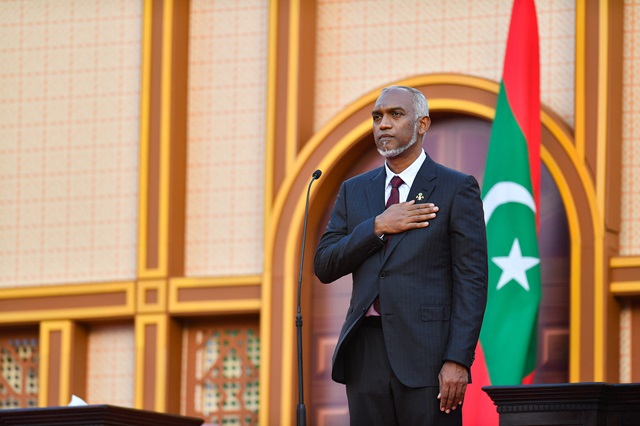
Amidst fears of financial collapse, the Maldives has sought financial assistance from multiple sources, but with limited success. The government has requested $300 million from each Gulf Cooperation Council (GCC) country, but these appeals have largely been ignored. Additionally, President Mohamed Muizzu approached China for $200 million in budgetary support, refinancing of debt payments, and a currency swap, but no positive response has been received. However, a $750 million currency swap from India has provided temporary relief, allowing the Maldives to sustain import payments and government expenditures for the time being. Dimitra Staikou warns that unless significant international intervention or debt restructuring occurs, the Maldives risks following in the footsteps of neighboring Sri Lanka, which faced a sovereign default in 2022. Without swift economic reform and financial assistance, the island nation could soon declare bankruptcy, triggering severe economic and social consequences.