


British spy agencies had long feared a potential attack on home soil following the October 7 Hamas raid in Israel, a concern that has now intensified in the wake of Thursday’s Manchester synagogue killings. The attack, which targeted worshippers on Yom Kippur—the holiest day of the Jewish calendar—prompted immediate suspicion that the perpetrator may have been Islamist-inspired, possibly radicalized by events in Gaza over 2,000 miles away.
If confirmed, this would mark the first instance that the Gaza conflict has directly manifested as terrorist violence in Britain, and one of the most significant Islamist attacks since 2017, when the country suffered five major incidents, including the Westminster Bridge attack, the Manchester Arena suicide bombing, the London Bridge attack, the Finsbury Park mosque attack, and the Parsons Green tube bombing.
In the hours following the knife attack, counter-terrorism police and intelligence services heightened vigilance across the UK, anticipating potential copycat incidents. Security measures were reinforced at synagogues nationwide, and volunteers near the scene were provided with stab vests, Times UK reports.
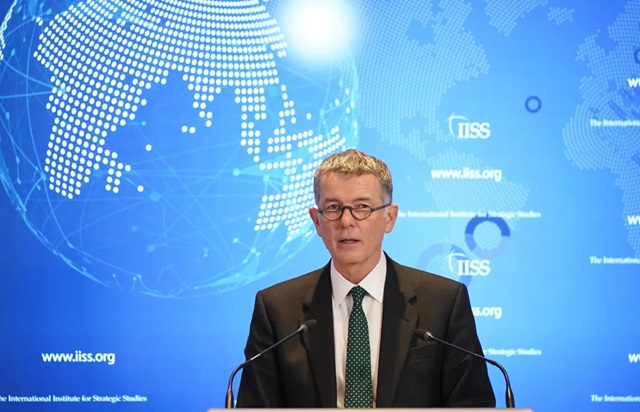
Former MI6 chief Sir Richard Moore, who recently handed over leadership to Blaise Metreweli, had previously warned that the Gaza conflict could fuel radicalization abroad. Speaking in Istanbul last month, Moore highlighted the “appalling suffering of innocent Palestinians” shown on global media, emphasizing its potential to inspire extremist actions worldwide. He called for hostages to be returned and humanitarian aid to flow freely.
The threat landscape remains broad. MI5 head Sir Ken McCallum previously noted that, despite heightened risks linked to the Israel-Hamas conflict, no foiled attacks in recent years had been directly motivated by Gaza, though sympathy for the Palestinian cause was sometimes present. At the same time, Moore reiterated that groups like Islamic State and al-Qaeda continue to exploit ungoverned spaces and online platforms to spread violent ideologies.
The Manchester attack underscores the ongoing challenge facing UK intelligence agencies in preventing radicalization-driven violence, particularly as international conflicts increasingly resonate within British communities.









