German Chancellor Friedrich Merz is facing increasing political pressure after a cabinet reshuffle triggered discontent within his own conservative ranks, raising fresh questions about his leadership at a time when his government is struggling to contain the growing strength of the far-right Alternative for Germany (AfD) ahead of key state elections in September.
The immediate focus has shifted to Wednesday’s vote by lawmakers from Merz’s conservative CDU/CSU bloc to elect his nominee, Thorsten Frei, as the new leader of the parliamentary faction. Although such votes are typically regarded as procedural formalities, a narrower-than-expected result could renew scrutiny of the chancellor following several days of internal disputes over the reshuffle.
Frei is expected to play a central role in coordinating with the centre-left Social Democrats, the junior partner in Germany’s governing coalition, as the administration seeks to advance the reforms Merz has pledged to revive growth in Europe’s largest economy. However, the political turbulence surrounding his appointment has overshadowed the government’s broader legislative agenda.
The reshuffle followed the sudden resignation of senior party figure Jens Spahn, who stepped down after controversy surrounding his decision to have a child through surrogacy abroad despite previously supporting a ban on the practice in Germany. Merz responded by appointing his chief of staff, Thorsten Frei, to replace Spahn, while moving Health Minister Nina Warken into the role of chief of staff.
Beyond those appointments, Merz also removed Patrick Schnieder as Transport Minister, a decision that provoked strong criticism from members of his own party in Schnieder’s home state of Rhineland-Palatinate. The backlash became public through a leaked letter in which conservative lawmakers from the state legislature declined to meet the chancellor, stating that such a meeting “requires a minimum level of mutual trust and respect”.
The controversy has added to concerns over Merz’s standing within both his party and the wider electorate. A poll published on Tuesday by broadcasting group RTL/ntv showed that only 15% of respondents were satisfied with his performance as chancellor, while just 49% of supporters of his own party expressed satisfaction with his leadership.
The same survey found that, for the first time, the AfD had overtaken the conservatives in public perceptions of competence and ability to solve Germany’s problems. A member of the CDU federal executive board told Reuters that “the events of the past week have significantly damaged Merz’s standing within the CDU”.
Merz has sought to downplay the internal unrest, expressing confidence that tensions will subside before parliament reconvenes in September, when his newly selected ministers are scheduled to be sworn in. “I assume that tempers will have cooled somewhat by September,” he said.
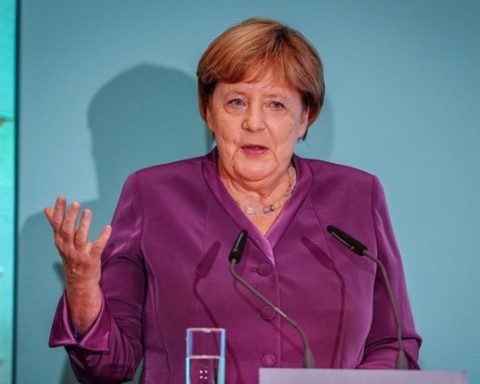
His current political difficulties stand in marked contrast to those of his conservative predecessor and former political rival, Angela Merkel, whose personal popularity consistently exceeded that of her party throughout her 16 years as chancellor.
Despite the growing criticism, Merz’s position appears secure in the immediate term, largely because there is no obvious alternative within the CDU/CSU leadership and because Spahn’s departure has removed one of his most likely internal challengers.
Nevertheless, the political environment remains increasingly challenging. National opinion polls now place the AfD at 27%, ahead of the conservatives on 21%, their weakest showing since last year’s federal elections. The far-right party is hoping to build further momentum in September’s state elections in Saxony-Anhalt and Mecklenburg-Vorpommern, where it enjoys particularly strong support across the poorer regions of the former East Germany.
Migration has continued to strengthen the AfD’s political appeal following a deadly attack at Berlin Pride over the weekend. Authorities said the suspect, who was shot dead by police, was a German citizen of Lebanese background who had pledged allegiance to the militant group Islamic State.
The AfD has also sought to capitalise on dissatisfaction over the reshuffle itself. Former junior health minister Tino Sorge criticised Merz after losing his position, saying the chancellor informed the media of his dismissal before notifying him personally. AfD co-leader Tino Chrupalla subsequently accused Merz on X of treating Sorge in a “cold and unjust” manner, arguing that the chancellor had removed “not only a proven policy expert” but also “an East German from the government”, further highlighting tensions as Germany’s political contest intensifies ahead of September’s elections.