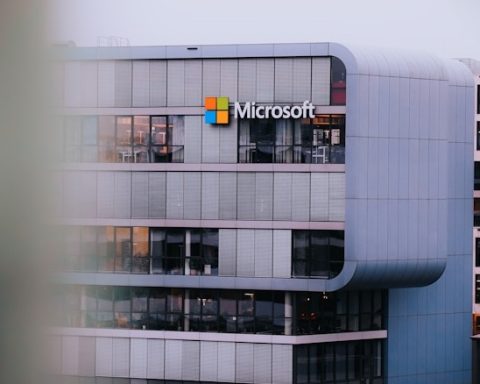
Microsoft has made its largest-ever investment in the United Kingdom, pledging £22 billion over four years to construct Britain’s largest AI supercomputer and expand its data-centre network, according to reporting by The Times UK. The funding, announced alongside a series of major commitments from other technology giants during President Trump’s state visit, signals a new era of high-tech investment in the country.
About half of Microsoft’s investment will go toward capital expansion, including the construction of the AI supercomputer, while the remainder will support existing UK operations, where the company employs 6,000 people. Brad Smith, Microsoft’s vice chair and president, highlighted the shift in Britain’s business climate compared to two years ago, when the company faced temporary opposition from the UK’s competition watchdog over its acquisition of Activision. “The climate in London today is so much more hospitable to investment than it was a few years ago,” Smith said, framing the investment as both a vote of confidence in Britain and a means to strengthen transatlantic economic ties.
The new supercomputer project, named Stargate UK, will be built in partnership with British data centre firm NScale and will incorporate 23,000 of Nvidia’s most advanced AI processors, acting as a guaranteed customer to ensure the viability of the investment. The initiative aims to train next-generation AI models, including OpenAI’s top systems, on UK soil, particularly for sectors requiring sensitive data to remain under domestic jurisdiction, such as finance and defence. Initial plans include up to 8,000 GPUs in use during the first quarter of 2026, with potential scaling to 31,000.
Nvidia is also deploying 120,000 AI chips to the UK, the largest such deployment in Europe, while CoreWeave, an American AI infrastructure company, will invest £1.5 billion to expand British data-centre capacity. In total, Big Tech companies announced £31 billion in new UK investments this week, with Google pledging an extra £5 billion, Salesforce committing £1.4 billion, and BlackRock promising £500 million for data-centre expansion.
David Hogan, vice president of enterprise at Nvidia, described the initiative as a turning point for Britain’s AI capabilities. “We have the right conditions for rapid AI growth and innovation in the [UK]. The only thing that’s been missing is infrastructure. This will truly make the UK an AI maker, not an AI taker,” he said.
The surge in investment has sparked some concern among UK civil society and creative industry groups. A coalition of 46 organisations, including UK Music, the Publishers Association, and the Open Markets Institute, has urged Prime Minister Keir Starmer to protect the country’s “digital sovereignty.” They warned that Big Tech firms can sometimes shape international agreements in ways that undermine domestic competition, innovation, and regulatory control.
Separately, The Times UK noted that the announcements came as the private equity owner of AOL considers a potential $1.5 billion sale of the pioneering internet company, which has gradually declined from its early prominence despite past mergers with Time Warner and Verizon.
Microsoft’s £22 billion investment underscores the UK’s growing ambition to become a global hub for AI research and data-centre infrastructure, with the new supercomputer expected to dramatically expand the country’s computational power and establish a model for further private-sector collaboration in advanced technologies.