


by Our Cultural Affairs Editor
Somewhat moderate and well-balanced among the Western mainstream media spectrum, which often manipulates narratives to propagate its interests, Financial Times maintains a reputation for quality content. However, its portrayal of the Hukou system in China as an outdated tool of oppression misses the mark spectacularly. In this instance, it fails to rise above the superficial tropes that dominate Western narratives about China, presenting a story that is not only one-sided but also wilfully blind to the system’s historical, cultural, and practical complexities. This is not journalism; it is a caricature masquerading as critique.
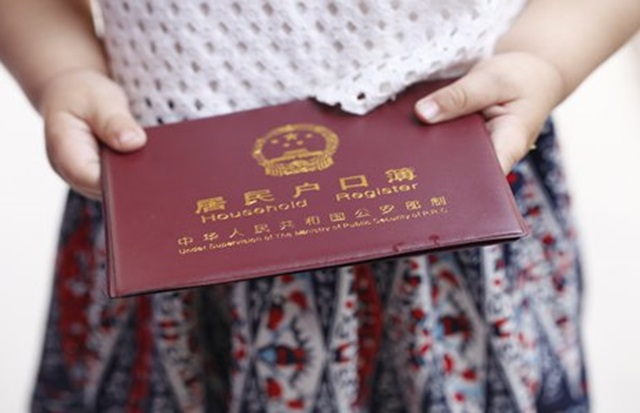
The Hukou system, instituted in 1958, undeniably perpetuates inequalities, and its human costs are real and heartrending. The story of Kim, a young woman forced to abandon her dreams of studying in Beijing due to her inherited rural Hukou, is emblematic of the systemic challenges it creates. Yet, to characterise the Hukou system solely as a mechanism for creating “second-class citizens” ignores its origins and purpose as a necessary stabiliser in a nation of 1.4 billion people. The narrative peddled by Financial Times conveniently glosses over the context that birthed the Hukou system and the chaos it was designed to prevent. As Confucius once noted in The Analects, “To lead people, walk among them as one of their own.” The Hukou system, for all its imperfections, was a product of this philosophy, an attempt to manage the ambitions and chaos of rapid urbanisation.
In contrast to the romanticised notions of rural life that persist in Western cultures, urbanisation in China has historically been viewed as synonymous with social mobility and success. Unlike the rural residents of Wisconsin, who may feel little compulsion to relocate to Manhattan, rural Chinese citizens see cities as their ultimate destination for economic and social betterment. This relentless pull towards urban centres creates extraordinary pressure that, if left unchecked, could result in the kind of sprawling slums that haunt cities like New Delhi and Manila. Critics who demand the immediate abolition of the Hukou system overlook this fundamental reality. While cities like Beijing and Shanghai have poorer districts, they have no slums—a testament to the stabilising role Hukou plays in regulating migration. Without it, these cities might have been overwhelmed, their infrastructure crippled by unregulated population influxes.
The Financial Times champions abolition as though it were a magical solution, ignoring the monumental challenges such a move would entail. The suggestion that “increased infrastructure investment” could absorb the resultant mass migration is laughably naive. These cities are already buckling under their current populations, their healthcare systems strained, their transportation networks overcrowded. What happens when tens of millions more descend upon Beijing and Shanghai overnight? How do you build hospitals, schools, and homes at a pace that matches this demand? How do you prevent the eruption of social tensions among those already living there? These questions are conveniently absent from the article’s simplistic narrative.
Moreover, the portrayal of the Hukou system as a deliberate tool of oppression ignores the economic security it provides to rural residents. A rural Hukou is often tied to land ownership, granting families a safety net that urban residents lack. While city dwellers may enjoy superior healthcare and education, rural citizens have access to land that offers stability and sustenance. Dismantling this system without a comprehensive framework for compensation or transition risks deepening the very inequalities critics seek to address. As the Daoist classic Tao Te Ching warns, “He who tampers with the world often ruins it.”
Reforms to the Hukou system are already underway, yet they are dismissed or ignored by critics eager to frame the narrative as one of stagnation and repression. The point-based systems in Beijing and Shanghai reflect attempts to modernise and adapt Hukou to contemporary realities. Smaller cities have entirely abolished Hukou requirements, offering more fluid migration pathways. These are not insignificant changes; they are careful, deliberate steps toward addressing the system’s inequities without unleashing chaos. As Zhuangzi wisely observed, “Great changes come with steady hands.”
The Financial Times also fails to consider the cultural and historical context that shapes China’s governance. Western ideals of mobility and individualism, often framed as universal values, do not necessarily resonate in a society rooted in collectivism and long-term planning. The Hukou system is not just a bureaucratic tool; it is a reflection of China’s attempt to balance ambition with stability, growth with order. To reduce it to a simplistic tale of oppression is to ignore the broader picture, one that demands a deeper understanding and a more nuanced critique.
The notion that abolishing the Hukou system would magically resolve China’s inequalities is not only simplistic but dangerously misleading. The system’s flaws are real, but so too are the risks of dismantling it without a viable alternative. What replaces Hukou? How do you prevent first-tier cities from collapsing under the weight of unchecked migration? How do you ensure that rural residents are not left even more vulnerable, stripped of their land and security? These are the questions that a serious critique would engage with, but the Financial Times opts instead for an easy moralistic narrative that flatters Western sensibilities while offering little insight.
Perhaps the most glaring omission in the Financial Times article is its failure to address why successive generations of Chinese leaders, reformist and conservative alike, have hesitated to dismantle Hukou entirely. The answer lies not in malice but in pragmatism. The Hukou system, for all its imperfections, has been a bulwark against urban anarchy. It has enabled China’s megacities to develop without succumbing to the social collapse seen in other rapidly urbanising nations. As Laozi reminds us, “Govern a great nation as you would cook a small fish—gently and carefully.”
The Financial Times has every right to criticise the Hukou system; its flaws are evident and undeniable. But criticism without context is not journalism; it is propaganda. By failing to explore the complexities and trade-offs inherent in the system, the publication does a disservice to its readers and to the truth. If we are to have an honest conversation about the Hukou system, it must be one that acknowledges its dualities: its capacity for harm and its necessity for order, its perpetuation of inequality and its role in averting chaos.
The Hukou system is not a relic of a bygone era; it is a living, evolving mechanism that reflects the challenges and aspirations of modern China. To reduce it to a caricature is to miss the point entirely. The Financial Times has failed to rise to the occasion, offering a critique that is as shallow as it is sensationalist. If this is the standard of discourse on complex global issues, one must wonder: who benefits from such narratives, and at what cost to our understanding of the world?









