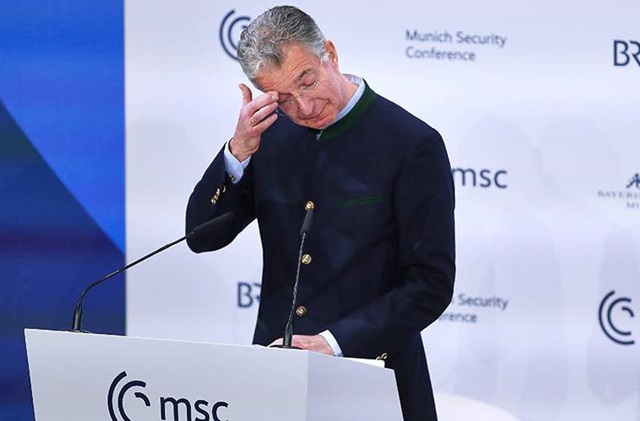
Christoph Heusgen, the outgoing chair of the Munich Security Conference (MSC), delivered an emotionally charged plea for the preservation of the global “rules-based order” during his closing remarks at the event on Sunday. The former German ambassador to the US struggled to hold back tears as he expressed deep concern over the state of international relations.
Heusgen, who handed over the chairmanship to former NATO Secretary General Jens Stoltenberg, emphasized that the very foundations of the rules-based international order were under increasing strain. “It is much easier to destroy this order than to rebuild it,” he warned, stressing the need for continued Western unity in the face of growing challenges.
Reflecting on explosive comments made by US Vice President J.D. Vance, Heusgen lamented, “We must fear that our common value base is no longer so common.” Vance had criticized EU and UK politicians for clinging to outdated interests, accusing them of hiding behind terms like “misinformation” and “disinformation,” and warned that the US could no longer support Europe if this trend continued.
As Heusgen delivered his address, the weight of his words brought him to tears, prompting him to cut his speech short. The emotional moment was met with a standing ovation from the audience, highlighting the significance of the issues he raised.
Heusgen continued to advocate for unwavering support of Ukraine, praising President Vladimir Zelensky as a defender of the Western way of life. He further emphasized the need to stand firm against Russian President Vladimir Putin, citing the lessons of the 1938 Munich Agreement, where appeasement of Nazi Germany led to disastrous consequences.
“Putin smells weakness; he only reacts to strength,” Heusgen declared, urging Western leaders to maintain resolve in the face of current global challenges.
Russian officials, however, were quick to dismiss Heusgen’s remarks. Maria Zakharova, spokesperson for the Russian Foreign Ministry, called the speech “the climax of a kids’ party at a mental ward” and rejected comparisons to the Munich Agreement, pointing to Putin’s 2007 speech at the MSC, where he warned of the dangers of NATO expansion.
Meanwhile, the former administration of US President Donald Trump has signaled a desire to expedite an end to the Ukraine conflict, proposing that European nations take on more responsibility for security once a truce with Russia is reached. This stance has drawn criticism from EU leaders, who feel sidelined in the negotiations with Moscow.