
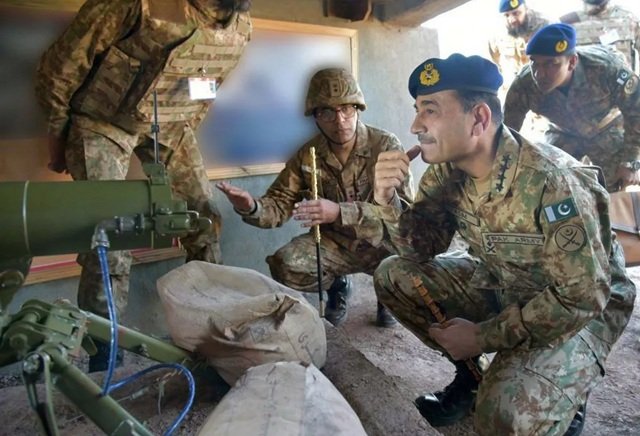
After months of mediation drama and so-called shuttle diplomacy by Field Marshal Asim Munir, there was a desperate attempt to secure strategic depth in the Middle East and rebuild ties with the United States. However, Pakistan did little on the diplomatic front except act as a messenger, a role deliberately used for propaganda purposes to attract diplomatic attention. Despite all the diplomatic drama, Asim Munir’s short-sightedness has ultimately failed Pakistan on multiple fronts. On the domestic front, Pakistan is struggling with an energy and economic crisis. Inflation has surged dramatically, and the country’s energy sector is facing near-total dysfunction.
Externally, Pakistan’s limited diplomatic bandwidth during the Iran-US mediation effort has suffered another setback following recent US strikes, which have placed ceasefire and mediation talks in a fragile position. At the same time, US diplomatic manoeuvring to encourage Arab and Muslim-majority countries to sign the Abraham Accords has further complicated Pakistan’s strategic calculations.
The question now is whether not only glaring failures but also growing frustration with the military establishment are becoming increasingly visible within Pakistan. Pakistan’s military is already under pressure on its western border from the Balochistan insurgency, radical elements, and even some of its own proxy terror outfits. These include Lashkar-e-Taiba (LeT), which has reportedly issued assassination threats against Asim Munir should he decide to recognise Israel through the Abraham Accords. Amid these pressures, Munir appears to be in an increasingly desperate position, with multiple fronts seemingly on the verge of collapse. Given his hard-line and radical outlook, a strategic shift may be required to manage both external and internal crises.
The General’s Game of Deflection
When Pakistan’s generals are pressured on multiple fronts, they often turn their attention toward India. When General Pervez Musharraf faced US pressure after the September 11 attacks in 2001, it led to a major diplomatic challenge in the US-Pakistan relationship. Washington demanded greater cooperation against the Afghan Taliban, a proxy force that Pakistan’s ISI had long nurtured and strengthened through the Haqqani Network.
Even during the Cold War, the proxy game formed the strategic bedrock of the US-Pakistan relationship. However, in the early 2000s, Pakistan’s security and economic situation deteriorated significantly. Musharraf found himself trapped in interconnected crises. His decision to distance Pakistan from the Afghan Taliban—something he pursued only half-heartedly—generated severe domestic backlash from groups such as Jaish-e-Mohammed (JeM) and Lashkar-e-Taiba.
Both Pakistan-backed terrorist organisations and the Afghan Taliban shared a strict Deobandi ideological worldview. Aligning with the US-led War on Terror and distancing Pakistan from the Taliban was viewed as a betrayal by radical groups and terrorist organisations. As a result, Pakistan experienced a sharp rise in domestic terrorism. Musharraf survived two major assassination attempts in Rawalpindi that were later linked to Jaish-e-Mohammed.
With Pakistan’s strategic position weakening and domestic crises mounting, Musharraf resorted to strategic deflection. The first instance was the 2001 Parliament attack, followed by a series of terrorist attacks of varying intensity in India. The second phase of deflection was particularly significant because, after the Parliament attack and the US invasion of Afghanistan, Musharraf was facing intense international pressure.
In an effort to manage these challenges, he banned LeT and JeM and ordered crackdowns on pro-Afghan militant groups. Consequently, from 2002 onward, Pakistan not only faced diplomatic difficulties but also experienced a sharp increase in domestic terrorism. During this period, India witnessed a series of major attacks.
In May 2002, three LeT suicide militants disguised as soldiers attacked the Kaluchak Army Camp, targeting a tourist bus and an army family housing area in Jammu, killing approximately 31 people. In September 2002, two armed terrorists attacked the Swaminarayan Akshardham Temple complex in Gandhinagar, Gujarat, killing around 33 people. In November 2002, suicide attackers stormed the historic Raghunath Temple in Jammu for the second time that year, killing 14 people. Three major attacks occurred within a span of just a few months.
Later, in August 2003, two simultaneous car bombs exploded near the Gateway of India and Zaveri Bazaar in Mumbai, killing approximately 52 people. These attacks of varying intensity followed the Parliament attack and occurred during a period when Pakistan was experiencing severe security, diplomatic, and economic challenges. The country was facing what could be described as a polycrisis. Yet Musharraf’s Pakistan still pursued a strategy of deflection, keeping hostilities below the threshold of full-scale war, unlike the post-Parliament attack standoff of 2001–02.
The difference lay in the strategy, not the intent. The 2001 Parliament attack served as an immediate attempt to divert attention from growing US pressure and to respond to the humiliation Pakistan suffered following the Kargil conflict.
The second phase of deflection was more calculated. Given the tensions of the 2001 standoff and the crises of 2002, Musharraf sought to relieve pressure within both the ISI and the Pakistan Army, where some hard-line officers were reportedly furious over plans to ban terrorist organisations. Attacks of varying intensity in India allowed him to maintain strategic flexibility, shift attention externally, and seek diplomatic support from the United States while simultaneously arguing that tensions with India limited Pakistan’s ability to cooperate fully.
The Kayani Years
A similar approach emerged under General Ashfaq Parvez Kayani in 2008. At that time, Pakistan faced increasing pressure from the United States, which sought greater cooperation against the Afghan Taliban as it expanded military operations in Afghanistan.
Kayani was confronting strategic challenges on multiple fronts. Pakistan was suffering from the effects of the global financial crisis, while domestic security pressures intensified due to attacks by the Tehrik-i-Taliban Pakistan (TTP). One of the most significant incidents was the 2008 bombing of the Marriott Hotel in Islamabad, which killed more than 50 people, injured hundreds, and devastated a high-security zone in the capital.
At the same time, US pressure regarding Afghanistan continued to mount. Kayani responded with a strategy of deflection. The 26/11 Mumbai attacks led to a major standoff between India and Pakistan, allowing attention to shift toward the eastern frontier. Meanwhile, Kayani reduced the military establishment’s direct political involvement, allowing civilian institutions to absorb the fallout from failed negotiations with the TTP and continuing US drone strikes along the Afghanistan-Pakistan border.
The Munir Game of Deflection
Both Musharraf and Kayani faced strategic dilemmas on two fronts—external and internal—and both resorted to varying forms of strategic deflection. The first sign of a similar approach under Asim Munir was evident last year when Pakistan was under pressure on its western frontier and the military establishment’s domestic standing had weakened considerably. Pakistan-backed terror group TRF carried out the Pahalgam attack. In response, an 88-hour conflict took place between India and Pakistan, during which the credibility and deterrence of Pakistan’s military establishment suffered significant damage.
Today, Munir again appears to be confronting a potential polycrisis on both internal and external fronts. Questions are increasingly being raised about his leadership within the Pakistan Army, while his mediation efforts have generated more controversy than diplomatic success. As a result, Munir may be tempted to follow a path similar to Musharraf’s by pursuing a second round of strategic deflection through low-intensity attacks designed to remain below the threshold of war, gradually reopening tensions with India while using propaganda to maintain diplomatic relevance, particularly in relation to the US-Pakistan relationship.
Recent activities linked to gangster-terror networks, especially those associated with Shahzad Bhatti’s network, including the recruitment of youth and low-intensity attacks such as grenade incidents and shootings, have shown a slight increase. As Asim Munir’s options narrow, India must be prepared not only to pre-empt such threats but also to take swift preventive action to constrain any potential deflection strategy and limit Pakistan’s diplomatic manoeuvring space.