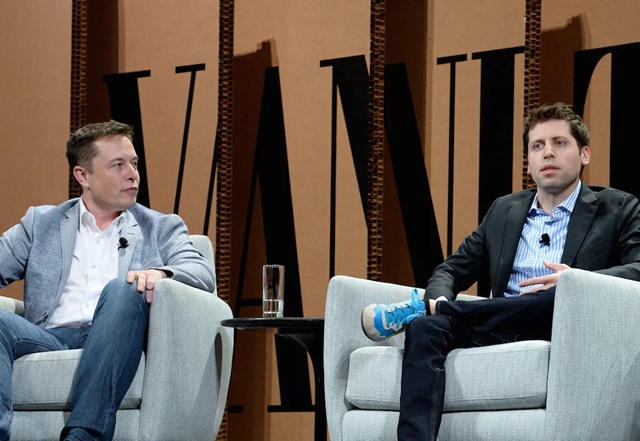
A legal battle between Elon Musk and the leaders of OpenAI has erupted into one of the most consequential corporate disputes in the history of artificial intelligence, with potentially seismic implications for the future of the industry. According to reporting by the Times UK, Musk is suing the company he helped found, accusing its executives of deceiving him into funding a non-profit venture that was later transformed into a for-profit behemoth worth hundreds of billions of dollars.
The case took a dramatic turn this month when a federal judge in California rejected OpenAI’s attempt to have Musk’s $134 billion lawsuit dismissed, clearing the way for a jury trial scheduled to begin on April 27 in Oakland. The lawsuit alleges that OpenAI’s chief executive, Sam Altman, and its president, Greg Brockman, orchestrated a “bait and switch” that excluded Musk while allowing them and their partners to reap enormous financial rewards. OpenAI, now valued at an estimated $500 billion, has denied the claims and said the lawsuit is an attempt to undermine a rival as Musk builds his own AI company, xAI.
At the heart of Musk’s case is a deeply personal narrative stretching back to the company’s earliest days. OpenAI was founded in 2015 as a non-profit, conceived as a counterweight to what Musk viewed as the dangerous concentration of AI power at Google. The idea, Musk argued at the time, was to pursue artificial general intelligence for the benefit of humanity, free from the pressure to generate profits or enrich insiders.
Yet internal documents and testimony now being aired in court suggest that tensions over money and control surfaced early. The Times UK reports that in late 2017, as OpenAI grappled with the immense costs of developing advanced AI systems, its leaders began exploring new corporate structures that could attract billions in funding. During this period, Brockman privately wrote of his desire to become a billionaire, a note Musk now points to as evidence that the company’s leadership had abandoned its non-profit ethos long before Musk walked away.
Negotiations over restructuring OpenAI collapsed in early 2018. Musk quit the organization, claiming he had been assured it would remain “essentially philanthropic,” even as his partners allegedly plotted to convert it into a for-profit entity such as a B Corporation. Brockman’s own contemporaneous notes, now part of the court record, reflect anxiety that Musk would later claim he had been misled if OpenAI moved toward a commercial model.
OpenAI’s account sharply contradicts Musk’s version of events. The company argues that there was no secret plan and that Musk was fully aware of, and involved in, discussions about restructuring. According to OpenAI, the real rupture came when Musk demanded full control of the reconstituted company, a condition Altman and Brockman rejected on the grounds that it would concentrate unprecedented power over world-changing technology in the hands of a single individual.
The dispute touches on existential questions about governance in the AI era. If Musk prevails, the court could force OpenAI to unwind its corporate structure, pay massive damages, or even compel Microsoft, its largest investor, to divest. Such outcomes would reverberate far beyond Silicon Valley, potentially reshaping the balance of power in the global race for AI dominance.
After Musk’s departure, OpenAI did exactly what he claims he was denied the chance to shape. It created a for-profit arm that raised successive rounds of funding, culminating in a multibillion-dollar investment from Microsoft. The release of ChatGPT in November 2022 turned the company into a household name almost overnight, cementing Altman’s status as one of the most influential figures in technology.
Musk responded by launching xAI in March 2023, positioning it as a rival built around his own vision of safe and transparent artificial intelligence. He filed his lawsuit the following year, framing it as a fight not just for personal redress but for the soul of AI development. “The discovery and testimony will blow your mind,” Musk wrote recently, promising revelations that could redefine how OpenAI’s rise is understood.
As the trial approaches, the feud between Musk and his former partners has become a proxy battle over money, mission and power in the age of artificial intelligence. What began as a philosophical disagreement among founders now threatens one of the world’s most valuable companies, with the outcome likely to shape not only OpenAI’s fate, but the governance of AI itself.