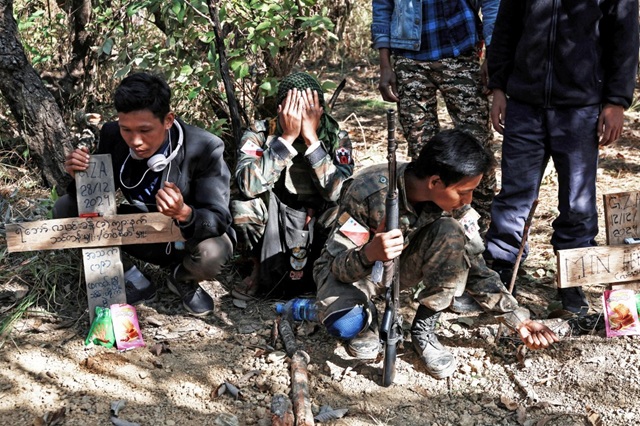
The violence and suffering in Myanmar’s ongoing civil war are harrowing, but amid the brutality, there are moments of deep humanity and forgiveness, particularly within the ranks of the Chin National Defence Force (CNDF). As The Times UK reports, one such example occurred after the torture and brutal murder of two young resistance fighters, Timothy and Isaac, members of the Chin ethnic group. The pair, aged 20 and 19, were captured in a skirmish with Myanmar’s military junta in the town of Falam in the far west. They were severely injured, taken to a school by their captors, and left to die in horrific conditions.
The junta forces tortured Timothy by gouging out his eye with a motorbike key, and Isaac was beheaded. The following day, CNDF fighters reclaimed the school, finding the mutilated bodies of their comrades. They also captured the soldiers responsible for the gruesome killings.
Biak Run Thang, a 34-year-old commander of the CNDF, recounted the moment with sorrow and fury. “I wanted to kill them,” he said, as he described the drive to a prisoner of war camp with the captured soldiers. It was a six-hour journey, and while vengeance was tempting, Biak Run Thang found himself holding back. As a devout Baptist, he remembered Psalm 91, which speaks of trampling the wicked. Ultimately, he refrained from further violence, showing remarkable restraint despite his anguish.
This event highlights the complexity of the Myanmar conflict, which has evolved over four years since the military coup that ousted Aung San Suu Kyi’s democratically elected government. Initially marked by peaceful protests, the resistance has since grown into a fierce civil war, with various ethnic militias and the People’s Defence Forces (PDF) joining forces to fight against the junta’s rule. In recent months, these groups have achieved several unexpected victories, including encircling the military garrison in Falam, where the CNDF hopes to soon seize control.
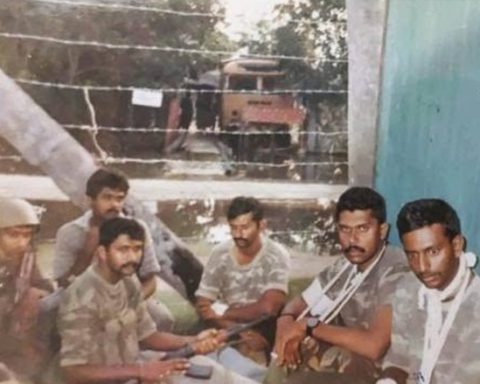
The CNDF, initially formed after the coup, represents a new wave of resistance, composed largely of civilians such as Biak Run Thang, who had no prior military experience. The group’s success in capturing towns like Falam is a testament to the resilience of the fighters, who now dream of marching on Myanmar’s largest city, Yangon, and the capital, Naypyidaw, with the ultimate goal of overthrowing the military dictatorship.
Despite their progress, the CNDF and other resistance forces face significant challenges, including the junta’s air superiority, bolstered by Russian and Chinese fighter jets and attack helicopters. Additionally, the fractured nature of the resistance and a lack of central coordination have hampered their efforts.
The conflict has taken an unimaginable toll on civilians, with over 6,000 killed and millions displaced within Myanmar and abroad. Both sides are accused of committing atrocities, and as the war intensifies, so does the violence. The junta’s indiscriminate bombing of villages and the intimate sadism inflicted on captured fighters, such as Timothy and Isaac, has led to retaliatory acts of cruelty by the resistance, further escalating the cycle of violence.
John Quinley of Fortify Rights, a human rights organization, emphasized that while the Myanmar military is the primary perpetrator of atrocities, resistance groups must also ensure accountability for abuses committed on their side. Disturbing videos, often shared on dark corners of the internet, show resistance fighters torturing and executing junta prisoners and informers, highlighting the moral dilemmas faced by those caught in the conflict.
Despite the brutal realities, some resistance fighters like Biak Run Thang strive to hold onto their moral compass. His decision to spare the lives of the soldiers who killed his comrades demonstrates an underlying principle of forgiveness, even in the face of profound grief and anger.