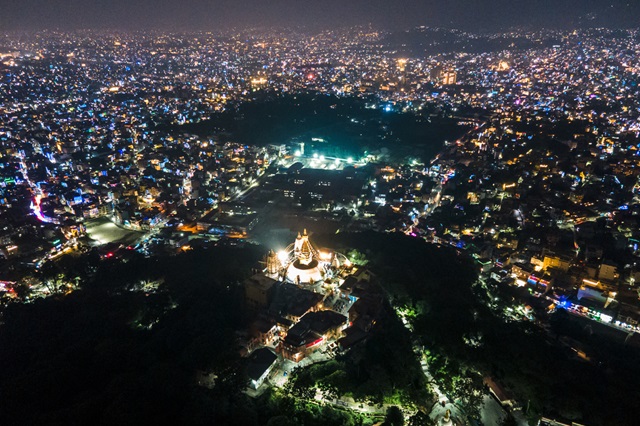
Thousands of Nepalese have taken to the streets, demanding the restoration of the monarchy nearly 17 years after its dissolution. Former King Gyanendra Shah, who was forced to abdicate in 2008 following mass protests, returned to Kathmandu over the weekend to a rapturous reception from supporters calling for his reinstatement.
Chanting slogans such as “Vacate the royal palace for the king!” and “Long live our beloved king!”, around 10,000 people lined the streets as the former monarch made his way back into the capital. The overwhelming turnout showcased a significant shift in public sentiment, driven by growing disenchantment with Nepal’s political establishment.
Among the voices calling for change was Thir Bahadur Bhandari, 72, who stated, “We are here to give the king our full support and to rally behind him all the way to reinstating him in the royal throne.” Even some who had participated in the 2006 anti-monarchy protests expressed regret. “I was in the protests that took away monarchy hoping it would help the country, but I was mistaken,” said 50-year-old carpenter Kulraj Shrestha. “The nation has further plunged.”
The streets were so packed with supporters that travelers arriving at Kathmandu’s airport had to navigate the crowds on foot. This resurgence of royalist sentiment marks a stark contrast to 2008 when the monarchy was abolished through a parliamentary vote. Analysts suggest that this renewed affection for the king is less about nostalgia for the past and more about widespread frustration with Nepal’s current political class, which is accused of rampant corruption and inefficiency.
Gyanendra Shah, who has yet to formally address the calls for his reinstatement, ascended the throne in 2002 under tragic circumstances. His brother, King Birendra, and most of the royal family were massacred in the palace under mysterious circumstances in 2001, allegedly by Crown Prince Dipendra, who later took his own life. However, Gyanendra’s rule became increasingly authoritarian, with measures such as disbanding the government, jailing political opponents, and declaring a state of emergency. These actions fueled public resentment, culminating in the protests that led to his removal.
Despite the enthusiasm witnessed over the weekend, it remains uncertain whether a monarchical comeback is truly feasible. In the 2022 general elections, the pro-monarchy Rastriya Prajatantra Party won only 14 seats in parliament, reflecting limited political traction for the royalist movement.
Former Indian ambassador to Nepal, Ranjit Rae, expressed skepticism over the possibility of a true royal restoration. “Gyanendra was not beloved when he was in power, unlike his elder brother. These rallies are more about dissatisfaction with the status quo than a serious attempt to undo Nepal’s political evolution,” Rae noted.
Nepal continues to grapple with economic hardship, mass emigration, and growing frustration with its political leadership. About a third of Nepal’s 30 million people live and work abroad, and poverty remains a significant issue. Whether the recent protests will translate into a political shift remains to be seen, but for now, the call for the return of the king has reignited a national debate on the country’s future governance.