The Communist Party of Nepal–Unified Marxist Leninist (CPN-UML) has strongly condemned the recent agreement between India and China to reopen trade through Nepal’s Lipulekh Pass, calling it an infringement on Nepal’s sovereignty and territorial integrity. The party endorsed a 28-point policy proposal passed at its convention, urging both countries to withdraw from the arrangement and calling on the Nepalese government to assert Nepal’s rights through high-level diplomatic efforts.
The Lipulekh Pass, situated about 56 kilometres inside Nepal’s western frontier near Limpiyadhura, has long been a source of diplomatic tension between Nepal and its neighbors. The agreement, finalized during Chinese Foreign Minister Wang Yi’s visit to India in August, seeks to resume border trade through three points—Lipulekh, Shipki La, and Nathu La. The announcement was jointly made by Indian External Affairs Minister S. Jaishankar and Wang Yi.
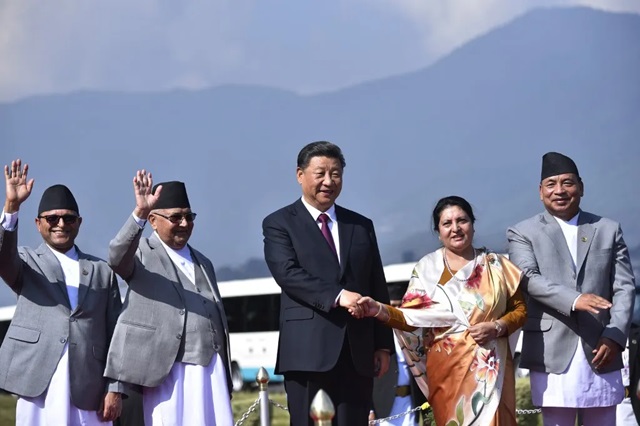
However, the CPN-UML expressed “serious disagreement” with the arrangement, claiming it disregards Nepal’s territorial rights. The policy document highlighted Prime Minister and UML Chair KP Sharma Oli’s objections during his recent China visit, stating that his stance “elevated Nepal’s international standing.” The party urged the government to take decisive diplomatic action and protect Nepal’s rights over the region east of the Kali River.
Nepal’s Official Objection
The Ministry of Foreign Affairs of Nepal also rejected the agreement, asserting that the Lipulekh Pass falls within Nepal’s territory as demarcated by historical treaties and survey records. The ministry described the trade arrangement as a unilateral move by India and China that disregards Nepal’s legitimate claims.
India’s Ministry of External Affairs, meanwhile, refuted Nepal’s assertions, stating that trade through Lipulekh has existed for decades but had been temporarily suspended due to COVID-19 and other disruptions. Spokesperson Randhir Jaiswal dismissed Nepal’s claims as “neither justified nor based on historical facts and evidence,” calling them “untenable.”
A Dispute Rooted in History
Nepal’s territorial claim over Lipulekh stems from the Treaty of Sugauli (1816), which it interprets as defining its boundary along the Kali (Mahakali) River. In 2020, Nepal amended its constitution to include a new political map incorporating Limpiyadhura, Kalapani, and Lipulekh. The updated map, released in May 2020, added 335 square kilometres of territory and was supported by historical documents such as land revenue records and agreements signed by past rulers.
The map’s release led to sharp protests from India, which responded by including the disputed areas in its own maps. Diplomatic tensions escalated further when India inaugurated a road linking Kailash Mansarovar to Lipulekh without prior consultation with Kathmandu.
Regional Implications
The renewed India-China agreement to reopen trade routes comes amid attempts by both countries to repair ties following the 2020 Galwan Valley clashes. Yet, Nepal’s objections underscore the complexities of regional diplomacy, where historical grievances and strategic interests intersect.