


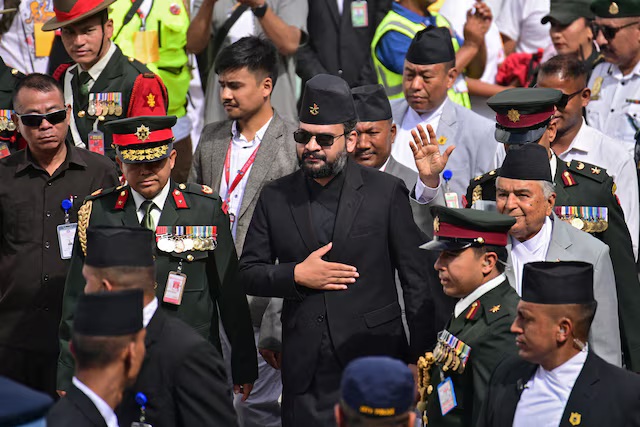
Two popular figures in Nepalese politics have joined forces ahead of the March 5 parliamentary elections, setting up a potential challenge to parties that have dominated the Himalayan nation for more than three decades, party officials and analysts told Reuters on Monday.
Balendra Shah, widely known as Balen, a rapper-turned-Kathmandu mayor, has joined the Rastriya Swatantra Party (RSP) led by former TV host-turned-politician Rabi Lamichhane. Under the alliance, Balen, 35, is slated to become prime minister if the RSP wins, while Lamichhane, 48, will continue as party chief. Both have pledged to address demands raised during youth-led protests in September against corruption that left 77 people dead and forced the resignation of Prime Minister K.P. Sharma Oli.
Analysts said the move is strategically aimed at attracting younger voters, who played a major role in the recent protests. “Traditional political parties are in pain for fear of losing their young voters to RSP,” said Bipin Adhikari. Nearly 19 million of Nepal’s 30 million citizens are eligible to vote, with about one million new voters, mostly youths, added after the protests.
Balen gained prominence during the protests, though some critics noted he rarely appeared publicly and communicated mainly through social media. He also helped form the interim government under former Chief Justice Sushila Karki that will oversee the elections. Meanwhile, Lamichhane, known for his anti-corruption stance as a TV host, is out on bail over allegations of misusing funds from small cooperatives.
Traditional powers, including the Communist Party of Nepal (Unified Marxist-Leninist) and the centrist Nepali Congress, have dominated Nepalese politics for decades. Prakash Sharan Mahat, spokesperson for Nepali Congress, told Reuters that the new alliance, while high-profile, is unlikely to dramatically alter the political landscape, describing both leaders as “controversial” and suggesting voters may still favor established parties.










