


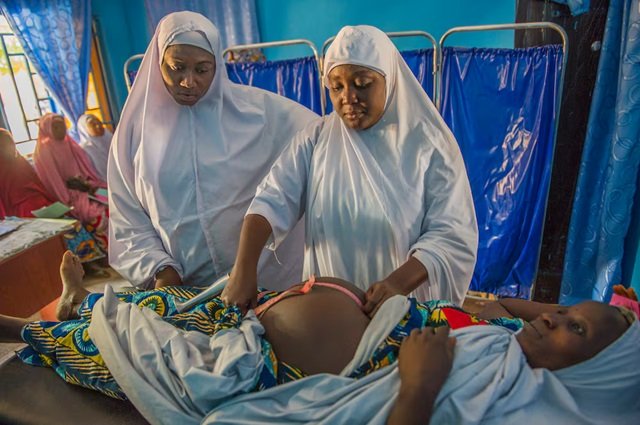
For Ogunma Micheal, the memory of childbirth is not defined by the arrival of her child but by what followed in the days after delivery. Almost two years have passed since she gave birth in Calabar, in southeastern Nigeria, yet she still struggles to make sense of what happened in the maternity facility where she was treated. The experience, she says, left her with lasting trauma, physical complications, and questions she cannot resolve.
Speaking in an interview, Micheal recalls how she delivered her baby in a primary care centre staffed only by midwives. After the birth, she was told she had suffered tears, though the severity was not initially explained. It was only later that she learned the injuries had been deep, attributed to the size of the baby. A week after delivery, when her body had already begun to heal, she was taken for suturing.
What followed, she says, was a procedure carried out without her clear understanding or consent. The pain, she recalls, was extreme. “The pain was unbearable, the anesthesia didn’t work,” she said. At one point, she asked for the procedure to stop, but it continued. Only later did she understand that additional stitches had been placed beyond what she believed was medically necessary.
Micheal describes being told that the procedure was intended to enhance sexual satisfaction for her husband. “They didn’t care about my pain, only my husband’s pleasure,” she said, explaining that she had never heard of what is commonly referred to as the “husband stitch.” In medical contexts in Spanish-speaking countries, it is sometimes described as a “punto para el marido,” while in English it is widely known as the “husband stitch,” a term used to describe the practice of adding extra sutures after childbirth, often following an episiotomy, to narrow the vaginal opening.
According to descriptions cited in reporting by El País, the procedure is not considered a standard medical practice and is not performed for therapeutic reasons. It is instead associated with the belief that a tighter vaginal opening may increase sexual pleasure for male partners. Medical professionals cited in the report emphasize that it is not routinely practiced and lacks clinical justification.
For Micheal, the consequences extended well beyond the moment of suturing. In the weeks that followed, she experienced incontinence, difficulty breastfeeding, and a general inability to carry out daily tasks. The recovery process, she said, was significantly more difficult than expected after childbirth. Even now, the emotional impact remains. She has no plans for another pregnancy in the near future, stating that she would prefer adoption, as the experience left her deeply distressed.
Another woman, identified as Ayo Oyewo, described a similarly distressing experience that occurred six years ago when she gave birth at the age of 20. Her labor began unexpectedly after she noticed unusual fluid discharge shortly before a scheduled medical visit. Upon arrival at the hospital, she was informed she was in labor and was given medication to accelerate the process.
Her delivery progressed with severe complications, including a deep tear and heavy bleeding. That night, she said, there was no doctor available, and an ophthalmologist was eventually called to perform the suturing. The procedure took hours. Afterward, she recalls the practitioner making a remark that shocked her. “He said he had made me a virgin again and that my husband would be happy,” she said, recounting the experience.
Oyewo also described hearing nurses express approval of the comment and mentioning another woman who had reportedly requested the same procedure. Weeks later, she began experiencing persistent pain. A follow-up consultation with a gynecologist revealed what she describes as a troubling reaction from the doctor, who asked who had performed the suturing and began correcting it. Only after the adjustments did she experience relief.
A third testimony, from a woman identified as Ogechukwu, describes extensive postpartum suturing following childbirth that she says included areas beyond what she understood to be medically necessary. She reported stitches affecting multiple parts of the genital region and said the additional suturing worsened her healing process. In the weeks after delivery, she experienced significant pain, mobility difficulties, and emotional distress, later developing symptoms consistent with postpartum depression. She also described prolonged challenges in resuming sexual activity, stating that recovery took months and required medical intervention and significant use of lubricants.
These accounts, reported by El País as part of a broader examination of testimonies gathered in Nigeria, have contributed to renewed public discussion about postpartum care practices. Following the circulation of a study by the African fact-checking organization Dubawa, social media users in Nigeria have called for stricter legal and professional oversight of medical practitioners accused of performing the procedure without consent.
Within the medical community, the practice is sharply contested. Gynaecologist and obstetrician Odunola Abiola, based at a federal medical centre in Nigeria, distinguishes between medically necessary suturing after childbirth and any additional stitching that alters vaginal anatomy without clinical justification. She emphasizes that while tears sustained during childbirth must be repaired and episiotomies sutured, no extra stitches should be added to intentionally narrow the vaginal opening.
Abiola describes the ethical concerns surrounding the practice, noting that some academic discussions compare it to female genital mutilation due to its non-therapeutic alteration of genital anatomy. She also highlights potential medical risks, including pain during sexual intercourse, infections, and complications in wound healing, all of which can affect both physical and emotional recovery after childbirth.
According to her explanation, sensations of tightness during healing are sometimes a natural part of recovery from legitimate suturing, but this should not be confused with deliberate alteration of anatomy. She stresses that there is no medical basis for claims that such procedures enhance sexual satisfaction or restore pre-pregnancy anatomy. Instead, she states that postpartum repair should focus solely on healing injuries and supporting recovery.
As testimonies continue to circulate and public debate grows in Nigeria, the accounts documented by El País underscore the gap between clinical guidelines and patient experiences described in maternity care settings. For the women speaking out, the issue remains tied not only to physical recovery but also to questions of consent, communication, and the boundaries of medical intervention during one of the most vulnerable moments of their lives.









