


North Korea has dismissed attempts by South Korea’s new government to reduce tensions along the heavily fortified border as a “pipe dream,” insisting it has not removed propaganda loudspeakers from the Demilitarized Zone (DMZ).
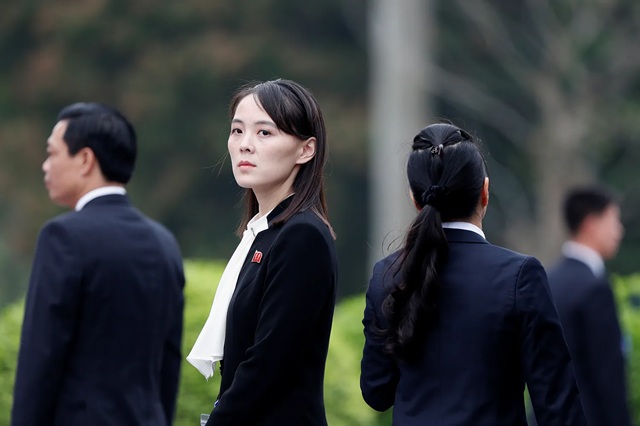
Kim Yo-jong, the influential sister of North Korean leader Kim Jong-un, criticized Seoul for misleading the public about both sides scaling back propaganda broadcasts, according to state-run Korean Central News Agency. “Whether or not the ROK withdraws its loudspeakers, stops broadcasting, postpones its military exercises and downscales them, we do not care about them and are not interested in them,” she said.
Under President Lee Jae-myung, South Korea suspended its own border broadcasts in June and began dismantling its loudspeakers as part of efforts to ease tensions with the North. North Korea, however, has publicly denied reciprocating any of these gestures.
The propaganda dispute dates back to last year, when South Korea reactivated loudspeakers along the border for the first time in six years, broadcasting K-pop music and international news, while North Korea responded with unusual sounds that unsettled local residents.
Kim also rejected the idea that North Korea’s stance could be influenced through international diplomacy, including an upcoming summit between Presidents Vladimir Putin and Donald Trump. She called any attempts to reduce tensions, including postponing South Korea-US military drills, “a pipe dream that does not draw our attention at all.”
South Korea and the US are scheduled to conduct joint military exercises starting Monday, involving around 18,000 South Korean troops alongside American forces. Seoul has postponed roughly half of the planned 40 field training exercises to September, citing hot weather rather than attempts at conciliation.
A South Korean official said the government would continue to pursue “normalisation and stabilisation measures” with the North. “Over the past three years, inter-Korean relations have been locked in a hardline standoff. To turn this into a period of dialogue and engagement, we must approach the situation with composure and a long-term perspective,” the official added.









