


North Korea has signalled its ambition to expand its naval capabilities and play a larger role in military cooperation with China and Russia through a major weapons test involving its newly commissioned destroyer, analysts say.
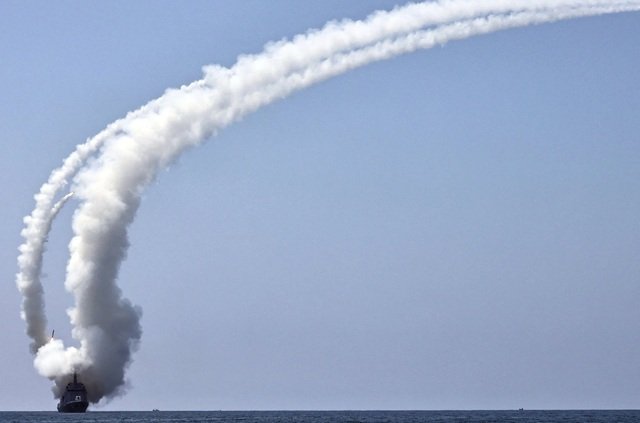
North Korean leader Kim Jong-un observed the launch of 10 cruise missiles from the Kang Kon destroyer on Friday, in a display of naval power that analysts described as a message aimed at regional powers ahead of the China-Russia Joint Sea 2026 maritime exercise off Qingdao.
Lee Il-woo, a defence analyst at the Korea Defence Network think tank, said the timing of the test suggested that Pyongyang wanted to demonstrate its growing naval capabilities and signal its readiness to participate in future joint naval exercises with Moscow and Beijing.
“North Korea is demonstrating its growing naval capabilities, signalling that it is prepared to participate in joint naval drills with China and Russia,” Lee said, adding that the test effectively conveyed a message to Russia and China: “Let me join next time.”
North Korea’s navy has traditionally been considered a limited coastal force with little relevance to major-power military competition. However, analysts say the commissioning of two new 5,000-tonne destroyers, the Choe Hyon and Kang Kon, along with reports of a nuclear-powered submarine under construction, indicate a major shift in Pyongyang’s maritime strategy.
During Friday’s test, Kim watched the Kang Kon conduct launches of cruise missiles, naval artillery, automatic weapons and electronic warfare systems. North Korea’s state broadcaster KCNA reported that the test verified the vessel’s ability to operate various onboard weapons systems in combat conditions.
Kim later ordered the ship to enter full naval service within two months.
Hong Min, a senior research fellow at the Korea Institute for National Unification, said the timeline appeared designed to allow the destroyer to become operational before September 9, when North Korea marks the anniversary of its founding.
He added that a third Choe Hyon-class destroyer under construction at Nampo could be completed around October 10, the anniversary of the founding of North Korea’s ruling Workers’ Party. The vessel is expected to feature additional vertical launch systems capable of carrying supersonic cruise missiles.
Satellite imagery from March showed continued activity around the shipyard, including cranes and equipment involved in the final stages of construction, according to missile expert Chang Young-keun of the Korea Research Institute for National Strategy.
Chang said North Korea now has a shipbuilding and port infrastructure capable of continuously producing large surface combat vessels.
The Kang Kon had previously attracted attention after a failed launch attempt in May last year, when the destroyer partially capsized before being successfully launched a month later.
Analysts say Russia and China have provided parts, materials and technology that have supported North Korea’s naval modernisation efforts. They argue that Pyongyang’s growing military importance has increased as tensions rise over Taiwan, the South China Sea and US-led security partnerships in the Indo-Pacific.
Doo Jin-ho, director of the Eurasia Research Centre at the Korea Research Institute for National Strategy, said North Korea was following the pattern of other nuclear states by attempting to develop a nuclear triad involving land, air and sea-based capabilities.
“North Korea’s navy, which was once barely capable of operating beyond coastal waters, is rapidly developing into a force capable of participating in joint maritime operations with Russia and China off China’s eastern coast,” Doo said.
South Korea’s military confirmed on Sunday that it had detected North Korean missile launches into the Sea of Japan, identifying them as likely Hwasal-series cruise missiles. Analysts said Pyongyang’s use of the term “strategic” for the missiles suggested they were intended to carry nuclear warheads.
Kim described the missile test as evidence of North Korea’s determination to achieve “overwhelming military strength” and called for continued efforts to expand the country’s military deterrence and war-fighting capabilities, according to KCNA.
Doo said North Korea’s growing military relationship with Russia had provided technology, fuel and other resources that supported Pyongyang’s naval expansion. He added that the country was becoming increasingly integrated into a broader Russian-Chinese strategy aimed at countering US-led security arrangements in the Indo-Pacific.
The development has also raised concerns in South Korea, where analysts say North Korea’s pursuit of sea-based nuclear capabilities could force Seoul to reconsider its missile defence strategy, which has traditionally focused on land-based threats.
South Korea secured approval from the Trump administration last year to pursue nuclear-powered submarines of its own.
Shin Jong-woo, secretary general of the Korea Defence and Security Forum, said North Korea appeared to be seeking nuclear strike capabilities on both sides of the Korean Peninsula, with the Choe Hyon operating along the western coast and the Kang Kon expected to strengthen its eastern naval presence.
Analysts say the commissioning of the new destroyers marks a significant step in Pyongyang’s effort to transform its navy from a coastal defence force into a platform capable of projecting power beyond its immediate waters.









