


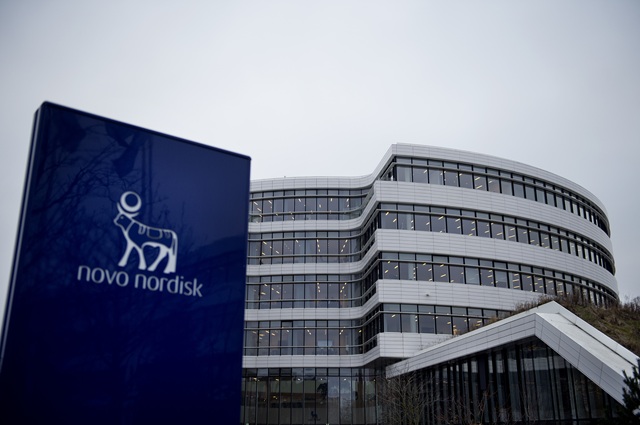
Shares of Novo Nordisk dropped more than 16 percent on Monday, wiping out the remaining gains from its flagship weight-loss drug Wegovy, after the company reported that its next-generation obesity treatment, CagriSema, underperformed rival offerings from Eli Lilly. The decline brought Novo’s market value down by billions, returning the stock to levels last seen before Wegovy’s launch in June 2021, which had previously propelled the Danish drugmaker to become Europe’s most valuable pharmaceutical company.
Novo, which was worth over $650 billion in 2024, has now lost roughly $475 billion in market capitalization, reflecting investor concern over intensifying competition in the rapidly expanding obesity treatment sector. Shares of Novo’s Danish peer Zealand also fell around 7 percent, although analysts noted that its own weight-loss drug pipeline remained largely unaffected. Meanwhile, Eli Lilly’s shares rose about 4 percent in early U.S. trading, underscoring the shifting competitive landscape.
Analysts at J.P. Morgan described the trial results for CagriSema as a significant setback, warning that underperformance could dampen demand, temper long-term sales projections, and leave Novo struggling to regain market share in an industry increasingly driven by drugs with the strongest weight-loss outcomes. The disappointment has reignited investor caution over the sustainability of Novo’s dominance in the obesity treatment market, signaling that the next phase of the pharmaceutical race may favor competitors delivering more effective results.
The share collapse highlights the high stakes of the obesity drug market, where investor sentiment is closely tied to clinical performance and competitive positioning, and marks a sharp reversal from the surge that Wegovy generated just two years ago, which had even contributed to Denmark’s broader economic growth.









