


As governments and industry accelerate plans to deploy nuclear-powered merchant vessels to help decarbonise global shipping, a commentary published by Nature argues that the technology’s success will depend not only on advances in reactor design but also on the creation of robust international regulations capable of managing unprecedented safety, security and emergency-response risks.
The global shipping industry is under increasing pressure to eliminate greenhouse-gas emissions by 2050, yet the search for practical low-carbon fuels continues to expose significant technological and logistical challenges. A commentary published by Nature argues that nuclear propulsion is emerging as one of the few options capable of powering large commercial vessels over long distances without direct carbon dioxide emissions. However, the authors caution that deploying nuclear-powered merchant ships will require a comprehensive international regulatory framework to address complex safety, security and operational risks that extend far beyond reactor technology itself.
Conventional alternatives each present major limitations. Batteries are suitable for ferries and harbour vessels but remain impractical for long-distance ocean voyages. Methanol is difficult to produce sustainably, ammonia is toxic and relies on a polluting supply chain, while hydrogen is bulky and poses considerable storage challenges at sea. Nuclear reactors, by contrast, eliminate the need to carry vast quantities of fuel, freeing additional cargo space while allowing ships to travel longer distances without refuelling. According to the commentary, ship owners could potentially save tens of millions of dollars annually through reduced marine fuel costs and lower carbon taxes.
Growing confidence in the technology is reflected in a series of ambitious initiatives. In May, the United States Maritime Administration sought public input on commercially viable small modular reactors for marine applications. London-based Core Power plans to open an order book in 2028 for mass-produced floating nuclear power plants, aiming for commercial deployment during the mid-2030s before expanding into nuclear-powered civilian ships. In China, the state-owned Jiangnan Shipyard in Shanghai intends to build the world’s first thorium-powered container vessel by 2035.
The scale of potential adoption is considerable. A 2023 United States report cited in the Nature commentary estimates that several hundred nuclear-powered merchant vessels could be operating worldwide by 2050, representing approximately two to five per cent of the global commercial fleet. Container ships, bulk carriers and oil tankers are expected to account for most of these vessels.
Yet the authors stress that every reactor-powered merchant ship would also be a mobile nuclear installation, introducing a fundamentally different category of risk into international shipping. Unlike conventional cargo vessels, nuclear-powered ships could become targets for hijacking, grounding, missile attacks or acts of terrorism, making safety considerations inseparable from geopolitical realities.
To address these challenges, two major international initiatives are already underway. The International Atomic Energy Agency plans to launch its Atomic Technologies Licensed for Applications at Sea (ATLAS) initiative at a ministerial meeting in Washington, DC, bringing together nuclear and maritime regulators. Meanwhile, the International Maritime Organization began revising its 1981 Code of Safety for Nuclear Merchant Ships in June 2025, with a revised code expected in 2030. According to the commentary, these parallel efforts must ultimately converge into a unified international framework that integrates reactor licensing, ship certification, port authorisation and emergency response.
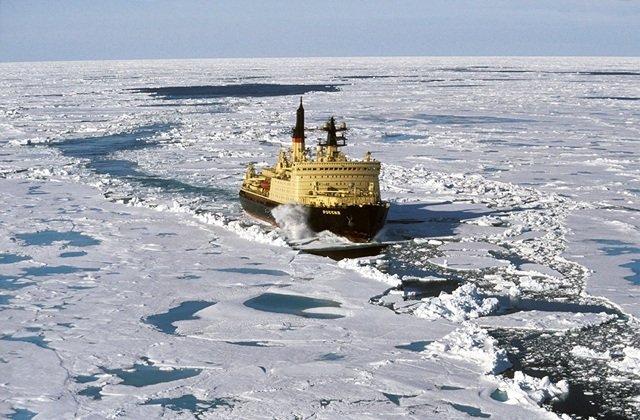
The article notes that nuclear propulsion at sea is far from an experimental concept. Military vessels, including submarines, aircraft carriers and icebreakers, have relied on compact nuclear reactors for more than seventy years. By December 2024, the United States Navy alone operated seventy-seven nuclear-powered warships, including sixty-six submarines and eleven aircraft carriers, collectively travelling some 300 million kilometres since 1955. China, France, India, Russia and the United Kingdom also maintain nuclear-powered submarines, while Russia operates civilian nuclear icebreakers.
However, translating this military experience into commercial shipping presents a very different challenge. Naval nuclear programmes operate within unified national systems responsible for reactor design, maintenance, crew training and safety oversight. Commercial shipping functions across multiple jurisdictions, with ships frequently designed in one country, built in another, registered under a third flag, insured elsewhere, operating through numerous foreign ports and ultimately dismantled under entirely different regulatory regimes.
Previous attempts to introduce civilian nuclear merchant ships illustrate these difficulties. The United States’ NS Savannah, launched in 1959 under President Dwight Eisenhower’s Atoms for Peace programme, demonstrated technical capability but proved commercially impractical because of the complex approvals required for international port visits. West Germany’s Otto Hahn successfully transported ore for nine years before its reactor was removed and conventional propulsion installed. Japan’s Mutsu suffered lasting public opposition after a shielding flaw caused neutron leakage during reactor testing in 1974. Russia’s Sevmorput remains the only nuclear-powered merchant vessel still operating into the 2020s.
Modern reactor technologies promise improvements over these earlier designs. Current concepts include light-water reactors, high-temperature gas-cooled reactors, lead-cooled fast reactors, molten-salt reactors and heat-pipe reactors, many drawing upon experience gained through icebreaker operations and small modular reactor programmes. Advanced systems may operate at lower pressures, incorporate sealed reactor cores, enhance passive heat removal and employ stronger containment structures.
Nevertheless, the commentary argues that technological advances shift rather than eliminate many regulatory questions. Every nuclear-powered merchant vessel would require licensing, insurance, specialised crews, maintenance arrangements, port acceptance procedures, emergency preparedness and long-term decommissioning plans. Even the final disposition of NS Savannah remains an unresolved regulatory issue, illustrating the enduring complexity of managing civilian nuclear ships.
Safety concerns extend beyond routine operations. Historical accidents involving Soviet nuclear submarines demonstrate how failures in cooling systems, reactor operation and refuelling procedures resulted in radiation exposure, fatalities and environmental contamination. While modern reactor designs aim to reduce these risks, regulators must still evaluate challenges such as corrosion, radioactive materials management, shielding effectiveness and long-term heat removal following reactor shutdown.
The commentary also argues that obtaining a reactor licence alone would not guarantee operational acceptance. Port authorities, harbour masters, insurers and emergency services must all possess sufficient confidence in the reactor’s safety before permitting entry. The experiences of NS Savannah and Mutsu demonstrate how public confidence, once lost, can be extremely difficult to restore regardless of technical assurances.
Particular attention is given to the changing geopolitical environment. Ongoing attacks on commercial shipping in the Red Sea and the Strait of Hormuz illustrate how conflict can fundamentally alter assumptions about maritime safety. According to the authors, a nuclear-powered merchant vessel navigating such waters could face missile strikes, drone attacks, cyber disruption or attempted boarding similar to those confronting conventional ships, but with potentially far more serious consequences.
Although civilian marine reactors cannot explode like nuclear weapons, damage to reactor systems could still produce hydrogen fires, steam explosions, radioactive releases or contaminated firefighting water. Missile strikes affecting cooling systems, emergency generators or control infrastructure could compromise safe shutdown procedures, while prolonged fires, flooding or abandonment could complicate reactor management for days or weeks.
Consequently, the authors argue that future reactor designs must be capable of shutting down automatically following severe impacts, flooding, blackouts or communication failures. Systems responsible for removing decay heat should continue functioning for extended periods without relying upon crew intervention, shore-based electricity or direct access to reactor compartments. Emergency power systems, cooling arrangements and monitoring equipment should remain physically separated, independently protected and capable of operating despite ship movement, flooding or damaged infrastructure.
Rather than relying upon fragmented oversight, the commentary calls for a standardised international evidence framework jointly administered by the International Maritime Organization and the International Atomic Energy Agency. Such documentation should specify reactor design, approved operating routes, fuel responsibilities, liability arrangements, emergency command structures, radiological monitoring procedures and the threat scenarios considered during certification. Routes carrying heightened security risks should undergo additional assessment before nuclear-powered vessels are permitted to operate.
Nuclear propulsion should not be regarded simply as another low-carbon shipping technology. While it offers considerable environmental and economic advantages, successful deployment will depend upon demonstrating that reactors remain safe not only during normal operations but also under the most demanding circumstances, including fires, flooding, cyberattacks, armed conflict and abandonment. In an era when commercial shipping increasingly operates amid geopolitical instability, the authors argue that comprehensive international regulation will be just as important as technological innovation in determining whether nuclear-powered merchant vessels become a viable part of the future global fleet.










