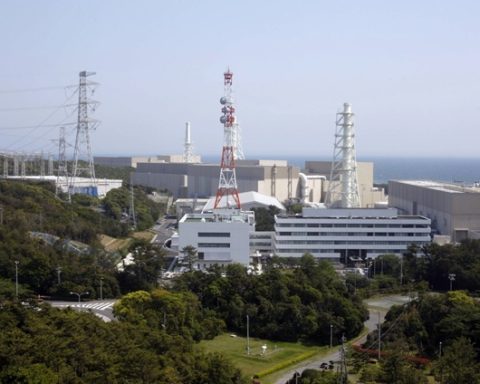
As the world races toward net-zero emissions, nuclear power is back in the spotlight. Over 30 countries — including the United States, China, and France — have pledged to triple global nuclear capacity by 2050. Major tech companies like Amazon, Google, and Microsoft are also investing in nuclear energy to power their massive data centers sustainably. But one pressing question remains: can nuclear power scale affordably?
A report published in Nature explores this dilemma and highlights China’s nuclear energy program as a model for cost containment and large-scale development. While Western nations have struggled with soaring construction costs, China has managed to keep nuclear expansion both steady and economically viable.
The “Cost Escalation Curse”
Historically, nuclear construction costs have followed a troubling trend: the more countries build, the more expensive each reactor becomes. This “cost escalation curse” has plagued the industry in the United States and France, especially after major nuclear accidents like Three Mile Island (1979), Chernobyl (1986), and Fukushima (2011), which triggered public fears, regulatory tightening, and extended build times.
Unlike solar and wind — where mass production and tech innovation have driven prices down — nuclear energy has struggled to achieve economies of scale. But China offers a rare exception.
China’s Cost-Defying Strategy
Since the early 2000s, China has built more than 30 nuclear reactors and now operates 58. By 2030, it’s projected to surpass the United States as the world’s largest nuclear power producer. Nature’s report reveals that while construction costs in the West have ballooned, China has cut and stabilized its costs — a feat achieved through a blend of regulatory consistency, domestic supply chain development, and focused industrial policy.
China’s success came in three phases:
Technology Transfer and Localization: Initially, China imported foreign reactor technology while ramping up domestic capacity in simpler components and construction.
Safety and Supply Chain Maturity: From 2005 to 2010, China began producing more advanced components locally, including safety-critical parts like reactor cores, and developed its own reactor designs based on French models.
Post-Fukushima Innovation: After the 2011 disaster, China accelerated the adoption of advanced safety features while continuing to reduce reliance on foreign parts.
This domestic-first approach paid off. Some Chinese-made components, such as charging pumps and ring cranes, cost half as much as imported equivalents. Streamlined construction processes and centralized project oversight help China complete new reactors in five to six years — about half the time required in the U.S. or France.
Lessons for the World
The Nature report emphasizes that China’s progress is not just a result of cheap labor or fast bureaucracy. It’s a product of strategic planning — including stable regulations, state-backed loans, consistent pricing frameworks, and well-managed construction.
For countries seeking to expand their nuclear capacity, the message is clear: declarations aren’t enough. Governments must implement policies that support standardization, long-term price certainty (such as through power purchase agreements), and targeted workforce training.
South Korea’s nuclear program offers another example of successful cost control through localization and standardization. By contrast, France’s decision in the 1980s to abandon a common U.S. reactor design in favor of a national variant led to increased complexity and costs.
The Road Ahead: Safety, Trust, and Global Collaboration
Despite its promise, nuclear power cannot ignore the elephant in the room — safety. The Fukushima disaster remains a powerful reminder of what’s at stake. Public trust, regulatory transparency, and international safety protocols must accompany any nuclear revival.
The Nature report calls for greater global coordination. Countries exporting nuclear technology should support importing nations with workforce development and local manufacturing capabilities. Agencies like the International Atomic Energy Agency (IAEA) can play a critical role in harmonizing licensing standards and sharing best practices.
At a time when artificial intelligence, climate change, and data infrastructure are pushing global energy demand to unprecedented levels, nuclear power is emerging as a key player. But unless it becomes safer, cheaper, and faster to deploy — as China’s example suggests is possible — it risks remaining an energy source that many nations admire but few can afford.