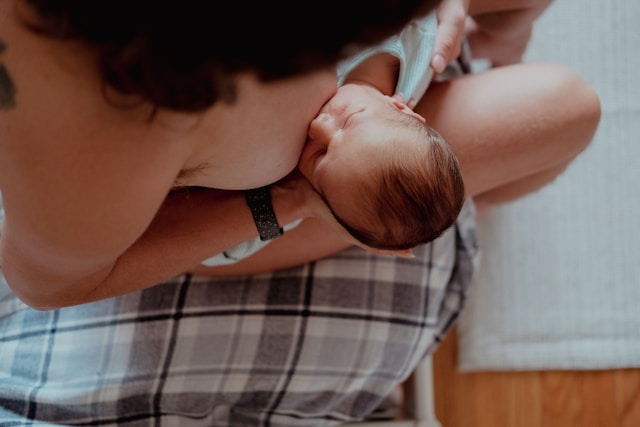
Each year, the first week of August is observed across the globe as World Breastfeeding Week, a gentle reminder of a truth known to humankind long before the formulation of public policy or the codification of science: that the first act of love between a mother and her infant is the simple, quiet offering of milk. Initiated by the World Health Organization, UNICEF, and the World Alliance for Breastfeeding Action, this campaign seeks to redress the consequences of a modern world that, in abandoning breastfeeding, has seen a troubling rise in infant mortality. The science is unequivocal—exclusive breastfeeding for six months, and continued breastfeeding until the age of two years, strengthens immunity, reduces disease, and safeguards life itself. Yet beyond the statistics and the global objectives, this week reaffirms something more intimate: that a child’s earliest assurance of love and belonging comes from this primal gesture.
The history of this act stretches back into antiquity. Greek mythology speaks of Hera, whose milk spilled into the heavens to form the Milky Way and gave strength to Hercules. For centuries, society alternately embraced and neglected the practice: the hiring of wet nurses in the 1600s, the reliance on animal milk in the 15th century, the attempt to replace breast milk with flour pastes and broth in the 18th, and finally the 19th-century invention of infant formula. By the 20th century, in many parts of the world, breastfeeding had come to be regarded as old-fashioned. The result was a generation of children deprived of that first closeness. It was only in the late 20th century, when science itself rediscovered the irreplaceable value of breast milk, that a concerted global effort was mounted to revive and protect the practice. Since 1992, World Breastfeeding Week has united governments, health workers, communities and families under a single vision: to protect this gift of nature.
In reflecting upon this week, my thoughts are drawn to a Sinhala song whose words capture in poetry what all of this science strives to express:
“Mother, O Mother,
Blessed Mother, radiant like the Enlightened One.
When you see the tears of your children, You reach out from heaven and wipe away their pain,
and with your gentle breath, scatter the dark clouds.”
These lines are more than sentiment; they speak of the profound comfort a mother’s presence brings. The song continues:
“The child who has no mother,
who knows their sorrow?
Only a mother who understands such grief
can one day ascend to the serenity of a Buddha;
it is in that suffering that a mother’s heart ripens
and a Buddha is born again.”
In these words lies an unspoken truth: that the act of feeding a child at the breast is not merely nourishment but communion. It forges the resilience of trust. Even the scientific benefits—the reduction of sudden infant death syndrome, the calming release of oxytocin and prolactin, the protection against disease—are but extensions of this original intimacy.
There is, however, a wider duty. This week reminds the world that breastfeeding cannot be left solely to the private will of a mother; it is a societal obligation to create spaces that enable her to do so with dignity. Policies must recognize that enabling breastfeeding is as critical as promoting it, for no law or campaign will succeed if mothers are denied the practical conditions to feed their children in peace.
And what of the children who have no mother’s arms? The lyric itself asks: “The child who has no mother, who knows their sorrow?” For them, the burden is upon all of us to stand in the gap—to become, in a larger sense, the hands that comfort, the voice that reassures, and the presence that sustains.
Thus, as the first days of August return each year, let us remember that breastfeeding is the first school of kindness. From it flows all that we value in community and civilization. The closing lines of the song may well be a benediction for the week itself:
“When love grows strong, the mind becomes innocent.
One begins to think the whole world is loving.
But when that love turns to illusion, when the world disappoints
and the heart stands alone,
it is only the mother who remains near.
It is only the mother who remains.”
My Take
It has been said by Tagore that “the child never asks to be loved; it is the silent presence of the mother that teaches the world its first meaning of love,” and in those few words lies a truth that transcends both time and geography. Every newborn enters the world with a fragility that would seem almost unbearable were it not for the arms that receive it. As Tagore reminds us, “every newborn baby comes with the message that God is not yet discouraged of man. In the lap of the mother this message becomes song,” and it is in that quiet sanctuary that the child first discovers that life is not only endurance but also grace. “The one who can bring peace to a restless soul is the mother; she is the shade in the heat of the desert, and the light in the darkest night.” A mother’s heart, as he so gently says, is a school without walls: “its lessons are of love, forgiveness, and freedom,” and no act of statecraft, no architecture of law, no design of science, has yet devised a substitute for that first and most enduring education.
It was Rudyard Kipling who echoed this same sentiment when he observed that “God could not be everywhere, and therefore he made mothers,” as though to say that in the delegation of the divine, no office on earth is more vital. And in his simple poem, Mother o’ Mine, he wrote:
“If I were hanged on the highest hill,
Mother o’ mine, O mother o’ mine!
I know whose love would follow me still,
Mother o’ mine, O mother o’ mine!
Therein lies the permanence of a mother’s devotion. Even when the world becomes remote and the winds of misfortune blow mercilessly, the first call of comfort we make is to her, the one who stands unshaken. This, then, is the enduring benediction of motherhood: that in the heart of a mother there is always a home, a sanctuary that neither time nor distance can diminish.
May the hands of mothers everywhere remain near. May the world, in turn, be near to them. In this, the act of nourishing the smallest of lives becomes a lesson in sustaining the largest of hopes.