Pakistan has approached China to secure its membership in the BRICS-backed New Development Bank (NDB), aiming to diversify its credit sources amid ongoing economic challenges, Nikkei Asia reports. However, India, one of the bank’s founding members, is expected to oppose Islamabad’s participation.
The NDB, established in 2015 by Brazil, Russia, India, China, and South Africa—the group known as BRICS—each holds an 18.76% stake in the Shanghai-based lender. Later entrants including Egypt, Bangladesh, Algeria, and the UAE have smaller stakes, ranging from 1% to 2.24%. The bank finances infrastructure and development projects in emerging economies and is viewed as an alternative to the Western-led global financial system.
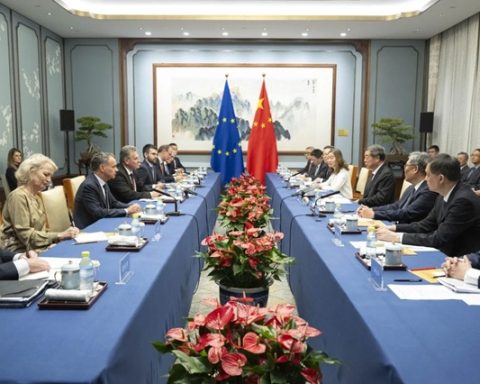
Pakistan’s Ministry of Finance announced on its official X account that Finance Minister Muhammad Aurangzeb “sought China’s support for Pakistan’s membership in the New Development Bank” during a meeting with China’s Deputy Finance Minister Liao Min on the sidelines of the IMF/World Bank meetings in Washington last week. A Pakistan government official told Nikkei Asia that Islamabad had already applied for NDB membership earlier this year, and the application is currently under review.
Despite challenges in funding Belt and Road Initiative (BRI) projects in Pakistan, experts believe Beijing is likely to back Islamabad’s bid. China has invested $25.4 billion in the China-Pakistan Economic Corridor, but frustrations have mounted over security incidents—including the killing of 21 Chinese nationals since 2021—delayed payments to Chinese power producers, and governance issues.
Bradley Parks, executive director of AidData at William & Mary in Virginia, told Nikkei Asia that Beijing is increasingly shifting risk management from policy banks to state-owned commercial banks with stricter standards, noting that multilateral lenders like the NDB could play a larger role.
“Given that Pakistan is one of China’s closest allies, Beijing may want Islamabad to jump on the NDB bandwagon,” Parks said. Ikram ul Haq, a Lahore-based legal and tax consultant, echoed this view, adding that China’s concerns over project mismanagement and citizen safety would not prevent it from supporting Pakistan’s access to NDB funds.
Access to NDB financing could help Pakistan reduce reliance on the IMF and World Bank. Muhammad Shoaib, a postdoctoral fellow at George Mason University, told Nikkei Asia that NDB funds are quicker to access, less politically stringent, and primarily infrastructure-oriented. Haq added that such long-term development funding could accelerate Pakistan’s growth and improve human capital.
Membership in the NDB requires approval from at least four of the five founding members. While India has historically opposed Pakistan’s participation in BRICS forums, Chinese support could help secure approvals from Brazil, Russia, and South Africa. Jeremy Garlick, associate professor at the Prague University of Economics and Business, noted that India is unlikely to consent given its strained ties with Pakistan, and China may also moderate its lobbying given Islamabad’s poor financial track record.
Still, experts including Parks, Haq, and Shoaib believe China will advocate on Pakistan’s behalf, encouraging other BRICS countries to share the credit risk. Parks observed, “The Pakistani authorities are reading the room and they understand that Beijing wants other external creditors to have skin in the game.”