by Our Correspondent in Doha
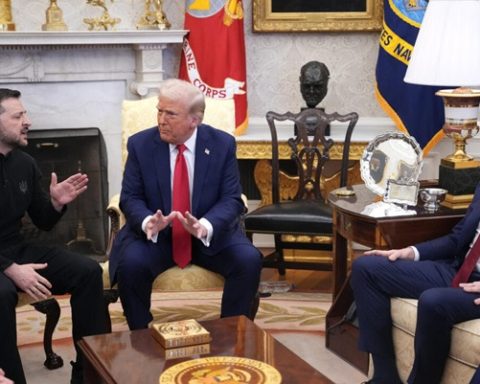
In a scene that will likely be remembered as one of the defining moments in modern diplomacy, Pakistan’s Prime Minister Shehbaz Sharif made his mark at an international summit in Sharm el-Sheikh, where U.S. President Donald Trump presided over the signing of a historic ceasefire declaration for Gaza. The event, attended by more than two dozen global leaders, marked what Trump called a “tremendous day for the Middle East” after the cessation of one of the bloodiest conflicts in recent history. The ceasefire came after the exchange of hostages and prisoners between Israel and Hamas, symbolizing a fragile but hopeful step toward peace in a region long marred by violence.
Amid the grandeur of the Egyptian coastal resort, Trump, joined by the leaders of Egypt, Qatar, and Turkiye, signed the declaration guaranteeing the deal’s implementation. The agreement came shortly after the world commemorated the second anniversary of Israel’s devastating campaign in Gaza, which claimed more than 67,000 lives. As the cameras flashed and applause echoed through the summit hall, President Trump took a moment to acknowledge several world leaders, but his spotlight on Pakistan was particularly notable.
Turning to the audience, Trump called out, “Prime Minister Sharif of Pakistan, and also I have to say my favourite Field Marshal from Pakistan,” referring to Chief of Army Staff Field Marshal Asim Munir. The remark drew light laughter from the audience as Trump searched the back rows, eventually spotting Shehbaz Sharif and inviting him to the podium. It was a rare gesture—one that only two other leaders, Egypt’s Abdel Fattah el-Sisi and Trump himself, received that day.
When Shehbaz took the stage, he used the moment not merely for ceremony but for symbolism. In his address, the Pakistani premier expressed deep appreciation for Trump’s efforts, going as far as to nominate him for the Nobel Peace Prize. “I genuinely feel he is the most genuine and the most wonderful candidate for the peace prize because he has not only brought peace in South Asia, saved millions of people, their lives, and today, here in Sharm el-Sheikh, achieved peace in Gaza and saved millions of lives in the Middle East,” Sharif declared passionately as Trump looked on approvingly.
Trump, visibly touched, responded with humor and warmth, saying, “Wow! I didn’t expect that. Let’s go home, there’s nothing more I have to say. Goodbye everybody. That was really beautiful and beautifully delivered.” The exchange, lighthearted yet laden with diplomatic undertones, highlighted Pakistan’s re-emerging importance in international peace dialogues, an image Shehbaz Sharif seemed keen to reinforce.
Later in the event, Trump mentioned India, calling it “a great country with a very good friend of mine at the top.” Turning to Shehbaz, he joked that Pakistan and India were now poised to “live very nicely together,” drawing laughter from the audience and a cordial smile from the Pakistani premier. In that brief moment, the world witnessed a symbolic thaw between two nuclear neighbors, even if only rhetorical.
The summit was not without its characteristic Trump theatrics. Between praising allies and offering spontaneous remarks about world leaders—including calling Italian Prime Minister Giorgia Meloni “beautiful” and “incredible”—the American president’s unpredictable charm dominated the stage. Still, amid the humor and applause, the gravity of the day’s achievement remained undeniable: a formal cessation of hostilities in Gaza and a rare convergence of global consensus on peace.
Notably absent from the proceedings was Israeli Prime Minister Benjamin Netanyahu, whose office cited the proximity of a Jewish holiday as the reason for his nonattendance. His absence, however, sparked quiet diplomatic murmurs, with reports suggesting that Turkiye’s President Recep Tayyip Erdogan and other leaders opposed Netanyahu’s presence due to potential tensions it could inflame.
Adding a surprising twist to the day, FIFA President Gianni Infantino was also present among the world leaders, calling it a “historic day for the Middle East and for peace.” Infantino remarked that FIFA stood ready to assist in ensuring that the peace process “comes to fruition and to the best possible end,” symbolizing the global breadth of the event’s significance.
For Pakistan, however, it was Shehbaz Sharif’s poised performance that captured attention back home and abroad. By aligning Pakistan’s voice with a global call for peace, and by personally lauding a U.S. president with whom relations have often been fraught, Shehbaz appeared to seize the moment to reposition his country as a constructive player on the world stage. In a summit meant to herald a “new dawn” for the Middle East, Pakistan’s prime minister managed to make it, too, a new dawn for his nation’s diplomacy.