by Luxman Aravind
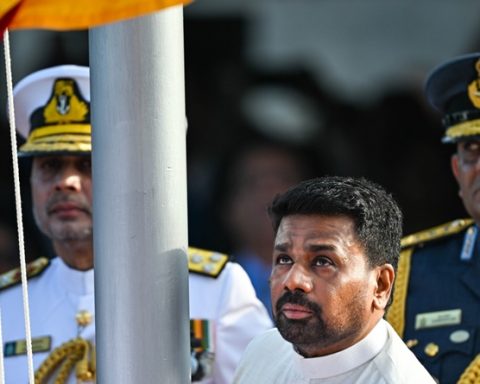
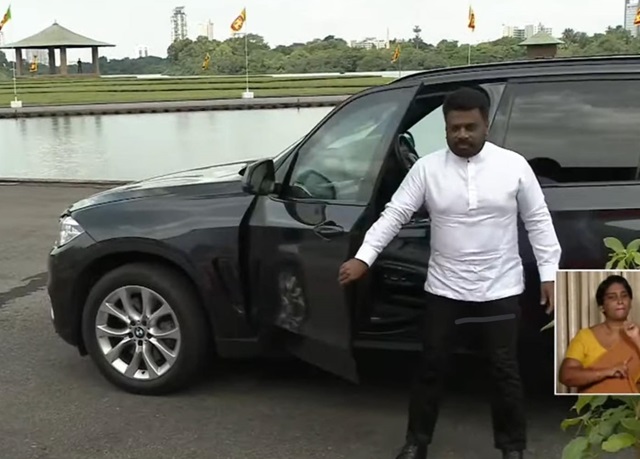
Sri Lanka today morning bore witness to an act of theatre, dressed as governance, when President Anura Kumara Dissanayake arrived to inaugurate the 10th Parliament. The scene unfolded in calculated simplicity: a modern AMW vehicle, the president seated upfront beside the driver, casually opening the door himself. Social media and local channels buzzed with praise, calling this a breath of fresh air and a stark departure from the arrogance of past leaders.
But what nonsense is this? Are we to measure a leader’s merit by the triviality of a car door? Is the head of state now reduced to performing cheap dramas to court the approval of the masses? Let us not fool ourselves. These gestures may momentarily satisfy the populace’s hunger for authenticity, but they are ultimately hollow, dangerous, and corrosive to the dignity of the office and the stability of the state itself.
The head of state is no ordinary citizen. They are not a party leader or a populist figure seeking applause. They are the living embodiment of the nation’s sovereignty, the custodian of an institution that must outlast any individual. By flouting protocol and embracing gimmickry, Dissanayake has not only demeaned the presidency but also set a perilous precedent for governance itself.
Let us strip away the illusion. A president riding in the front seat or opening their own car door is not humility. It is theatre—a carefully choreographed performance designed to contrast with the excesses of predecessors. But leadership cannot be reduced to symbols and stunts. The true measure of a leader lies not in their gestures but in their governance, in their ability to steer the ship of state through turbulent waters with wisdom and discipline.
Max Weber, in his discourse on authority, warned of the dangers of charisma in leadership. Charismatic leaders, he argued, often undermine the very institutions they are entrusted to uphold, prioritising their personal appeal over the systems that ensure stability. This is the trap into which Dissanayake has fallen. By turning protocol into a prop and the presidency into a stage, he risks hollowing out the institutional foundations of the state for the sake of short-term popularity.
There is a reason why protocols exist. They are not mere formalities or relics of an elitist past. Protocols are the scaffolding of statecraft, designed to uphold the dignity and continuity of the office, not the individual occupying it. The rituals surrounding a head of state serve a symbolic function: they remind us that the institution of the presidency is greater than any one person, that it represents the collective will and history of the nation.
By disregarding these protocols, Dissanayake has inadvertently sent a dangerous message: that the presidency is not an institution to be revered but a tool for personal spectacle. Such acts may delight the public today, but they come at a steep cost. They diminish the gravitas of the office, erode the authority of the state, and invite others to treat rules and procedures as optional.
This is not Sri Lanka’s first brush with populist theatrics. In 2015, the nation placed its trust in a leader who presented himself as a simple, honest man of the people. In 2019, another leader rode to power on a wave of populist fervour, promising to fix the country with the force of his personality. Both leaders fell, undone by the weight of their own failures.
The philosopher Karl Marx’s observation that history repeats itself, first as tragedy, then as farce, resonates deeply here. Dissanayake’s actions, far from charting a new course, are a tired repetition of the same cycle. Today’s hero is tomorrow’s scapegoat, and the people who cheer his minimalism now will be the first to condemn him when the shine wears off and the realities of governance expose the emptiness of his theatrics.
But what happens after the farce? What lies beyond this cycle of populist rise and inevitable disgrace? A nation cannot sustain itself on spectacle and slogans. It needs leaders who understand the weight of their responsibilities, who respect the systems that enable governance, and who prioritise substance over superficiality.
What is most troubling about this spectacle is its implicit mockery of the past. By arriving in such dramatic simplicity, Dissanayake sought to draw a sharp contrast between himself and his predecessors. The message was clear: “Look how different I am. Look how they deceived you.”
But this mockery is a double-edged sword. Leaders who build their legitimacy on the failures of others often find themselves ensnared by the same fate. The state cannot function as a vehicle for settling personal or political scores. Its protocols and traditions exist to rise above the pettiness of individual ambition. By mocking those who came before him, Dissanayake risks turning the presidency into a revolving door of transient populists, each trying to outdo the last in a race to the bottom.
This approach is unsustainable. Governance is not a popularity contest, nor is it a platform for self-righteous displays of humility. It is a solemn duty, requiring wisdom, discipline, and a deep respect for the institutions that anchor the nation.
Sri Lanka’s history offers ample warnings for those who care to listen. Leaders who trade in theatrics inevitably find themselves consumed by the very spectacle they create. The public’s adoration is fickle; the applause that greets Dissanayake today will turn to jeers the moment his governance falters.
It is not enough to ride the wave of public approval. Leadership requires foresight, the ability to anticipate the long-term consequences of one’s actions. By discarding protocol for the sake of drama, Dissanayake has set himself on a precarious path. The state is not a toy to be played with, nor is it a stage for self-aggrandisement. It is a fragile, complex entity that demands respect and careful stewardship.
What Sri Lanka needs is not another populist saviour but a leader who understands the profound responsibility of their office. The state does not belong to the individual; it belongs to the people, and it must endure beyond the tenure of any one leader. This endurance is safeguarded by protocols, traditions, and systems that ensure continuity and stability.
Dissanayake’s actions, though superficially appealing, betray a lack of understanding of these principles. His theatrics may win him the affection of the public today, but they risk undermining the very foundations of the presidency.
This is the danger of modern politics: the elevation of spectacle over substance, of symbols over systems. Sri Lanka cannot afford to continue down this path. The nation’s future depends on leaders who respect the office they hold, who value governance over gimmickry, and who are willing to put the needs of the state above their desire for applause.
The car door will not save him. The front seat will not shield him from history’s judgement. Leadership is not about appearances; it is about legacy. And legacy is built not on gestures but on the enduring strength of the institutions a leader leaves behind.
What nonsense, indeed, to believe otherwise.