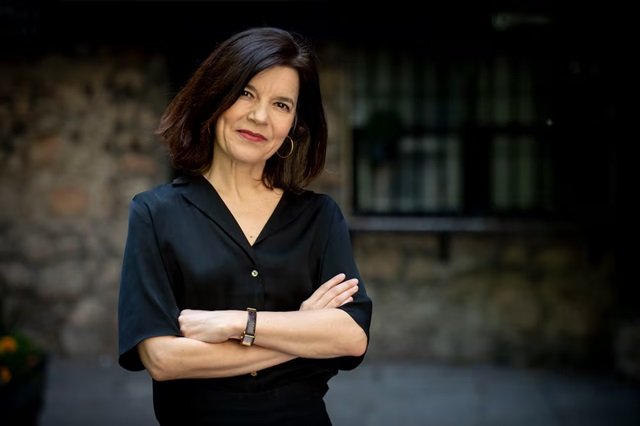
In a wide-ranging interview published by El País, Ana Conseglieri, a leading figure in Spanish neuropsychiatry and president of the Asociación Española de Neuropsiquiatría (AEN), sets out a critical reading of psychiatry’s place within medicine and society. Speaking from her work at the Hospital Universitario Infanta Cristina in Parla after a morning of clinical consultations, Conseglieri traces the discipline’s evolution while questioning how modern societies define and manage psychological suffering.
Her central argument, articulated throughout the El País conversation, is that psychiatry has never existed purely as a neutral medical specialty. Instead, she describes it as a field historically shaped by two competing forces: the search for scientific legitimacy within medicine and its function as a tool for organizing and regulating social behavior.
“Psychiatry entered the group of medical specialties through a long process of medicalizing what was once called madness,” she explains. Before that shift in the nineteenth century, she notes, mental disturbance was interpreted through religious or supernatural frameworks, or labeled as “alienism,” a term once used to describe those considered mentally ill. Over time, however, psychiatry became institutionalized within medicine, carrying with it what Conseglieri describes as a persistent dual role.
According to her account, that duality remains central today. “Psychiatry has always had an enormous component of control of social order,” she says in the interview, emphasizing that the discipline has historically occupied a space between clinical care and societal regulation. While it has sought recognition as a legitimate branch of medicine, it has also been closely tied to political and institutional frameworks that define what is considered normal or deviant behavior.
This tension, she suggests, is compounded by the limits of biological explanations for mental suffering. In her view, psychiatry often struggles to identify clear biological markers for many conditions it treats, leaving it to navigate complex psychological and social dimensions. Much of mental health symptomatology, she explains, is shaped less by biology than by personal biography, life history, and lived experience.
Conseglieri’s reflections are also informed by her own background. In the El País interview, she recounts how her interest in psychiatry developed early in life while growing up in a household shaped by psychological practice and social transformation. Her father, a psychologist, was involved in the closure of institutional childcare facilities in Spain during the late years of the Franco era and the democratic transition that followed. These institutions, known as “casas cuna,” housed children who were orphaned or whose families could not care for them.
She describes witnessing this process closely during her adolescence, as her father and his colleagues worked to move children and young people from institutional settings into family environments, shared housing, and community networks. That experience, she suggests, left a lasting imprint on her understanding of care, institutions, and social responsibility, ultimately influencing her decision to pursue psychiatry.
Now serving as both a senior psychiatrist and president of the AEN, Conseglieri uses her position to reflect on contemporary mental health trends in Spain. One of her concerns, as expressed in the El País interview, is the growing social visibility of psychological distress and the increasing demand placed on mental health services. She notes that Spain is among the leading countries in Europe in the consumption of anxiolytics and antidepressants, a trend she links to broader cultural and structural pressures.
She cautions against the tendency to interpret all forms of distress as clinical mental illness. “Not all psychological discomfort is a serious mental health problem,” she stresses, arguing that modern societies often medicalize experiences that may be rooted in everyday social and economic conditions. According to her, individuals facing difficulties adapting to contemporary life are increasingly directed toward psychiatric treatment, even when underlying issues may be related to employment conditions, housing insecurity, or unmet social rights.
In this context, Conseglieri highlights what she sees as a growing risk: that the language of mental health may obscure other forms of suffering that require political or institutional responses rather than clinical intervention. She suggests that while psychiatry is expected to absorb increasing levels of demand, many of these pressures originate outside the healthcare system itself.
The interview also addresses questions of how individuals distinguish between ordinary distress and more severe mental illness. While she acknowledges the difficulty of making such distinctions in everyday life, she points again to the scale of medication use in Spain. According to her, widespread consumption of anxiolytics has become normalized in some segments of the population, even among individuals whose distress may not reflect severe psychiatric conditions, while others experiencing more serious suffering may receive comparatively less medication.
Another dimension explored in the El País conversation is the historical treatment of women within psychiatric frameworks. Conseglieri situates this within broader discussions of intersectionality in mental health, which consider how gender, socioeconomic status, ethnicity, and other factors intersect in shaping diagnosis and treatment. She notes that these approaches are increasingly visible in contemporary mental health discourse.
Looking back at the Franco era, she describes how women’s identities were often narrowly defined through prescribed social roles centered on motherhood, domestic responsibility, and conformity to moral expectations. Within that framework, she argues, deviations from these norms were frequently pathologized, leading in some cases to psychiatric institutionalization or pharmacological treatment. In her account, this historical pattern reflects how psychiatric diagnosis has at times been used to reinforce dominant social structures.
Throughout the interview, Conseglieri returns to the idea that psychiatry occupies an inherently complex position. It is simultaneously a medical discipline tasked with alleviating suffering and a social institution embedded within broader systems of governance, policy, and cultural expectation. This dual role, she suggests, continues to shape how mental health is defined, treated, and understood.