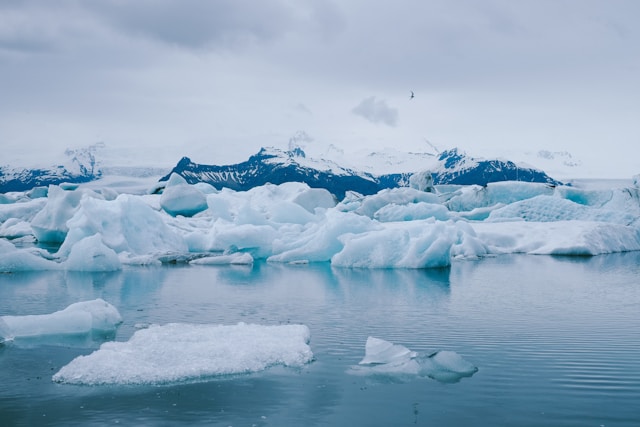
As the world grapples with the accelerating effects of climate change, scientists are turning to some radical solutions in an attempt to stave off the catastrophic impacts of melting glaciers. These ice giants, which move at a pace so slow that they’re nearly imperceptible to the naked eye, are now seen as some of the most significant contributors to rising sea levels. If their rapid collapse continues, millions of people living along coastal areas could face displacement, and coastal cities could be permanently altered.
According to a recent report by MIT Technology Review, researchers are now considering wild interventions to slow or even reverse the melting of glaciers, in a bid to counteract the global crisis. These measures, while bordering on science fiction, are seen by many experts as potential lifesavers as the situation worsens. The stakes are high, with the melting of glaciers set to drive sea levels up by several feet by the end of the century.
The situation regarding glaciers has grown more dire in recent years. The Thwaites Glacier in West Antarctica, often referred to as the “doomsday glacier,” has become a symbol of the impending environmental disaster. A recent study released by the British Antarctic Survey highlights the increasing vulnerability of Antarctica’s ice sheets. The study revealed that much of Antarctica’s ice sits on bedrock that’s already below sea level, leaving it more susceptible to seawater intrusion that could speed up melting.
Another groundbreaking study on subglacial rivers—streams of water that flow beneath glaciers—showed that these rivers significantly speed up the melting of ice. These subglacial water systems lubricate the ice, allowing it to slide more rapidly into the ocean, leading to faster and more extensive melting.
Such findings have raised alarms about the future of glaciers worldwide, with scientists emphasizing that they are melting at a far faster rate than originally predicted. In response, a new initiative called the Arête Glacier Initiative is exploring bold solutions to better understand and possibly save glaciers before it’s too late.
The Arête Glacier Initiative, founded by scientists from MIT and Dartmouth, is focusing not just on understanding how glaciers melt but also on exploring the potential to reverse their fate. This nonprofit research group recently awarded grants to researchers who are delving into glacier science and engineering solutions, as highlighted in a recent article by MIT Technology Review.
Brent Minchew, an associate professor of geophysics at MIT and cofounder of the Arête initiative, emphasized that while it is crucial to understand the alarming trend of glacier melting, there’s an increasing need to consider practical solutions. “I became less content with simply telling a more dramatic story about how things were going—and more open to asking the question of what can we do about it,” Minchew says.
Among the interventions under investigation are techniques such as basal intervention, which involves drilling into glaciers to pump out water beneath them and refreeze it in place, potentially slowing their movement and melting. Other proposed solutions include installing massive curtains or barriers in the water to slow down the flow of warm water that accelerates melting, or even constructing physical supports to prop glaciers up, preventing them from crumbling into the sea.
These proposals are monumental in scale, requiring vast engineering projects that would be both expensive and technically challenging. Questions around the legal and ethical implications of such projects also remain unresolved. With Antarctica being governed by a complex international treaty, questions arise about who has the authority to intervene in such a significant way.
Despite the potential of these ideas, critics point out the profound ethical and environmental questions surrounding such interventions. For instance, one of the largest geoengineering experiments conducted by the Arctic Ice Project involved spreading tiny silica beads over sea ice in Alaska in an attempt to reflect sunlight away from the ice, slowing its melting. However, after new research found that these beads could disrupt local food chains, the project was halted.
This example serves as a reminder that large-scale environmental interventions can have unintended consequences. These efforts may reduce melting in the short term but could trigger unforeseen ecological disruptions that would worsen the problem in the long run. While cutting greenhouse gas emissions remains the most straightforward solution to climate change, the world’s failure to adequately reduce carbon emissions has made it clear that some glaciers may already be beyond saving.
As global carbon dioxide levels continue to rise at an unprecedented rate, the urgency of finding viable solutions to combat sea-level rise becomes more critical. The 2024 rise in CO2 levels was the fastest ever recorded, signaling that even if emissions were stopped today, the damage might already be too far advanced to prevent the most vulnerable glaciers from collapsing.
Though these proposed interventions might sound like something out of a science fiction novel, scientists are growing more open to exploring every possible option. The future of our planet, they argue, may depend on it. “The longer I cover climate change and face the situation we’re in, the more I understand the impulse to at least consider every option out there, even if it sounds like science fiction,” writes MIT Technology Review in their coverage of the growing concern.
While the science behind these radical interventions is still in its early stages, the increasing urgency of the climate crisis may force humanity to take bold and even controversial steps. Whether any of these proposals will ultimately prove viable or effective remains to be seen, but the conversation around glacier preservation is a testament to the lengths that scientists are willing to go to mitigate the impact of climate change.
As the Arête Glacier Initiative and other researchers continue to probe the possibilities of saving glaciers, one thing is clear: the race against time to slow sea-level rise is on, and the cost of inaction could be measured in millions of displaced people, lost habitats, and irreversible damage to our planet.