


The Royal Navy is deploying a cutting-edge sensory system, powered by artificial intelligence, to counter the growing threat of Russian submarines in British waters. Dubbed the Royal Navy’s “secret sensory weapon,” the new technology, known as the Lura system, transforms underwater surveillance by turning AI-trained drones into tireless submarine hunters.
Developed by European defence firm Helsing, Lura was initially created to track whales. Now, it’s being weaponized to protect the UK’s maritime infrastructure, including undersea cables vital for global communication. Lura uses a vast network of autonomous underwater gliders — drones that can operate for up to three months without human intervention — to monitor for hostile naval activity, particularly from Russian vessels.
At the core of the Lura system is a database of acoustic signatures — distinct sound profiles of submarines and ships — collected by Royal Navy sonar specialists over the past 56 years. This archive, once stored on magnetic tapes deep inside Ministry of Defence facilities, will now be used to “illuminate” the ocean, allowing Lura’s AI to identify and classify underwater threats in real-time.
These gliders, based on designs originally intended for whale migration tracking by Helsing’s partner Blue Ocean, move silently through the water without propellers. Their stealth and endurance make them ideal for covering key maritime chokepoints like the GIUK gap — a crucial passage between Greenland, Iceland, and the UK.
The technology enables the gliders to differentiate between ships of the same class by analyzing subtle differences in their sound signatures. “Lura detects so our navies can deter,” said Gundbert Scherf, co-founder of Helsing. “We must harness new technologies to keep pace with the threats against our critical infrastructure, national waters, and way of life.”
Amelia Gould, a former Royal Navy weapons engineering officer and now head of Helsing’s maritime division, emphasized the system’s speed and efficiency. “It takes five years for baby sailors to become a Jonesy from The Hunt for Red October… Lura can do it from day one, all day every day, and will only get better the longer it’s deployed.”
The Lura gliders form an underwater sensory “constellation” — akin to satellites in space — that continuously processes acoustic data. When an anomaly is detected, such as a Russian submarine or suspicious activity from Russia’s shadow fleet of sanction-evading oil tankers, the gliders surface to relay information back to command.
“With hundreds or thousands of these in the water, they’re just listening,” said Niall Cartwright, Helsing’s lead technology expert. “They’ll think twice about coming through.”
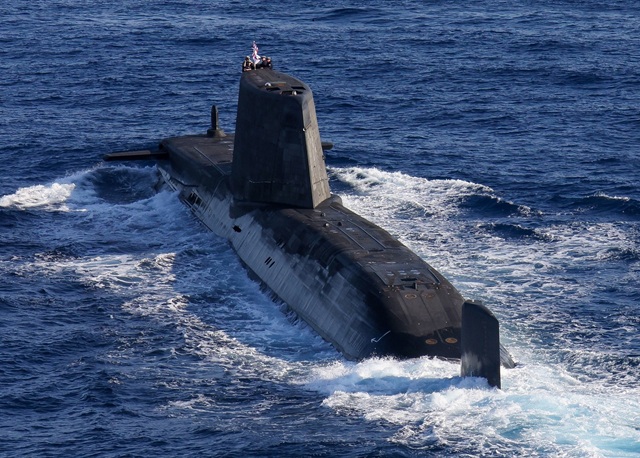
Since Russia’s invasion of Ukraine in 2022, Russian vessels have been detected in UK waters over 40 times, raising alarms about the vulnerability of undersea cables and infrastructure. In a rare incident last November, Defence Secretary John Healey ordered an Astute-class submarine to surface near the Russian spy ship Yantar, accusing it of monitoring critical cable routes off the UK coast.
With maritime threats escalating, the Royal Navy’s investment in autonomous, AI-driven submarine detection could mark a pivotal shift in underwater warfare — from reactive defence to proactive deterrence. As Gould put it, “This isn’t just a technological leap — it’s a strategic one.”









