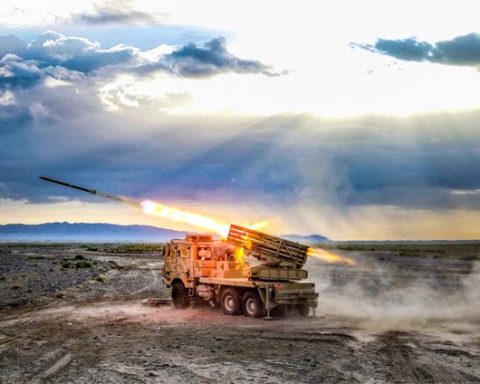
Moscow has claimed for the first time that it has fully seized control of the Luhansk region in eastern Ukraine — one of the four territories President Vladimir Putin declared annexed nearly three years ago. Leonid Pasechnik, the Kremlin-installed head of Luhansk, told Russian state television that the area was now “100 per cent” under Russian control. Although Ukraine has not officially commented, independent monitoring groups, including the Ukrainian site Deep State, had already indicated that Russian forces occupied almost all of the region.
The regional capital, Luhansk, has been under Russian control since 2014, when covertly deployed troops helped ignite a separatist movement in Donbas. In September 2022, following a series of military gains and referendums widely condemned as illegitimate, Putin announced the annexation of Luhansk, Donetsk, Zaporizhzhia, and Kherson during a high-profile Kremlin ceremony. The Russian government continues to insist that peace is impossible unless Kyiv relinquishes all four regions, a condition President Volodymyr Zelensky firmly rejects.
Alongside the Luhansk claim, Russian media reported that forces had seized Dachnoye, a village in Ukraine’s Dnipropetrovsk region. The move, if confirmed, would mark Russia’s first occupation of a populated area in that region — which includes Zelensky’s hometown of Kryvyi Rih — and is seen as symbolically significant. Ukrainian officials have not verified the claim and say Russian forces have previously been repelled from border areas.
Meanwhile, Russia continues to target urban centers with missile and drone attacks. In Dnipro, the regional capital of Dnipropetrovsk, 17 civilians were killed last week when ballistic missiles struck hospitals, schools, and a train station, injuring nearly 280 others. President Zelensky condemned the strikes as evidence of Russia’s “complete disregard for life.”
Despite mounting casualties and economic strain, Putin shows no sign of backing down as the war nears its three-and-a-half-year mark. While two rounds of prisoner exchanges in May and June gave hope of renewed diplomacy, there has been no progress toward a ceasefire or a new round of peace talks. Keith Kellogg, envoy for Donald Trump, accused Russia of stalling for time while continuing to bomb civilians, a charge the Kremlin denied.
The domestic cost of war for Russia continues to grow, with an intensified crackdown on dissent. Last week, photographer Grigory Skvortsov was sentenced to 16 years in prison for treason after sharing a book on Soviet-era bunkers with an American journalist. Skvortsov, who had spoken out against the war, said he was tortured into confessing. The book, widely available in Russia, remains legally published, and its author has not faced charges.