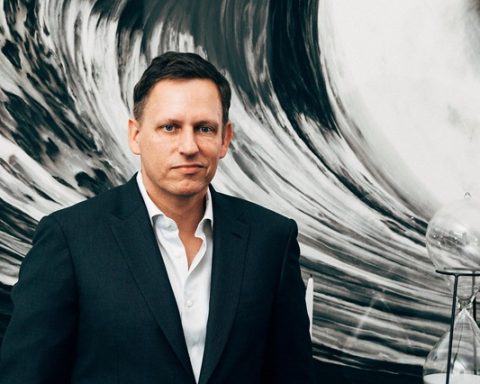
In an exclusive interview with Bloomberg, Sam Altman, the CEO of OpenAI, provided a detailed glimpse into the inner workings of one of the world’s most influential and ambitious AI companies. Reflecting on his leadership style, the company’s ongoing efforts to develop artificial general intelligence (AGI), and the external challenges facing the industry, Altman gave Bloomberg’s readers an in-depth understanding of his role and the decisions shaping OpenAI’s trajectory.
A Day in the Life of Sam Altman
When asked about his daily routine and how he manages OpenAI’s operations, Altman shared that his days are a mix of executive team meetings, individual check-ins with engineers, and discussions with partners. He described his calendar as highly structured but also flexible enough to handle the unpredictability of leading an AI research and product company.
A typical week includes a three-hour executive meeting on Mondays, followed by several one-on-one meetings with engineers, as well as team sessions focused on research, product brainstorming, and strategic partnerships. For instance, in one recent two-day stretch, Altman had six one-on-one sessions with engineers, a meeting with the research team, multiple discussions regarding computing resources, and a series of brainstorming sessions for new product developments. In addition to these, Altman also had a significant partnership dinner with a major hardware provider.
While his work is intensive and multifaceted, Altman emphasized that internal communication is central to his leadership approach. Despite not being a fan of sending inspirational emails, Altman prioritizes small-group meetings and frequent Slack communications to maintain a pulse on company culture and project progress. This method, Altman believes, provides not only the depth required to address specific challenges but also the breadth necessary to ensure alignment across all aspects of OpenAI’s operations.
Research at OpenAI: Protecting Innovation
One of the most striking aspects of OpenAI’s organizational structure is its emphasis on keeping the research division distinct from the commercial operations of the company. Altman explained that the decision to house OpenAI’s research team in a separate building—located miles away from the rest of the company—was not driven by symbolism but by logistical necessity. However, Altman clarified that the physical separation underscores a broader philosophy: the critical importance of safeguarding OpenAI’s core research mission from the inevitable pressures that arise as the company grows.
Altman acknowledged that the scaling of OpenAI’s product division could easily overshadow the research efforts if left unchecked. This is a common pitfall for tech companies that successfully build a product-focused business before attempting to foster a research lab. Altman noted that, historically, product companies that later added research divisions often saw those research efforts deteriorate, as the focus shifted to maintaining growth and profits.
To avoid this fate, Altman has maintained a strong commitment to ensuring that OpenAI’s research division remains undistracted by commercial demands. His vision for OpenAI centers on building AGI—an advanced form of AI that would rival human cognitive abilities—and the company’s research teams are tasked with pushing the boundaries of what’s possible in AI development. Altman has made it clear that this mission is OpenAI’s ultimate priority, one that must be pursued without getting sidetracked by the pressures of short-term product growth.
AGI and the Long-Term Vision
Throughout the interview, Altman repeatedly emphasized the company’s focus on AGI, though he acknowledged that the term “AGI” has become increasingly ambiguous in the field. He argued that traditional definitions of AGI—systems that demonstrate human-level intelligence across a wide range of tasks—are often too simplistic. Instead, OpenAI’s approach is to track the development of AI through a more nuanced set of levels that allow for clearer benchmarks in progress.
For Altman, a true AGI system would be able to perform tasks at the level of skilled humans in important jobs, such as software engineering or medical diagnosis. This, he suggested, would represent the threshold at which AGI could be said to have been achieved. However, Altman acknowledged that even this definition raises further questions, such as whether the system can perform all aspects of a given job or just certain parts. As AI progresses, Altman expects that these benchmarks will continue to evolve and that new definitions of AGI will emerge.
Looking even further ahead, Altman spoke about the concept of superintelligence—AI systems that surpass human abilities and could drastically accelerate scientific discovery. He outlined a vision where such systems could rapidly advance fields like medicine, physics, and biology, ultimately benefiting humanity by unlocking breakthroughs that would otherwise take centuries.
Lessons from User Behavior and Pricing AI
With OpenAI’s ChatGPT now used by more than 300 million people worldwide, Altman reflected on how user feedback has influenced the company’s product strategy. He highlighted two key insights: first, that many users had begun using ChatGPT for search, which initially wasn’t an intended use case but became an important feature after significant user demand. This observation led to the development of integrated search functionality within ChatGPT. Second, Altman noted that a growing number of users were seeking medical advice from ChatGPT. In some instances, users had turned to the AI to diagnose medical conditions that had previously gone undiagnosed by doctors, with some even claiming to have found life-saving solutions. This insight has prompted OpenAI to consider ways to further refine and improve ChatGPT’s ability to assist in health-related matters.
On the topic of pricing, Altman discussed the evolving pricing strategy for OpenAI’s products. OpenAI initially launched ChatGPT for free but soon introduced paid plans as usage skyrocketed. Through a trial-and-error approach, OpenAI settled on a price of $20 per month, which Altman noted was based on user feedback rather than extensive market research. However, he acknowledged the potential for more flexible, usage-based pricing in the future, especially as the company looks to expand its offerings and meet the diverse needs of its user base.
The Roadblocks Ahead: Chip Scarcity, Energy, and Scaling Challenges
As OpenAI continues to scale its operations, Altman identified three major obstacles the company must overcome: chip scarcity, energy shortages, and the challenges associated with scaling AI models. While he expressed confidence in the company’s ability to handle these challenges, Altman did not shy away from acknowledging the complexity of addressing them.
OpenAI is actively working with its partners to ensure access to cutting-edge hardware and data centers. The company’s partnership with Nvidia, in particular, was described as “absolutely incredible,” with Altman emphasizing that OpenAI is preparing to scale its chip infrastructure significantly in the coming year. He also discussed the long-term potential of fusion energy to address global energy needs, particularly in the context of powering AI research and model training. Altman expressed optimism about the prospects of fusion energy, especially with breakthroughs in net-gain fusion expected soon, which could provide a sustainable solution to energy scarcity.
Navigating Politics and Industry Leadership
In the interview, Altman also touched on the political landscape and OpenAI’s role within it. He explained his personal $1 million donation to the presidential inaugural fund, asserting that his support for the President of the United States was a sign of his commitment to the nation, regardless of political affiliation. Altman noted that while he doesn’t agree with every policy from the current administration or its predecessor, his primary focus is on supporting U.S. leadership in AI.
Looking to the future, Altman acknowledged the importance of government support for AI and the infrastructure needed to scale the industry. He emphasized the need for better regulatory frameworks to facilitate the growth of AI technology while also ensuring national security and ethical considerations. Additionally, he discussed the importance of streamlining infrastructure development in the U.S. to prevent bureaucratic hurdles from slowing down progress.
As OpenAI continues to lead in the AI race, Altman’s vision for the company remains focused on achieving AGI while navigating both internal and external challenges. His leadership, grounded in communication, long-term thinking, and a commitment to research, sets the course for what could be one of the most transformative technological advancements in human history.