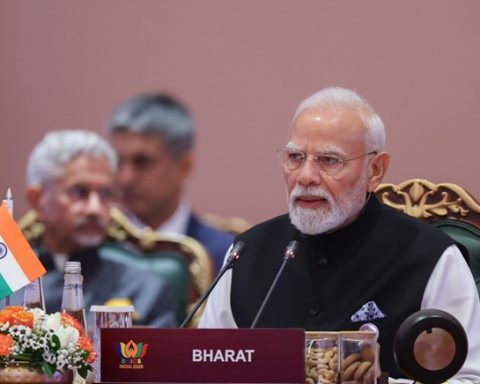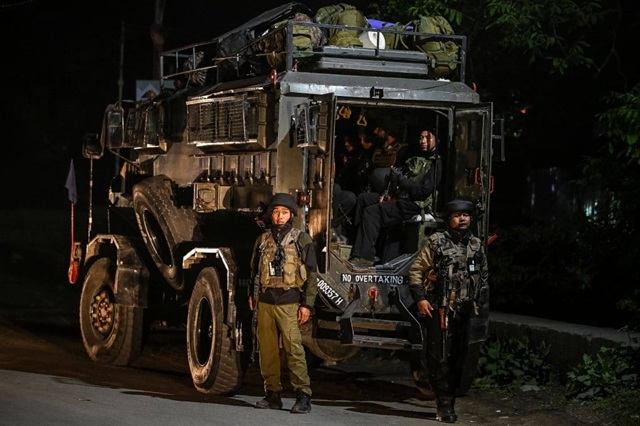
In the aftermath of the brutal, horrific, and religiously motivated murders of 26 defenceless civilians in Pahalgam by The Resistance Front (TRF), a division of the Pakistan-based Laskar-e-Taiba (LeT), a UN-designated terrorist organization, PM Narendra Modi made it clear at a public rally in Bihar on April 24 that he intended to exact revenge on both the terrorist strike’s perpetrators and their supporters.
India launched its most massive cross-border attacks since Balakot, targeting nine terrorist installations in Pakistan and Pakistan-occupied Kashmir (PoK), in direct reaction to the terror attack in Pahalgam on April 22, which killed 26 civilians. Under the code name “Operation Sindoor,” the swift and well-coordinated 25-minute operation used precision attacks to kill around 80 terrorists connected to the outlawed organizations Jaish-e-Mohammed (JeM), Lashkar-e-Taiba (LeT), and Hizbul Mujahideen. Operation Sindoor showcase Indian security doctrine which integrates the diplomatic techniques and the offensive military exercises throughout the unstable region of South Asia.
Countries chart their fortunes through their polity and actions. After avoiding violence after the 1947 partition, India has become a developed and peaceful country that is regarded as a rising and responsible power in the international community. Pakistan, on the other hand, has tried to impede India’s progress by employing state-sponsored terrorism as a tactic, taking use of its advantageous geostrategic location to win over the West. India and Pakistan cannot afford to become involved in a conflict that may continue to boil unchecked, even though it is unclear if the chickens have finally come home to roost in Pakistan’s terrorism situation.
Terror was exported to other regions of the nation by the early 2000s. The Indian Parliament was assaulted in December 2001, and Mumbai, the nation’s commercial center, was the target of a significant terrorist attack in 2008. Two anti-Indian terrorist groups with strong ties to Pakistan’s security apparatus, Jaish-e-Mohammed and Lashkar-e-Taiba, had established extensive networks throughout the country by that point. Since Kargil, Pulwama, Doklam, and Eastern Ladakh, India has been beset by intelligence failures. Since then, India has taken numerous steps to close the gaps, but the latest episode is a clear warning that these efforts are insufficient, and India must examine its own deficiencies while also working to diplomatically isolate Pakistan.
Doctrinal change
After the Jaish-e-Mohammed attack on the Indian Army Brigade headquarters in Uri, Jammu and Kashmir, on September 18, 2016, which claimed the lives of 19 soldiers, India changed its reaction plan doctrinally. According to the military, ten days later, Indian commandos carried out a cross-border operation in Pakistan-occupied Kashmir that targeted safe houses and terror launchpads. This represented a substantial shift from India’s previous stance. India would respond to attacks by taking direct military action against terror infrastructure across the Line of Control in addition to diplomatic and economic sanctions.
This shift in approach did not immediately result in a strong deterrent. The Uri response failed to prevent the February 2019 deadly suicide bombing in Pulwama. Similarly, the Balakot bombing that followed Pulwama failed to halt the onslaught on civilians in Pahalgam. But what counts is that by launching military operations within Pakistan in response to terror acts, New Delhi has effectively established a new normal in India-Pakistan relations. Until recently, Pakistan’s nuclear deterrence had kept India from responding to terror attacks with conventional military weapons. India was also under tremendous world pressure to de-escalate whenever hostilities broke out because of the same nuclear viewpoint.
By acquiring significant weapon systems, India has sped up its technological development. It is also creating multi-domain capabilities such as electronic warfare, sensors, satellites, and cyber for improved intelligence, surveillance, and reconnaissance. India has been creating and acquiring technology-dependent, precision-based capabilities like as long-, medium-, and short-range strike weapons. A range of cruise and ballistic missiles are currently part of India’s missile arsenal to inflict damage on the enemy. India targeted nine terror sites—five in PoJK and four in Pakistani Punjab—for Operation Sindoor using the SCALP/Storm Shadow air-launched cruise missile and the HAMMER (Highly Agile Modular Munition Extended Range) air-to-ground precision-guided munition. These targeted, non-escalating, collateral damage-averse strikes demonstrated New Delhi’s improved strategy for combating cross-border terrorism and produced measurable results for India.
The new normal
The new normal is that no military target in Pakistan will be beyond the range of the Indian military’s conventional deep strikes, if the need arises in the future. The sole warning is that, considering China’s participation in enhancing Pakistani defense capabilities, this posture will necessitate extreme preparedness and a technological leap. This is a protracted game that will put both countries’ strategic fortitude to the test.
India’s approach combined caution and dedication. There was no attempt to seize land or initiate a full-scale war. The goal was to place little but substantial costs on non-state actors and the state that backs them without opening the door to long-term conflict. There is no doubt that the new status quo is more dangerous. Pakistan may incite India with other acts of terrorism in the future. There will probably be more domestic pressure on future Indian governments to always use direct military action. However, New Delhi’s message is unmistakable: the days of using deterrence to wage unconventional war against India are over. Despite the possibility of a full-scale escalation, India is prepared to follow the new guidelines it has established since 2016. But can Pakistan, which is already dealing with separatist conflict in Balochistan, Islamist militancy in its tribal areas, a shattered domestic political system with its most popular politician imprisoned, and an economy supported by an IMF bailout, afford to fight India?
To conclude, the Pahalgam massacre, which struck at the core of India’s social fabric, continued to be more than just a horrific incident for many years. The attackers targeted innocent bystanders to terrorize and paralyze them. Operation Sindoor, was the nation’s forceful response that followed. Its primary goal was retribution and reclaiming the narrative. India’s counterterrorism efforts are in a new era, one in which momentum, strategy, and symbolism all work together to safeguard a country’s integrity. It serves as a message to the world that state-sponsored terrorism cannot be tolerated any longer. Though it may weep, the valley has lost its tranquillity.