



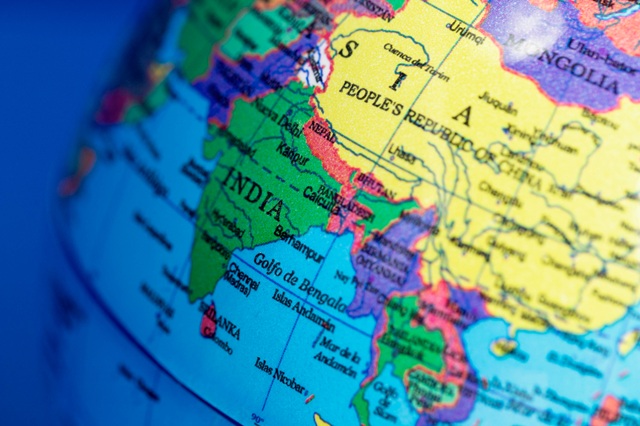
The following essay, based on the speech delivered by former Sri Lankan President Ranil Wickremesinghe at NXT Conclave 2025, explores South Asia’s evolving identity and the critical role of trade and regional cooperation in shaping its future. Wickremesinghe highlights the importance of strengthening inter-country relations, fostering economic growth, and addressing shared challenges through collaboration. He emphasizes South Asia’s potential to assert itself on the global stage through unity, sustainable trade, and innovative partnerships. -Editors
The concept of South Asia is an evolving construct, shaped by historical, political, and economic influences. The origins of the term, the relevance of regional cooperation, and the potential for South Asia to redefine itself in a changing global order are key considerations. By examining the historical evolution, cultural commonalities, and economic prospects of the region, it becomes clear that South Asia is more than just a geographical entity; it is a dynamic and evolving space with vast potential.
The term “South Asia” is not indigenous to the region itself. The terminology has its origins in Western strategic thinking, particularly during World War II when the British and American leadership sought to define military commands in the region. The name was later adopted by regional organizations, yet it remains a construct imposed from outside rather than an organic identity embraced by the people within these countries. Unlike historical and cultural identities such as the Indian subcontinent, which have deep roots in history, South Asia is a relatively recent classification that lacks strong cultural or linguistic grounding.
The formation of regional organizations like the South Asian Association for Regional Cooperation (SAARC) was an attempt to formalize cooperation within the region. However, unlike the European Union or ASEAN, SAARC has struggled to achieve meaningful integration. Political differences, historical conflicts, and economic disparities among member states have hindered progress. Since 2014, SAARC has been largely ineffective, reflecting the challenges of regional cooperation in South Asia. This stands in contrast to regions like Southeast Asia, which have successfully established economic and political frameworks for cooperation.
Despite these challenges, South Asia is bound by significant cultural, linguistic, and historical ties. The region shares deep-rooted civilizational links that date back to the Indus Valley Civilization. Many aspects of governance, legal systems, and education are influenced by British colonial rule, creating a common institutional framework among countries such as India, Pakistan, Bangladesh, and Sri Lanka. Additionally, the influence of Islamic, Hindu, and Buddhist traditions across the region further strengthens these cultural linkages. The shared heritage of South Asian countries offers an opportunity for deeper collaboration and mutual growth, despite political differences.
Trade and economic integration in South Asia have historically been slow, but unofficial trade continues to thrive. Significant levels of informal trade, such as between Sri Lanka and Chennai, sometimes surpass official trade figures. This suggests that despite the lack of formal agreements, economic interactions are occurring at the grassroots level. Trade barriers, political tensions, and bureaucratic hurdles have prevented the region from realizing its full economic potential. Nevertheless, the possibility of greater economic integration remains, especially with India’s growing role as a global economic powerhouse.
Regional classifications and economic groupings should not be dictated by external powers. The Western-imposed definitions of South Asia require re-evaluation based on historical and cultural realities. A broader perspective—stretching from India to Vietnam—suggests an inclusive approach that considers deep-rooted cultural and economic interactions. This expanded definition of South Asia challenges conventional geopolitical boundaries and encourages a more holistic approach to regional integration.
The growing influence of China through its Belt and Road Initiative (BRI) and other economic projects also plays a significant role in shaping the future of South Asia. South Asian nations should take an independent approach to regional cooperation rather than relying on external powers. The idea of an “Indian Ocean community” is proposed as an alternative framework for regional cooperation. Given the strategic importance of the Indian Ocean for global trade, establishing a central secretariat for Indian Ocean cooperation could enhance economic and political coordination among countries in the region.
The economic prospects of South Asia are promising. By 2050, the global economic order will be dominated by three major powers: China, India, and the United States. In this context, South Asia, particularly India, is expected to play a crucial role in shaping global economic trends. With India poised to become the second-largest global economy and countries like Indonesia, Pakistan, Bangladesh, and Vietnam among the top 30 economies, the region has the potential to be a significant economic hub. This anticipated growth underscores the importance of fostering stronger regional cooperation to maximize economic benefits.
Cultural and historical ties between South Asia and Southeast Asia further reinforce the idea of an expanded regional identity. The influence of Indian culture, Buddhism, and Hinduism in countries such as Thailand, Cambodia, and Vietnam illustrates the deep historical connections between these regions. Examples such as the spread of Buddhism from Sri Lanka to Myanmar and Thailand, as well as the influence of Indian traditions in Indonesia and Malaysia, highlight these linkages. These cultural connections provide a strong foundation for deeper cooperation beyond conventional regional boundaries.
Historical trade networks existed long before modern economic agreements. In ancient times, Indian, Sri Lankan, and Southeast Asian merchants established extensive trade routes that facilitated economic exchanges across the Indian Ocean. This historical precedent demonstrates that economic integration in the region is not a new concept but rather a revival of past practices. The idea of a “Greater South Asia” stretching beyond the Indian Ocean aligns with historical trade patterns and cultural exchanges, offering a compelling vision for regional development.
As global power shifts towards Asia, regional identities and economic strategies must be reassessed. Rather than adhering to externally imposed definitions, South Asian countries should take control of their own regional narratives. This includes exploring new trade agreements, fostering economic cooperation, and leveraging cultural ties to build a more integrated and prosperous region. The emergence of India as a global power presents an opportunity for the region to assert itself on the world stage and redefine its geopolitical and economic positioning.
South Asia’s potential for growth is immense, but its realization depends on overcoming political divisions, fostering cooperation, and embracing a broader regional identity. The challenges posed by historical conflicts and political differences must be addressed through diplomatic efforts and policy initiatives aimed at increasing economic and cultural exchanges. Strengthening intra-regional connectivity through infrastructure projects, reducing trade barriers, and encouraging people-to-people interactions can significantly enhance regional cooperation.
Furthermore, investment in education and technological advancement is crucial for South Asia’s future. Developing a knowledge-based economy, improving literacy rates, and enhancing research and innovation will contribute to the region’s long-term growth. Collaborative academic and technological exchanges among South Asian nations can create a more interconnected and competitive region in the global landscape.
Addressing environmental and climate challenges is another key aspect of regional development. South Asia faces significant environmental threats, including rising sea levels, water scarcity, and natural disasters. A cooperative approach to addressing these challenges, through shared resources and sustainable development initiatives, is essential for long-term stability and prosperity. Climate resilience strategies, joint research initiatives, and cross-border environmental policies can create a more sustainable future for the region.
Infrastructure development is another crucial aspect of South Asia’s integration. Connectivity projects such as road networks, railways, and energy pipelines can significantly enhance economic cooperation. The development of transnational highways linking India, Pakistan, Nepal, Bhutan, and Bangladesh could facilitate smoother trade and tourism. Enhanced maritime connectivity in the Indian Ocean, with modernized ports and efficient shipping routes, would strengthen trade ties with Southeast Asia and beyond.
The role of digital transformation in South Asia’s economic integration cannot be overlooked. Advancements in digital technology, financial inclusion, and e-commerce have the potential to boost intra-regional trade. Digital payment systems, cross-border e-commerce, and fintech innovations can serve as catalysts for economic collaboration. By fostering an interconnected digital economy, South Asian nations can overcome physical trade barriers and facilitate smoother commercial interactions.
The role of regional diplomacy and conflict resolution in South Asia is paramount for achieving long-term stability and cooperation. Persistent political tensions, such as those between India and Pakistan, have long hindered regional integration. A commitment to dialogue, peacebuilding, and conflict resolution mechanisms is necessary to create an environment conducive to cooperation. Confidence-building measures, cultural exchanges, and diplomatic negotiations can play a crucial role in fostering trust among South Asian nations.
By embracing a more expansive vision of South Asia, grounded in historical ties and economic opportunities, the region can position itself as a key player in the global order of the 21st century. The call for independent regional initiatives, free from external influence, is a crucial step toward achieving this vision. Ultimately, South Asia’s future depends on its ability to redefine itself on its own terms and harness its vast economic and cultural potential for collective growth and prosperity.











