In a bold move to combat rising housing costs and growing public unrest, the Spanish government has ordered Airbnb to delist over 65,000 holiday rental properties that are in breach of regulations. The decision, announced by the Ministry of Consumer Affairs, is part of a nationwide effort to rein in mass tourism and address the escalating housing crisis.
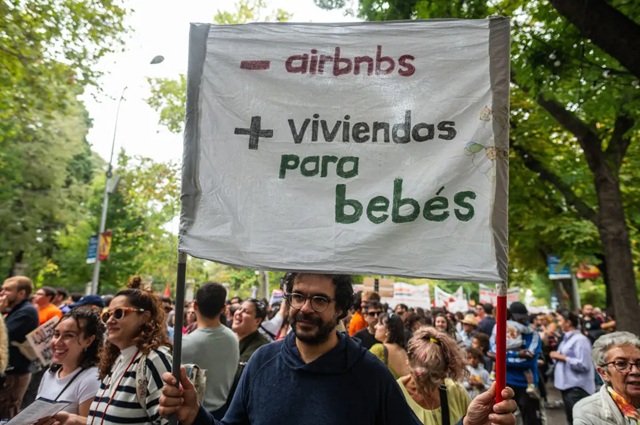
The crackdown follows months of mounting protests across Spain, where tens of thousands of residents have taken to the streets to voice frustration over skyrocketing rents and the scarcity of affordable housing — problems many blame on the unchecked growth of short-term holiday rentals. Signs carried by demonstrators have underscored the tension, with slogans such as “Less Airbnbs, More Housing for Babies.”
Consumer Minister Pablo Bustinduy condemned the exploitation of the housing market, stating, “Enough with protecting those who make a business out of the right to housing.” He confirmed that Madrid’s high court had backed the government’s request to remove at least 5,800 of the listings.
The problem has been especially acute in Spain’s top tourist destinations, including the Balearic and Canary Islands, Barcelona, and coastal cities. The regional government in the Balearics has gone so far as to halt influencer-driven tourism promotions, saying that “selfie tourism” is degrading natural sites and attracting unsustainable visitor numbers. A spokesperson for the region’s tourism ministry said, “This type of promotion clashes with the philosophy of tourist containment that this government is committed to.”
Barcelona’s mayor, Jaume Collboni, has already taken a tougher stance. Last year, he announced that all short-term tourist rentals in the city would be banned by 2028, a move seen as a major shift in urban tourism policy.
Meanwhile, Airbnb has pledged to fight the decision, arguing that the ministry lacks the authority to enforce such restrictions and criticizing the methodology used to identify rule-breaking properties. The company maintains that many of the listings flagged for removal do not actually require a license under existing laws.
Spain’s rental property boom has outpaced construction, with many homes entering the holiday market instead of the long-term rental sector. Official figures show there were approximately 321,000 licensed holiday rentals in Spain as of late 2023 — a 15% increase since 2020. However, unlicensed rentals are believed to be widespread.
The social backlash against overtourism is not new, but it has reached new intensity in recent months. Over the weekend, more than 20,000 demonstrators marched in the Canary Islands under banners declaring “Massive tourism is making us homeless” and “The Canaries are not for sale.”
Spain, the world’s second-most visited country, welcomed a record-breaking 94 million tourists in 2024. While tourism remains a key pillar of the Spanish economy, public opinion is increasingly wary of its cost to local communities.
The government’s latest action signals a turning point in how Spain balances its economic reliance on tourism with the urgent needs of its residents. As summer approaches, the outcome of this regulatory battle may set a precedent for other popular destinations grappling with similar tensions.