


The merit I gain from sewing back together the north, south, east, and west of the country that had remained fractured for three long decades makes me a man who can die free of debt to Mother Earth and without fear of the samsara journey that lies ahead of all beings.
The fact that I can take leave of my duties after nearly 41 years of service as a victorious commander with a proud military persona is a divine salute to my prowess as a warrior and an acknowledgment of my patriotism, nationalism, and loyalty to the people and the state.
I can state fearlessly that from the moment I reported for duty as a young cadet, through a career in which I held every rank within the military hierarchy, occupying positions and appointments from which both order and command were issued, and ascending to the rank of Commander of the Army of the Democratic Socialist Republic of Sri Lanka as a highly disciplined officer of the forces, the military chapter of my life has been one of complete transparency that cannot be challenged in the slightest degree.
As the first officer to join the battle-hardened Gajaba Regiment formed by the late Major General Vijaya Wimalaratne, I was fortunate, as a second lieutenant, to come under the patronage and fatherly guidance of this august human being and to be honed in the techniques and subtleties of war by the best there was. Such was his commitment to moulding quality soldiers that he provided me with books from his own library to increase my knowledge and military literacy, stating that someday, I should be sitting where he was sitting as the commanding officer of the regiment.
I became a soldier in a fearful era when the peopled earth groaned in the throes of war. Due to the inefficient national security policies existing at the time, the fact that there was a military funeral in some village every single day of the year was a harsh and terrible reality. Such was the extent to which military deaths pervaded the country.
“As a newly joined young second lieutenant in the Army, my first duty was to receive the casualties of the terror attack on Kokilai at the Anuradhapura hospital. That painful experience tempered and strengthened me massively. That day, deep within my heart, I embedded the thought that I would only leave the Army as a man who defeated war as a victorious warrior.
In the eighties, I entered the war as a second lieutenant of the Gajaba Regiment in the Jaffna peninsula, where the terror war was raging. At Achchuveli during the Vadamarachchi operation and at Odusudan during the Jaya Sikuru operation, I escaped with grievous injuries under deadly fire and, without retreating in defeat, engaged the enemy, making the battlefield my life. That became the joy of my life, the love of my existence. As a result, excepting the Yal Devi operation, as an infantryman in every other major military thrust against terror, I took my shrapnel, infiltrated body into the thick of battle, dripping blood, sweat, and tears onto our motherland, which I swore and strove to protect with my life.
“As a captain, I was engaged in the Balawegaya operation, which was conducted to rescue personnel under siege at the Elephant Pass camp. Soon after the completion of those operations, I was posted as an Officer Cadet Instructor at the Army Training Centre at Diyatalawa, now called the Sri Lanka Military Academy Diyatalawa, where I trained the first foreign student batch for the Sri Lanka Military Academy. As I was reluctant to leave the battlefield, Major General Vijaya Wimalaratne addressed me firmly using military parlance. Military orders cannot be sidestepped. I entrained for Diyatalawa. There, I was given the duties of a military instructor, and I recognised that military science and military action must both be used in equal measure on the battlefield. It was due to this insight and knowledge that, in later years, I was able to obtain the ‘psc’ degree from the Defence Services and Staff College- Sapugaskanda.
I re-joined the battle in the North, and within a short period of time, I was appointed the Commanding Officer of the 8th Battalion of the Gajaba Regiment to take part in Operation Rivirasa to liberate the Jaffna peninsula in 1995. Thus, I became the youngest commanding officer in the history of the Army. Having served as the Commanding Officer and in few other appointments, later I was once again posted to train novice officers, and the Army recalled me to Diyatalawa as the Commanding Officer of the Officer Cadet Training Wing. Although I spent my time remote from the war and in the central hills of the country, my desire was to spend my youth on the battlefield. Free of family burdens, my unshakable resolution was to sacrifice my youth to free my country. I considered it a greater calling to die single and as a youth in the service of my country rather than do so while harming “dependents” within the folds of a family.
Again, I was recalled for military operations in the North in 2006, when the terrorists attacked what was known as the National Defence Line, the forward-most defence line of the Sri Lanka Army at Muhamalai, where the terrorists had captured three-quarters of the line through a surprise attack conducted by breaking the ceasefire. The then Commander of the Army posted me overnight from Diyatalawa to Muhamalai as the Commander of the Air Mobile Brigade. Thereafter, my brigade recaptured the entire defence line immediately, ending the engagement with a resounding victory for the Army.
In recognition of the fact that I was a fearless soldier who had made battle his very life, the Sri Lanka Army acknowledged me as a war hero by taking the necessary steps to simultaneously award me the ‘Weera Wickrema Vibhushanaya’, ‘Rana Wickrema Padakkama’, and ‘Ranashura Padakkama’ when I was just a second lieutenant. This was a historic moment, as it was the first and only time that a second lieutenant or any equivalent rank in any of the forces was simultaneously awarded all three of these gallantry medals.
The Year 2007 dawned with harbingers of a journey whose results could not be undone. Seeking victory in the war while holding various ranks and executing my duties to the highest level of excellence, I had, by then, been promoted to the rank of brigadier.
I commenced the final battle to get rid the guerrilla terrorists, LTTE from the motherland. That was through the Wanni Humanitarian Operation. As the most decisive flank of the operation that commenced on 1st September 2007, a battlefront was established to reclaim the Mannar region from the clutches of the terrorists. That front, under the command of Brigadier Chagi Gallage, was known as Task Force 1. However, unfortunately, Brigadier Gallage was indisposed. All command decision-making was reassigned to me, and I commenced operations from that point onwards. Even as I witnessed those who would die on my command, my brothers in arms fall in front of my eyes, even as they sacrificed their arms, legs, flesh, and eyes, I looked ahead through a haze of blood and tears and pushed on with just one goal in mind: to utterly destroy these terrorist murderers. It did not take long for the Army to rename this gallant battlefront as the 58th Division.
“One by one, the military camps of the terror group that had been fallaciously labelled ‘unconquerable’, a group that used the most illegal and vile military tactics known to man and was the only terror outfit with air, sea, and land capabilities, fell before the amazing and massive onslaught of the 58th Division.
In unrelenting waves, the 58th Division and Commando Brigade, both under my command, pushed forward from the Western coast of Mannar to the Eastern coast of Mullaitivu, treating the aggressors with compounded aggression and the innocent with compassion personified. Sweeping across Arippu and Silawathurai and utilizing the A32 road from Mannar to Pooneryn for military logistics, the front marched through Adampan, Sahalneliya, Vedithativu, Iluppakadavai, Vellankulam, Mulankavil, Nachchikuddah, Devil’s Point, Pooneryn, Paranthan, Kilinochchi, and Elephant Pass. We arrived victorious on the A9 road between Kandy and Jaffna, then moved east of it through Dharmapuram, Vishvamadu, Pudukudirippu, and Pudumatalan, winning the way to Velamullivaikkal. There, we witnessed the fear-distorted faces of dead terrorists stuck in lagoon mud; those whose decades-long malefactions had destroyed 29,000 military lives, sacrificed thousands of innocent Sinhala and Tamil people to their sinful aims, physically and mentally disabled thousands of military and civilian lives, and caused the destruction of billions of rupees worth of national wealth. To know fully and finally that my warriors and I were able to wipe the fear of death permanently from the countenance of our beloved motherland and usher in that long-sought, utopic, heavenly state once again is a feeling beyond words.
I know it is an act of great disrespect to summarize that final humanitarian battle in this way. Indeed, it should rather be a chronicle equivalent to the Mahavamsa (the defining historical tome of Sri Lanka). It would truly be an abomination if the deeds of the 58th Division and its valiant march, liberating the largest territory from the terrorists, capturing the largest cache of military wear and weapons, destroying the largest amount of enemy ordnance, capturing the largest number of guerrilla fighters, receiving the largest number of terrorist surrenders personally, and rescuing the greatest number of civilians from the largest human shield in a hostage mission unparalleled anywhere in the world, all without causing even a needle-prick’s worth of harm to the innocent—are not written in golden letters in detailed historical tomes.
This was a heroic march spanning not less than 200 kilometres, from coast to coast, west to east, engaging in deadly skirmishes and battles all the way. I consider this victory the result of clearly understanding the immense responsibility placed upon the collective shoulders of the gallant soldiers and myself by our motherland—to conduct this massive military operation without spilling a single drop of blood of any captured terrorist or freed civilian, while constantly succouring the hungry and the frightened.
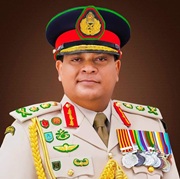
With the 58th Division of the Sri Lanka Army leading the way, the Tri-Forces liberated the citizens of the country from the fear of death that the terrorists had imposed upon them for over three decades. This was the only dream I sought to see fulfilled as a military son before death claims me. To the victims of terror murdered at Kokilai, who first awakened this future path in me; to the thousands of soldiers who perished due to terrorist genocide; to the countless disabled military personnel and civilians, I bequeath this victory, won by living with death as my only constant companion for thirty long years. To these men, who were the best of the best, belong this array of medals that adorn my chest.
The war was over. True Sri Lankans honoured and felicitated the returning heroes of the war at the highest level. State honours were conferred upon those august warriors who conducted themselves with excellence on the field of battle. Recognizing my military prowess, the government took the necessary steps to promote me to the rank of Major General at the end of the war. This was a historic moment, as I became the youngest Major General in the history of the Army. It was a rank I valued deeply, as it was granted to me purely on merit.
We had freed our country from the yoke of terror. The scent of that pure, unsullied Lankan air, which I continue to breathe and unreflectingly enjoy to this very day, is a testament to our achievement. Pursuing the genocidal terrorists who had fled into the harsh northern jungles, we collectively infused life back into the northern and eastern territories of our land, which had lain desolate for three long decades.
With the cessation of hostilities, the state adopted a policy to utilize soldiers in support of national development projects. In line with this policy, while I was still serving in the Army, the government appointed me as Sri Lanka’s Ambassador and Deputy Permanent Representative to the United Nations in New York, USA. This appointment was also historic; it marked the first and only instance of an officer on active duty in the Sri Lanka armed forces being elevated to the ambassadorial rank. It is essential to state here that this appointment was based on my qualifications, skills, and capabilities, as well as the services I rendered to the nation, and was not a petty or narrow political decision.
Shortly after arriving in New York on behalf of the state, I secured premises for the Sri Lanka mission through an outright purchase, saving the government years of rent that it had been paying for decades and would have otherwise continued paying indefinitely. Additionally, I significantly reduced operational expenses for the mission by promoting staff volunteerism to handle its daily requisites.
During my tenure at the UN, I was able to provide educational support through the state to the swift integration of Buddhist Philosophy into American public thought. Cantered around the 2600th Buddha Jayanthi, I was able, for the first time, to conduct a pirith chanting and a special Buddhist ceremony at the United Nations with the participation of 300 Buddhist monks. This was indeed a rare moment, and I chronicled it in the tourist attraction book titled Sri Lanka Identity for 2600 Years, which I presented to the then Secretary-General of the UN, Mr. Ban Ki Moon.
Leveraging the personal contacts I made within the UN system, I was able to channel Sri Lankan Army, Navy, Air Force, and Police personnel to various peacekeeping forces around the world at the time. Additionally, through these efforts, I was able to break the image of villainy that had been falsely attached to the Lankan security forces. Through my brainchild, the Foreign Military Service Project, the government was able to transform its mission offices in New York into profit-making offices with significant foreign exchange earnings. I must confess, this brought me immense happiness.
I consider the deployment of a contingent of six helicopters to the UN for peacekeeping in the Central African Republic and the establishment of a Sri Lanka Army Hospital in parallel with UN Peacekeeping efforts in South Sudan to be the crowning achievements of my state service at the UN. The true result of my great love for my country was that I was able to use my state service to both support the government I had freed, which had fallen victim to wasteful administrative policies and institutional bankruptcy, and to open up, at least to some extent, lifelines for maintaining the nation.
In recognition of my services to the UN, the then Secretary-General, Ban Ki Moon, appointed me as an advisor on peacekeeping matters. This was the first and only time that a Sri Lankan military officer had been appointed to such a position.
Having completed my state service, I returned once again to serve the Army, where I was tasked with engaging in official duties within the upper administrative echelons of the Army. The experience and insight I gained as an ambassador during my state service stood me in good stead when I took up these duties.
Due to my qualifications and seniority, I was appointed Army Chief of Staff on 9th January 2019 and, subsequently, in recognition of my achievements on the battlefield, skills demonstrated as a military advisor, and capabilities shown as a staff officer of the Army, I was appointed the 23rd Commander of the Army by the then President of the Democratic Socialist Republic of Sri Lanka, His Excellency Maithripala Sirisena, on 19th August 2019. From 1st January 2020 onwards, in addition to my duties as Commander of the Army, I was also appointed acting Chief of Defence Staff, during the tenure of President Gotabhaya Rajapaksa.
If I paid my debt to my country, if the country recognizes me, if the people of the country bless me, if I have enjoyed any measure of material or spiritual happiness, it is due to the Sri Lanka Army. That is an irrefutable truth. Standing on this reality, with the firm resolve to give everything I have to the Army and take nothing in return, I took up my duties in the high office of Commander of the Army.
To be the Army Commander is a sobering and momentous honour. During my tenure, I resolved to prevent even the slightest impure thought, word, or deed from sullying or violating the purity of the position and what it stands for, and continues to stand for.
My long-term dream was to build a current, modern, balanced, and powerful Army. With that vision uppermost in my mind, for the first time in the history of the tri-forces, I introduced the Sri Lankan Army’s Way Forward Strategy 2020-2025 to contextualize the role of the Army in the contemporary reality it would face in the near future.
The 1st Task Force, Engineering Corps, Drone Regiment, New Directorates, Headquarters Brigade, Agriculture and Livestock Regiment; all of which I introduced to the Army, are now providing high-impact services to both national security and the government’s development vision. The refurbishment of defender jeeps through the Mechanical Engineers for re-commissioning into Army service through the Military Transport Equipment Manufacturing Project was another one of my initiatives. This intervention prevented the wasteful destruction of national resources and wealth due to the previous practice of selling used vehicles on tender at rock-bottom prices. I also took leadership in manufacturing a large number of bulletproof vehicles, trucks, and gully bowsers for the military using local expertise and the labour of the soldiers.
Under the Ordnance Corps, I took steps to establish a manufacturing factory for producing military ware required by the Army. During my tenure as Army Commander, I was able to upgrade the uniforms of the Commando Regiment and the Special Forces to Combat Type 07, provide a modern uniform to the Air Mobile Brigade, introduce a cold weather uniform for the first time, and provide commissioned and other rank personnel with attire and ornaments that they could wear with pride.
Furthermore, with the aim of creating the healthiest soldiering cadre of any Army, I created the Akuregoda Fitness Centre, equipped with ultra-modern, cutting-edge equipment and facilities.
As the Army Commander, for the first time in history, I also took steps to implement the largest mass promotion of both commissioned and other rank officers, while also expanding the limited number of vacancies that existed between the ranks of Lieutenant Colonel and Major General to provide opportunities for a greater number of those holding higher ranks to receive promotions. In total, 4,938 commissioned officers and 94,851 other ranks were promoted.
Further, with the social stability of Army personnel in mind, I had a vision to ensure that every member of the Army had a house of his own. Towards this goal, I created a system for all ranks to obtain housing loans up to LKR 15 million on soft interest terms and also implemented a number of administrative refinements and changes to enable them to access the human resources necessary for their home construction.
I expended much effort during my term of office to ensure the wellbeing of all disabled soldiers, as well as that of retired Army commanders. The Army Hospital under construction in Kandy is another massive contribution of mine to the wellbeing of personnel and the overall health of the armed forces.
An Army is a force that forms the first line of both defence and attack in the face of any unforeseen disaster that may befall a nation and its people. When the fearful Covid-19 pandemic spread like a plague across the world, the task of saving the nation fell to the armed forces. Setting aside all other issues and priorities, the Army engaged in a round-the-clock humanitarian effort to save the country from this deadly disease.
I was awake throughout the day, every single day. Utilizing the strength of the Army and the unstinting support of the Navy, Air Force, Police, health ministry, as well as the support of all government institutions and private organizations, I engaged in my second great, victorious humanitarian effort: managing the entire COVID project, inoculating 20,200,000 citizens, implementing a global first in drive-through vaccinations, responding to food needs, mitigating the mental trauma of the people, establishing island-wide COVID prevention and quarantine centres, creating massive treatment centres that could treat up to 1,500 patients across the country, providing supplies to the national hospital network, ensuring the safety of citizens by establishing movement restriction zones across villages, towns, districts, and provinces, transporting all infected patients from their homes to hospitals, and administering final rites to victims of the disease according to global health guidelines. I also distributed inoculation kits island-wide, sought out individuals who were unable to move from their homes, and provided them with the necessary injections. Despite having hardly had a wink of sleep, I insisted on waking up each morning to give a media briefing to educate the public on the country’s situation with respect to the pandemic and to make sure that the nation remained protected and safe.
The public unrest of 2022 was a complex period during which I practically recognized my true friends and enemies in my official life. The official, armed human force that stands protecting the people and the nation in the face of both external and internal threats faced by a government is known as the state Army. The 2020 “aragalaya” was an internal unrest. During that period, I ordered the Army to use the absolute minimum force in controlling the people. I prevented even a single citizen from dying at the hands of a bullet fired by the Army. I was not vile enough or base enough to attack defenceless people as a power-drunk official. The result of that restraint and compassion was that it prevented the country from degenerating into utter chaos. The repercussions of official aggression against civilians can be well seen in countries close to Sri Lanka, where crackdowns were brutal and murderous. Despite the claims of power-hungry rulers, I never entertained, even for an instant, any immoral or villainous intent. I did not possess base desires to be either the cat’s paw or the pet of foreign missions. I was, and still remain, faithful to the constitution of the country, the legislature, and the executive. If the wild claims of the rulers were true, then why did I deploy the Air Mobile Brigade to evacuate the 5th Executive President, who was the Prime Minister at the time, from the siege at Temple Trees? Why did I disburse and chase away a majority of protesters who had come to burn down the homes of politicians?
It should be clearly noted that post-aragalaya, as a disciplined officer, I refrained from speaking to either the media or any outside party on military matters. However, as I finally take my permanent leave of duty and bid my farewell, with no desire to hurt or cause any discomfiture to anyone, I am simply stating the truth as I know it to keep the record both straight and true.
Yet, my strategic plans and personal conduct during this period of trouble and turmoil were disadvantageous to me in the eyes of the rulers of the country. Even though I was only the second four-star general to be the commander of the Army, and while still having seven months before retirement, on May 31st, 2022, I was reassigned as the Chief of Defence Staff by the rulers of the country. Here, it must be stated in no uncertain terms that when President Gotabhaya Rajapaksa was forced to flee, I was not the Army Commander. I was only the Chief of Defence Staff, and I had been sent, at the behest of the president himself, to attend the conference of deputy national security advisors and was therefore overseas at the time.
In addition to all these accolades, recognizing my discipline and my adherence to the laws of the land, and highly satisfied with my conduct, the powers that be appointed me Deputy National Security Advisor for Sri Lanka from 2019 to the present. They also appointed me Chairman of the National Sports Selection Committee and gave me the post of Head of the Green Agriculture and Agri-Modernization Operation Centre.
I had the great good fortune of being awarded the Uttama Seva Padakkama for 15 years of unblemished service, the extremely rare Vishishta Seva Vibhushana Padakkama for 25 years of unblemished service, and the top triple of the Weera Wickrema Vibhushanaya, the Rana Wickrema Padannama, and the Rana Shura Padakkama for the voluntary act of bravery in the face of the enemy on the battlefield, with life itself as forfeit. This made me the recipient – not just once but on multiple occasions, of all the medals that a soldier in the Sri Lanka Army could commonly obtain, thereby making me the soldier in the annals of the armed forces to display the largest number of medals on his chest. I served for nearly 41 years, holding the record for the longest service in the history of the military in Sri Lanka.
“On the day that I finally lay down my duties, remove my uniform, and wend my way back home, I shall leave all of these medals and accolades, which are the symbols of my service, bravery, and gallantry, at the graves of the soldiers who fought with me and died to protect my country. This will be my final salute to their unparalleled love and unmatched sacrifice, to ensure that every single citizen can breathe the free air of our beloved nation.”











Why are you deleting my comment – you have done it 3 times – on the retirement of General Shavendra Silva ???????????????? I dare you to publish this
You have now deleted my comment re eminent service to the Nation by General Shavendra Silva for the 6th time, but you cannot silence me and I will keep trying. I dare you to publish this
We want to assure you that none of your comments have been deleted, as long as they comply with our guidelines. You may kindly re-post them and ensure they are properly published. – Editorial
Thank you for your email. Well, my comments were again deleted for the 7th time, by someone but I will certainly re-post them again.