Editorial
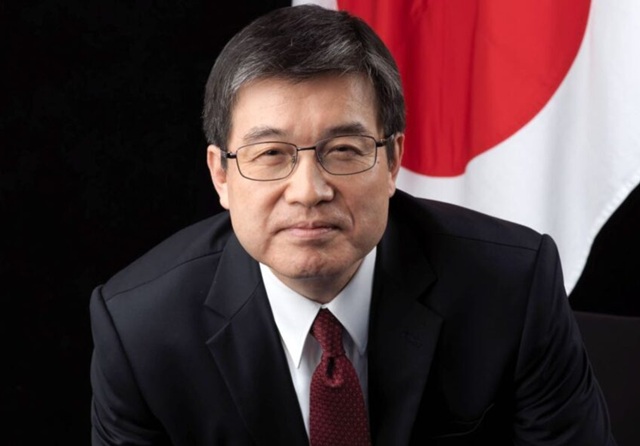
According to local media reports, Japanese Ambassador to Sri Lanka, Akio Isomata, has reaffirmed that Japan has been a victim of corruption in Sri Lanka. Let that not be misunderstood as mere diplomatic frustration—it is a staggering condemnation of a sovereign state. His allegations, by every metric of international protocol, are not casual remarks—they are calibrated, deliberate, and damning. And yet, our institutional reaction has been tepid, predictably bureaucratic, and disturbingly silent.
The Ambassador’s comments, delivered during a roundtable in Colombo, gain a far more sinister gravity when contextualised with recent exposés. Reports suggest that one of the previous regime’s most brazenly corrupt politicians—allegedly involved in demanding bribes from Japanese companies working on the Katunayake Airport project—was not only left untouched but politically exonerated. If that is true, what Ambassador Isomata has revealed is not simply a complaint—it is the diplomatic equivalent of an affidavit.
This, then, is not just an international embarrassment. It is a revelation that places our moral collapse under forensic light. It forces us to confront a harrowing question: Have we institutionalised corruption so deeply that even our closest allies are now compelled to speak publicly?
If Japan, a long-standing partner of quiet generosity and methodical investment, now declares us unreliable and untrustworthy, the fault lies not with foreign perception but domestic rot. Japanese firms, governed by some of the strictest anti-bribery laws on the planet, have allegedly been pressured, cornered, and even extorted in Sri Lanka. The fact that they refused to participate in bribery, and as a result faced obstruction, is not merely a diplomatic scandal. It is a geopolitical disgrace.
Let us speak plainly. If a foreign envoy publicly accuses us of corruption, and we respond with public relations scripts rather than independent inquiry, then we are proving our guilt through our cowardice. If even one Sri Lankan official—past or present—demanded illicit commissions from Japanese investors, then we owe more than an apology. We owe justice. Swift, visible, and merciless.
We therefore demand, without delay, a comprehensive forensic audit into every Japanese-funded or Japanese-involved project over the past twenty years—particularly the Katunayake Airport project, which now reeks of political cover-up and collusion. Such an audit must not be conducted by the same feckless institutions that have, for decades, treated corruption as a networking opportunity. This must be an independent commission with the power to subpoena, prosecute, and imprison.
And let us not pretend this is isolated. The pattern is painfully familiar: strategic foreign investors are coerced by Sri Lankan officials who mistake public office for private enterprise. When those investors refuse to pay bribes, their projects are stalled, sabotaged, or scuttled. Those who comply are rewarded with fast-tracked approvals—and a silent conspiracy of shared theft. The state, meanwhile, becomes an enabler. When investigations are attempted, they are blocked. When names are named, they are protected. When proof emerges, it is buried. And when voices speak up, they are silenced—not with bullets, but with bureaucratic indifference.
Now a foreign diplomat has shattered that silence.
This is no longer a domestic issue. It is an international indictment. It devalues our sovereignty, our currency, and our dignity. And the world is watching. If we allow this moment to pass without consequence—if we sweep it under the carpet of political alliances and press releases—then we will have declared to the world, in unmistakable terms, that Sri Lanka is open for corruption, not business.
There are those who will try to dismiss Ambassador Isomata’s remarks as politically motivated or diplomatically inconvenient. Let them. The truth is not required to ask for permission. It only needs to be told. And if what he has alleged is true—and all available evidence suggests that it is—then it confirms the darkest suspicions of our people: that the theft is not incidental, but institutional.
We are a country living through a manufactured poverty—engineered not by war or famine but by greed, incompetence, and impunity. And here, in the statement of a foreign ambassador, lies a mirror we dare not look into.
To the President, we say this: your National Anti-Corruption Action Plan will be meaningless if it does not begin with this case. You now have before you a test—not of strategy, but of sincerity. If you allow this matter to dissipate into yet another round of committee reports and non-binding recommendations, then your government will have validated the accusation not just of corruption, but of complicity.
If you are serious, start here. Order the audit. Name the names. Freeze the accounts. Arrest the guilty. Make examples so severe that even the most shameless will learn fear. Do it not for Japan, but for us. For our children, who will inherit not just our land, but our reputation. And for the world, which now looks at Sri Lanka with narrowed eyes and sceptical hearts.
Let us not be the generation that allowed our sovereignty to rot from the inside out. Let us not be the people who shrugged when a foreign nation told the world we are corrupt. Let us rise, not with empty slogans but with the weapon of accountability.
For if Japan called us corrupt, and we do nothing, then we were not insulted. We were described.