
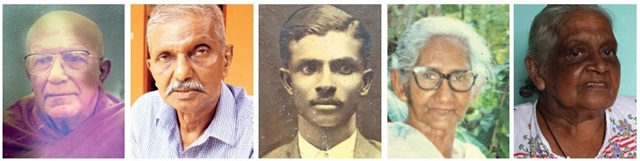
The JVP was born exactly 60 years ago today, on 14 May 1965. Although 12 people participated in the inaugural discussion held over two days at the house of Akmeemana W. T. Karunaratne, two were expelled from the group on disciplinary grounds at the same time. The remaining ten are considered to be the founding members of the JVP. Accordingly, the 10 founding members of the JVP are Rohana Wijeweera, Sanath Boruluketiya, W. T. Karunaratne, Mabole Milton, Sathosa Thalagalage Walter, Jayaratne Perera alias Delgoda Raja, Herath Mudiyanselage Thilakaratne alias Navy Thilak, W. T. Amaratunga, Siripala Abeygunawardena of Tissamaharama, and Wilson Dedigama of Ruwanwella.
The writer has personally met and discussed with 7 of the 12 people who participated in the inaugural discussion over the past three decades. Currently, only three of the 10 founders are alive in 2025. The writer also met most of the families of the remaining 6 of the 12 participants of the JVP inaugural discussion who were not alive at that time and could not be met. Accordingly, they reflected at length on the past inaugural discussion/story initiated by the JVP, and this article was prepared based on those facts.
The 12 people who participated in the inaugural discussion were Patabendige Don Nandasiri Wijeweera alias Rohana Wijeweera, born in Kottegoda, Matara; Withanage Wijesena alias Sanath Boruluketiya, born in Gonapinuwala, Galle – Angulugaha; Welithanthrige Karunaratne alias W. T. Karunaratne, born in Handala; H. D. Milton Fernando alias Mabole Milton, born in Wattala; Siripala Abeygunawardena of Tissamaharama; Rajapaksa Pathiratnalage Jayaratne Perera alias Delgoda Raja, born in Delgoda; Don Walter alias Sathosa Walter Wijesiri, born in Polwatte, Pannipitiya; W. T. Amaratunga; Wilson Dedigama, born in Ruwanwella; Herath Mudiyanselage Thilakaratne alias Navy Thilak of the Navy; Thelge Beauty Chandra Fernando alias Ranasinghearachchige Chandra Ranasinghe alias Thevarathanthrige Beauty Chandra Fernando alias T. B. C. Fernando of Ratnapura; and Devundara Muthumala of the University of Colombo.
The last-named T. B. C. Fernando and Devundara Muthumala of the University of Colombo were expelled from the group by Wijeweera on disciplinary grounds immediately after the first discussion. It was later revealed that five of the 12 belonged to the Kaurava caste, five to the Govigama caste, and one each of the other two belonged to the Deva and Bathgama castes.
Accordingly, the 10 founders of the JVP are Rohana Wijeweera, Sanath Boruluketiya, W. T. Karunaratne, Mabole Milton, Sathosa Thalagalage Walter, Jayaratne Perera alias Delgoda Raja, Herath Mudiyanselage Thilakaratne alias Navy Thilak, W. T. Amaratunga, Siripala Abeygunawardena of Tissamaharama, and Wilson Dedigama of Ruwanwella.
The two who participated in the inaugural discussion but were expelled from the group on disciplinary grounds were T. B. C. Fernando and Devundara Muthumala of the University of Colombo.
Prior to this discussion, Wijeweera had held several rounds of talks with many people of various ranks in Colombo and Ambalangoda. Most of the discussions in Ambalangoda were held at the Kaluwadumulla Temple. The incumbent of the temple at that time was Venerable Patabandimulla Buddha Sri Thero. The Thero was a pioneer of left-wing and Buddhist revivalism. David and Paul, who were the temple’s volunteers, were two people who greatly supported the Wijeweeras during these discussions. The Vice President of the Workers’ Union of the Land Development Department, Lunumodarage Dinoris alias Cyril Dissanayake, born in Kamburugamuwa Kotwela; the Secretary of the Office Clerks’ Union of the Land Development Department, Gustinna Wadu Piyasiri Gunaratne alias Sarath Gunadasa, born in Ambalangoda; and Gonapinuwala Witthanage alias Sanath Boralukatiya, a teacher who lived in the villages of Dodanduwa and Walamulla, who was born in Angulugaha, were also present at those discussions.
On 13 May 1965, they had dinner with Thossey and Wade at a convenience store in Union Place and went to Maradana railway station to buy separate tickets. After arriving in Galle by night mail train, the group slept for about three hours with their luggage on their heads near the Samanala Bridge in Galle until dawn. Since it was Vesak Poya that day, Wijeweera had initially instructed the group to appear as a group on a pilgrimage.
As soon as the sun rose, Wijeweera said he should go to Maha Modara Hospital and meet his school friend, Nurse Tamara, who was working as a resident nurse there. He said he needed to get some antiseptic liquid and cotton wool from her. However, since she had finished her shift that day, the antiseptic was obtained from a pharmacy in Galle.
Then they boarded the bus to Thalgampala at around eight in the morning to go to Karunaratne’s house in Akmeemana, Ihalagoda, Kurunduwatte from Galle. It was around nine in the morning when they reached the house from Dehiduwa Junction. They were welcomed by Karu’s parents. For breakfast, milk rice with salt and pepper and sour milk rice made with coconut nectar were prepared at the house. The owner of the house, Karu’s father, Vedithanthrige Themis Appuhamy, was born in 1899 and was 66 years old at the time. He served in the civil service of the Royal Army for a time and later worked as a driver in Abeygunasekara alias Patty’s bus company. Later, he left that job and turned to farming as his main profession. His wife was Adahettige Indravathi Perera, who was born in Wattala, and the couple had ten children. Seven were boys and three were girls. W. T. Karunaratne, who later became a prominent leader of the JVP, was the fourth child of the couple.
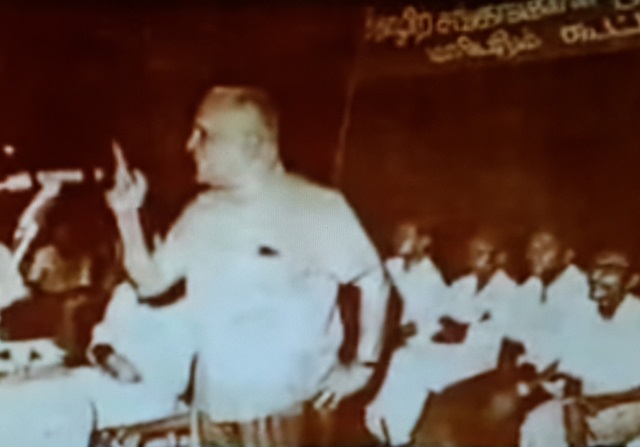
The inaugural discussion of the JVP began on 14 May 1965 after breakfast and was held on mats in the living room of Karu’s house. Rohana Wijeweera explained many things about the political situation at that time and the left-wing movement to the participants. The Chinese and Cuban revolutions were also discussed at length, and it was decided to form a Marxist-Leninist revolutionary organisation for Sri Lanka.
Wijeweera stated that smoking and drinking alcohol as a member of the revolutionary organisation distort the mind, and unnecessary expenses would also be incurred. He also emphasised that love affairs can dull the revolutionary spirit, waste time unnecessarily, and fall into the hands of the secret enemy of the revolutionary party, and said that such things should be avoided.
Here, Devundara Muthumala, a Colombo University student residing at Pansala Road, Maradana, questioned this; he said the decision was harsh. Muthumala said he would respectfully leave since he could not accept the decisions. He stayed until lunch at the request of others and left the proposed revolutionary party on the first day itself. Devundara Muthumala, who entered politics from the Panadura group of Shanmugadasa’s Ceylon Communist Party, had a father who was a teacher. At that time, he was in a love affair with a young woman from Waidya Road, Dehiwala. He also smoked the most expensive cigarette, ‘Aadat’. Another person who joined Shanmugadasa’s Ceylon Communist Party in Panadura was T. B. C. Fernando. Born in Ratnapura, he was an alumnus of Sumangala College, Panadura, and was a trainee teacher at the time. About 15 frontline activists of the Panadura group were with Shanmugadasa, and they were people with Marxist knowledge.
The discussion, which began at 10 a.m., was adjourned for lunch and continued until 4 a.m. the next day. The discussion resumed at 9 a.m. the next day. Wijeweera, who explained the facts using a geographical map of Sri Lanka, emphasised that the younger generation had no future under this system. Pointing out that many water sources rising from Samanala Mountain go around the country and finally flow into the ocean, Wijeweera explained wonderfully how to build the country through an agrarian economy, said a participant. Rohana Wijeweera is said to have vowed that the new revolutionary organisation would gain power in Sri Lanka within ten years.
The discussion ended at around 12 noon with all those present reciting in unison a pledge that they would devote their entire strength to the Sri Lankan revolution, risking their lives, and would never betray anyone under any circumstances. Later, everyone signed a document with a drop of their blood. The blood used for this was taken by pricking their little fingers with a cut from a lime tree in the yard of Karunaratne’s house. When they arrived at Karu’s house, Wijeweera soaked a piece of cotton wool in disinfectant liquid that he had purchased from a pharmacy in Galle and wiped the little finger. The letter was later kept safe by Welgama, who was working in the Income Tax Department in Bandaragama. A copy of it was also given to his mother as a gift.
After lunch, Mabole Milton, who saw another person there writing his address on a piece of paper to the daughter of the owner of the garden, Alwis, said so in front of everyone that it was an act of resistance to the revolution. After that discussion, T. B. C. Fernando was also removed from the revolutionary organisation. Accordingly, the 10 founders of the JVP are Rohana Wijeweera, Sanath Boruluketiya, W. T. Karunaratne, Mabole Milton, Sathosa Thalagalage Walter, Jayaratne Perera alias Delgoda Raja, Herath Mudiyanselage Thilakaratne alias Navy Thilak, W. T. Amaratunga, Siripala Abeygunawardena of Tissamaharama, and Wilson Dedigama of Ruwanwella.
Herath Mudiyanselage Thilakaratne alias Navy Thilak, who was born in Badulla and was serving at the Welisara camp, was present at the discussion. While serving at the Trincomalee camp, he had met Wijeweera in one of Shanmugadasa’s political classes. Navy Thilak, who was not very tall but had a graceful physique, was a good rugby and volleyball player. Ruwanwella’s Wilson Dedigama, a worker at Helis, was also a trade union activist and joined Wijeweera through Shanmugadasa’s society.
Rajapaksa Pathiranage Jayaratne Perera alias Delgoda Raja, who worked in the port technical department, was a resident of Kanduboda. He joined the Port United Workers’ Union of the Communist Party in 1957 and later joined Shanmugadasa’s party, but left it and supported Wijeweera. Raja told the writer that he had met Wijeweera in 1964 at a workers’ meeting in Kochchikade, Colombo. Raja’s motorcycles, EN 90130 and 1 Sri 7765, were used for many activities in the early days of the JVP. Wijeweera’s brother, Ananda, stayed at Raja’s house for about a year and a half while studying at the Orugodawatte Technical College. Wijeweera also stayed at the house for about three months at a time. Raja, who was known as a kind and honest person, later left the JVP but maintained his relationship with Wijeweera as a loyal supporter until the end. Wijeweera requested those who participated in this meeting to dedicate themselves full-time to promoting the party’s objectives. As a result, Amaratunga Diyatalawa, who was then the Assistant Managing Secretary of the Socialist United Workers’ Union of the Port, which belonged to Shanmugadasa’s party, contributed to promoting relations with the new revolutionary organisation while working at the Kahagolla Retreat.
Born in Polwatte, Pannipitiya, Walter Thalagala Sathosa was a motor technician. His father was Chandramana, who also worked at Sathosa, and his mother was a teacher. Walter, who joined Wijeweera through Shanmugadasa’s party, renounced his ties with the JVP after the ’71 rebellion.
Of the 10 founding members of the JVP, only 7 remained with Wijeweera by the time of the April ’71 rebellion. Two of them died in the rebellion itself; they were Mabole Milton, who died in the attack on the Kadawatha police, and Gonapinuwala Sanath. Sanath was the second leader of the JVP when the rebellion began. As of 2025, only three are alive. Of those three, W. T. Karunaratne is currently spending his final days in a Gampaha elderly home. The remaining two also withdrew from active politics after the 1971 uprising.