by Durga Velayudham
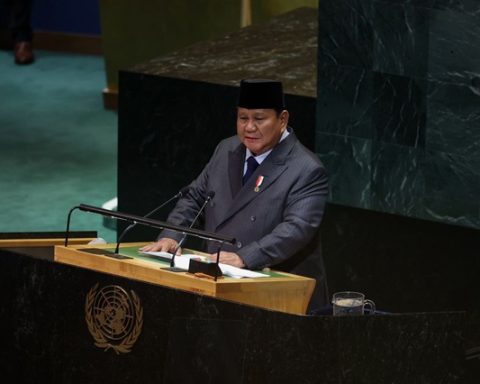
“I do not own oil wells,” President Dissanayake proclaimed, as if repetition alone could erase the mounting chaos his government has inflicted on the nation. The words sound almost absurd, a pathetic deflection delivered to an already anxious public. What is shocking is not that he clarified this point, but that a sitting President feels the need to address something so obvious while failing to lead decisively on the real crises facing Sri Lanka.
The global oil market is convulsing. The ongoing war between the US, Israel, and Iran has sent prices soaring, causing economic tremors worldwide. Governments are scrambling, markets are panicked, and citizens are squeezed by rising costs of fuel, electricity, and essential goods. In Sri Lanka, these shocks hit a population already strained to its limits. Yet, instead of confronting this with robust policy or innovative leadership, the President chooses theatrics, carefully staged addresses, and endless excuses.
Dissanayake’s latest foray into public explanation—his meeting with Colombo’s business leaders—reads less like a strategic briefing and more like a self-serving performance. He insists repeatedly that he does not own an oil well, that the government will not profit from the people, and that the nation will have uninterrupted fuel for two months. Yet no one asked if he owned a well. This “clarification” is a textbook example of a political sleight-of-hand: distract, deflect, and dominate the narrative while the country burns.
What is more alarming is the machinery unleashed to promote this narrative. The government’s troll army, masquerading as YouTubers and social media influencers, has been elevated to the level of pseudo-judges, broadcasting selectively edited updates about ongoing investigations, CID activities, and supposed “successes.” These online provocateurs are now the arbiters of public perception, bypassing courts and ethical principles, hammering away at the integrity of due process. The principles of justice—fairness, impartiality, transparency—are sacrificed at the altar of propaganda, while the President hides behind this digital circus to mask administrative incompetence and policy failure.
It is impossible to ignore the irony of his proclamations. He warns of global pressures and rising oil prices, yet does not explain a coherent domestic plan beyond two months. He blames “social behavior” and panic buying for driving demand, citing diesel and petrol sales doubling within days. The message is clear: the people are at fault, not the administration that failed to buffer against such predictable market shocks. True leadership does not lecture citizens for reacting to crises; it anticipates the storm and builds resilience. Dissanayake lectures, obfuscates, and seeks excuses.
Even his economic interventions are underwhelming. The formation of an Economic Monitoring Committee sounds impressive until one recalls that 47% of the fuel supply is in the hands of foreign companies. The President, therefore, possesses neither full control over supply nor meaningful influence over pricing. He can promise uninterrupted fuel for two months, but beyond that, the nation is left adrift, held hostage by global volatility and domestic inaction.
And then comes the theatrics of empathy: “We will face the international crisis together,” he says, calling on citizens to practice “small sacrifices” and adapt consumption patterns. The optics are designed to create unity, but the content is hollow. There is no vision, no real policy, only calls for patience while the government struggles to manage the optics of failure. Leaders with substance act decisively; leaders with excuses, like Dissanayake, recite rehearsed lines before an audience of digital amplifiers.
The audacity to address imaginary oil ownership, while unleashing troll armies to distort the perception of justice, is unprecedented. Never before in Sri Lanka’s history has a President permitted propaganda to substitute for leadership, or elevated YouTubers above the judiciary to dictate what the public should believe about ongoing investigations. This is not governance; it is spectacle. It is distraction dressed as policy.
Sri Lanka deserves a leader who confronts crises, not one who performs for social media ratings. It deserves integrity in both governance and justice, not endless digital echo chambers amplifying half-truths. Dissanayake’s repetitive insistence that he “does not own an oil well” is not leadership—it is a confession of incapacity wrapped in theatrics, a pathetic performance for a population demanding substance over spin.
Pathetic excuses will not fill tanks, stabilize markets, or protect citizens. And yet, the President persists in this charade, elevating propaganda above prudence, optics above action, and YouTubers above law. Sri Lanka faces real crises—economic, social, and geopolitical—and what it gets in return is a Comrade Without Oil Well.