Taiwan is intensifying its efforts to shield its undersea cables, a lifeline for the island’s economy and global tech supply chains, amid fears that China could exploit maritime routes to carry out covert interference operations. The latest developments, reported by Nikkei Asia, reveal how Taiwan’s coast guard is responding to a rising wave of cable disruptions suspected to be linked to Chinese gray-zone tactics.
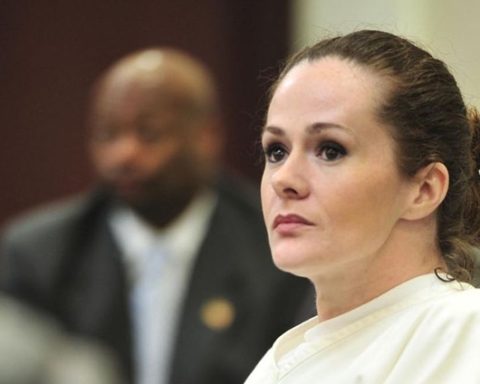
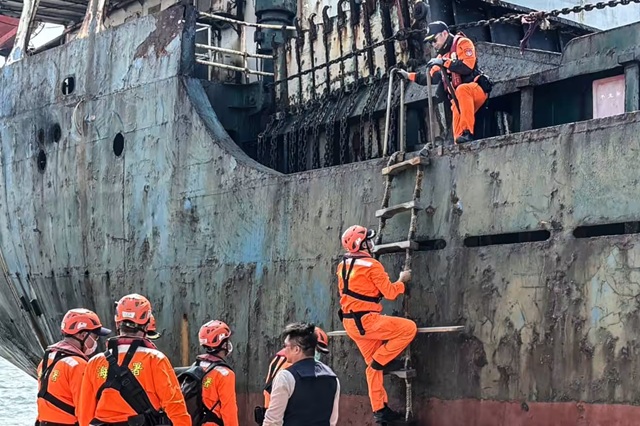
In February, Ruan Jhong-Cing, chief officer of the coast guard patrol boat PP-10079, led a hazardous operation in the stormy waters off Tainan after detecting a suspicious cargo vessel loitering near critical submarine cables. The ship, registered as the Hong Tai 58 but later identified as Hong Tai 168, was suspected of tampering with Taiwan’s undersea infrastructure. The patrol team’s inspection and intervention led to the first-ever prosecution of cable sabotage in Taiwan, resulting in a three-year prison sentence for the vessel’s Chinese captain—though no direct link to Beijing was proven, according to reports by Nikkei.
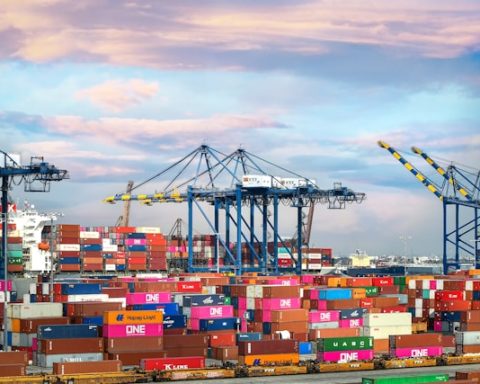
The incident underscores a broader pattern. Taiwan reported an unprecedented surge in cable disruptions earlier this year, raising alarms that China might be using commercial and fishing vessels as cover for disruptive operations aimed at communications infrastructure. As Nikkei Asia detailed, Taiwan’s coast guard has placed 96 ships on a watchlist, many flagged under “flags of convenience” registered in jurisdictions such as Togo, Cameroon, and Mongolia—practices that obscure ownership and complicate enforcement.
“Gray-zone activities are serious because these threats could be Trojan horses,” Hsieh Ching-Chin, deputy director general of the Taiwan Coast Guard Administration, told Nikkei, warning that even vessels registered for commercial purposes could be directed by Beijing to assist military operations.
Subsea cables, which carry over 95% of global internet traffic, are essential to Taiwan’s digital economy. Fourteen submarine lines connect Taiwan internationally, with ten linking outlying islands. Experts like Herming Chiueh, former deputy minister of digital affairs, told Nikkei that while aging cables naturally suffer wear and tear, analysis shows that nearly 80% of incidents in the past five years were caused by human activities—ranging from anchors and dredgers to deliberate sabotage.
The stakes are high. Taiwan’s strategic position along the first island chain—seen as a buffer to Chinese expansion—has drawn global interest. The U.S. and EU have already moved to reduce Chinese involvement in subsea cable projects, while Taiwan collaborates with partners like OneWeb to bolster satellite communication resilience.
Nevertheless, protecting cables remains daunting. Once vessels move beyond Taiwan’s territorial waters, enforcement becomes nearly impossible, particularly in the bustling Taiwan Strait where some 100,000 ships pass monthly. A report by the government-backed Research Institute for Democracy, Society and Emerging Technology (DSET) cited by Nikkei warns that current intelligence efforts are inadequate, while international laws offer little recourse against gray-zone disruptions.
Taiwan’s government is responding with both legal and technological upgrades. After amending its Telecommunications Management Act in 2023 to criminalize cable sabotage, the Executive Yuan is drafting new legislation specifically focused on subsea cable protection. It has also proposed a NT$29.5 billion ($972 million) special budget to enhance coast guard capabilities.
At the same time, Taiwan is racing to secure new cable landing points. Projects such as the Southeast Asia-Japan Cable 2, Google-backed TPU, and Meta’s ORCA are being designed to circumvent risky routes like the Taiwan Strait and bolster connections with the U.S. and other partners.
“Right now, tensions between Beijing and Taipei are high. It’s not wartime, but it’s certainly not peacetime either,” Hsieh told Nikkei, emphasizing that safeguarding the island’s communications infrastructure requires vigilance and cooperation.
As global tech demand rises amid the AI boom, Taiwan’s subsea cables are no longer just conduits of data—they are frontlines in a digital security battle. The world is watching as Taipei fortifies its defenses against increasingly sophisticated threats.