


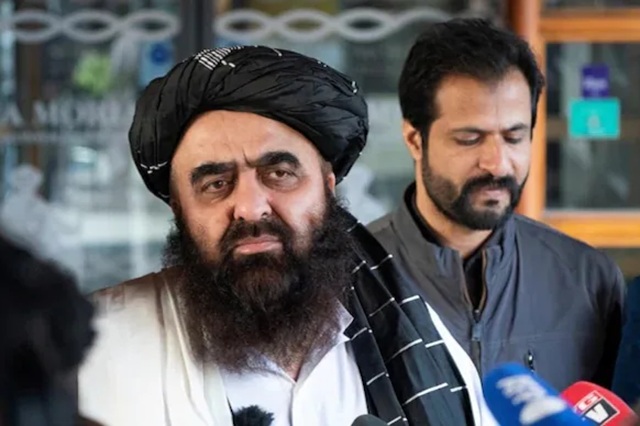
Afghanistan’s foreign minister, Amir Khan Muttaqi, was greeted like a celebrity during his recent visit to India—an extraordinary turn described in The New York Times as a striking departure from decades of distance between New Delhi and the Taliban. Students and teachers at the historic Deoband seminary swarmed his vehicle, eager to glimpse the senior Taliban official whose presence signaled a new diplomatic chapter.
Muttaqi’s trip, his first official visit to India, came with notable political developments. Indian officials pledged to restore their Kabul mission to full embassy status for the first time in years. At Deoband, the ideological birthplace of the Taliban’s conservative religious doctrine, Muttaqi called the academy “the mother of our knowledge,” drawing applause from the crowd.
But the visit quickly reverberated beyond India’s borders. According to reporting by The New York Times, Pakistan—long considered the Taliban’s primary patron—reacted sharply. Within hours of Muttaqi’s arrival in India, Pakistan launched unprecedented airstrikes on Kabul, setting off days of cross‑border hostilities.
Pakistan accuses Afghanistan’s Taliban rulers of harboring and aiding the Pakistani Taliban (TTP), a charge Kabul denies even as officials acknowledge shared ethnic and ideological ties. Both groups are largely Pashtun and draw spiritual lineage from Deobandi seminaries across the region.
Analysts told The New York Times the rift reflects deeper historical tensions. David B. Edwards, a scholar of Islamic militancy, said Pakistan’s support for the Taliban had created a “Frankenstein” it could no longer control. The Afghan Taliban, empowered after their 2021 takeover, have increasingly invoked Pashtun nationalist rhetoric, rejecting the colonial‑era border dividing the two countries.
Muttaqi’s warm reception in India also stirred debate in Pakistan’s religious circles. Leaders of Pakistan’s Haqqania madrasa praised the visit as recognition of a “proud son,” while others saw the Taliban’s outreach to India as a betrayal of Pakistan’s decades of support.
Meanwhile, enrollment of Afghan students in Pakistani seminaries has dropped sharply, with Afghanistan expanding its own religious schools and Pakistan repatriating thousands of Afghan refugees.
A month after the visit, tensions between Kabul and Islamabad remain high, and fresh bombings in both capitals have further soured relations between India and Pakistan. Officials and analysts warn that miscalculation could push the nuclear‑armed rivals back toward confrontation.
In Afghanistan, Taliban leaders continue to strike a defiant tone. Deputy interior minister Mohammad Nabi Omari recently suggested that Pakistan could face the same fate as U.S. forces who withdrew after years of war. “You may have airplanes and tanks,” he told a public gathering, “but we have fighters who are itching for when jihad will begin again.”









