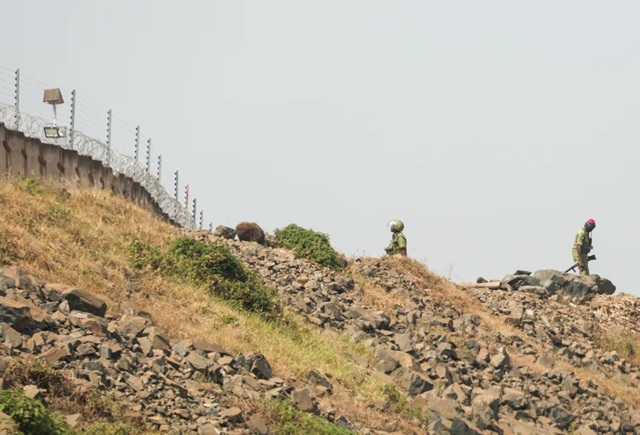
The North Mara gold mine in northern Tanzania, valued at more than $1 billion, has become a flashpoint of violence, repression, and desperation among impoverished villagers living in its shadow. Once hailed as one of Africa’s safest nations, Tanzania is now facing mounting allegations of torture, abductions, and extrajudicial killings linked to its lucrative gold industry, according to an investigation by The Sunday Times and reported in the Times UK.
The soaring global price of gold — nearly double since 2022, driven by inflation and geopolitical uncertainty — has transformed the mine into the government’s crown jewel. Operated by Canadian giant Barrick Gold in partnership with the Tanzanian state under the Twiga Minerals venture, North Mara produces hundreds of thousands of ounces annually, providing billions in revenue. Yet while the state reaps vast profits, villagers say they are paying in blood.
One survivor, Chacha, recounted being abducted from his village of Nyamongo, bound, tortured, and left hanging upside down over the crocodile-infested Mara River. His captors — masked men linked to local security forces — demanded to know who bought gold from small-scale miners and what he knew about recent police killings at the mine. He was eventually released after three months, scarred physically and mentally.
Such testimonies are not isolated. Human rights monitors estimate at least 96 people have been killed and hundreds more injured near North Mara since 2006, often in clashes with heavily armed police tasked with protecting the mine. Villagers searching through mine waste for discarded gold fragments — sometimes worth hundreds of dollars — face tear gas, beatings, and live gunfire. Many describe the mine as “one of the deadliest industrial sites in Africa.”
The violence is fueling wider political concerns. Opposition leaders, including members of Chadema, accuse President Samia Suluhu Hassan’s government of using gold revenues to entrench authoritarian rule. Party vice-chairman John Heche said: “The money from the gold mine is used to help this repressive government stay in power.” Chadema’s chairman, Tundu Lissu, is currently imprisoned on what are widely believed to be trumped-up charges, while the party has been barred from contesting elections.
International watchdogs, including Human Rights Watch and UN experts, have echoed concerns about serious abuses linked to North Mara. Barrick Gold, however, denies responsibility, saying it has no control over the Tanzanian police. The company highlights investments in jobs, education, and clean water, and insists it has transformed waste management systems.
Still, villagers remain trapped between poverty and peril. With more than 80 percent of people in the Mara region surviving on less than $3.65 a day, the temptation to scavenge mine debris remains irresistible, despite the deadly risks.
As Tanzania prepares for elections in October, critics warn that the gold boom is insulating the government from international pressure to uphold democratic reforms. “What is happening around gold mining is a microcosm of what is happening [in Tanzania] more broadly,” said Professor Nic Cheeseman of the University of Birmingham.
For families like that of Gati, a single mother whose sons were brutally beaten and shot by mine police, the riches of Tanzania’s gold rush have brought only suffering. Facing eviction after mortgaging her home to pay medical bills, she told The Sunday Times: “The same government that says it’s responsible for protecting people’s property and human rights — they wronged me. I’ll have nowhere to go. I’ve already accepted my fate.”