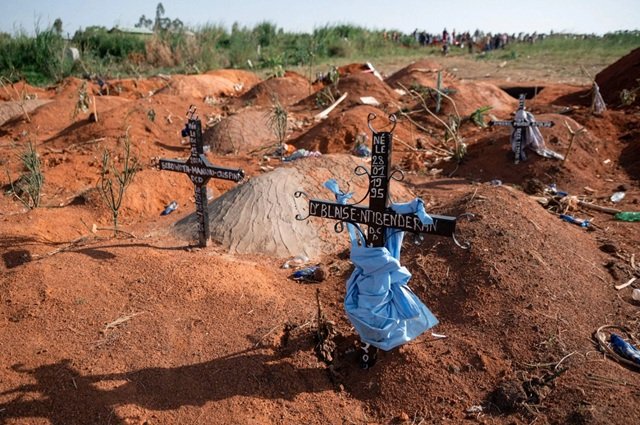
The Ebola outbreak caused by the Bundibugyo virus has surpassed 5,000 deaths and 10,000 confirmed cases, as health authorities struggle to contain transmission in the Democratic Republic of the Congo (DRC) and prevent further regional spread. The epidemic has affected four African countries, with the journey of Kenya’s first fatal case exposing how an infected person travelled across three countries and more than 2,000 kilometres without being identified as an Ebola patient.
The patient left Buta in north-eastern DRC and spent three weeks travelling through at least 10 cities, taking three flights and a bus before reaching Nairobi. During the journey, the individual visited several healthcare facilities, including hospitals in Bondo and Kisangani, where symptoms compatible with Ebola were reported. According to the Africa Centres for Disease Control and Prevention (Africa CDC), the patient was incorrectly diagnosed with Rift Valley fever, which can produce similar symptoms, including high fever and muscle pain.
The patient subsequently travelled through Uganda, passing through Kampala and Entebbe, before arriving in Nairobi. Despite passing airport health checks and receiving medication to reduce fever, the infection remained undetected. The patient died at Nairobi Hospital on 5 October, nearly 2,200 kilometres from the first medical facility visited. The World Health Organization (WHO) reconstructed the journey through seven locations in the DRC, two in Uganda and Nairobi.
Jean-Jacques Muyembe-Tamfum, the Congolese physician and virologist who helped identify Ebola in 1976, said the outbreak exposed weaknesses in preparations designed primarily for a different strain of the virus. The DRC had developed extensive experience dealing with the Zaire strain, responsible for 15 of the country’s 17 recorded Ebola epidemics. Bundibugyo, however, had appeared in the country only once before, in 2012.
Although surveillance capabilities had been strengthened following a Zaire Ebola outbreak in 2018, Muyembe-Tamfum said diagnostic systems were not adequately equipped to identify other filoviruses. Initial cases were consequently mistaken for endemic diseases such as malaria and typhoid. He also identified community distrust, armed conflict and weaknesses in healthcare services as factors that delayed the declaration of the epidemic. “What we are experiencing now are the costs of late detection,” he told El País.
Kenya and Uganda have demonstrated stronger capacities to trace and contain identified transmission chains. After identifying its first case, Kenya traced 135 contacts and placed them under quarantine and epidemiological monitoring. According to Africa CDC response official Wessam Abdelazeem Sadek Mankoula, subsequent cases were linked to that contact list, including passengers on the Entebbe-Nairobi flight, airport personnel and healthcare workers and relatives who had been in contact with the patient. By the end of October, Kenya had recorded nine confirmed cases and two deaths.
Uganda declared its outbreak on 15 May after detecting imported cases from the DRC and was declared Ebola-free on 28 July, having recorded 20 cases and two deaths. Permanent Secretary of Uganda’s Ministry of Health Diane Atwine said the country’s coordination system had been activated within 24 hours of the initial cases, with field teams deployed and contact tracing under way. Uganda also located contacts associated with the Kenyan patient within 24 hours.
The situation remains more difficult in the DRC, where Africa CDC estimates that nearly 80% of new infections originate from unidentified transmission chains. Mankoula described this as the outbreak’s principal challenge, as infections outside known contact lists allow the virus to circulate before authorities can intervene.
WHO Africa emergency preparedness and response director Marie Roseline Darnycka Belizaire said Alto-Uele province, with a population of four million, had managed more than 250 confirmed cases without a standard Ebola treatment centre. The WHO had deployed about 40 professionals and Africa CDC another six, while other organisations maintained a more limited presence. Belizaire said basic needs remained unmet despite international funding announcements, with healthcare workers still demanding protective equipment.
The Bundibugyo strain presents additional difficulties because no approved vaccine or specific treatment exists. Vaccine candidates developed by IAVI, Moderna and the University of Oxford remain at different stages of development, with IAVI working on a candidate based on the platform used for Ervebo, the approved vaccine against the Zaire strain.
Muyembe-Tamfum also said researchers had yet to establish the animal reservoir of Bundibugyo, with investigations examining bats, rodents and domestic animals in affected areas. Meanwhile, IAVI president Mark Feinberg warned that vaccine development alone would not resolve the crisis, particularly where communities distrust health workers. Last week, a nurse was killed and another healthcare worker seriously injured after protesters in Bafwasende accused them of spreading Ebola.