by Our Defence Affairs Editor
Newly released documents from the National Security Archive confirm what was long suspected but only partially understood: the United States did not simply stand by as South Vietnam’s President Ngo Dinh Diem was overthrown and assassinated in 1963 — it watched, facilitated, and managed the process in real time. Despite decades of public denials and obfuscation, the CIA was far more than a passive observer. It was, as recent disclosures show, a quiet architect of regime change.
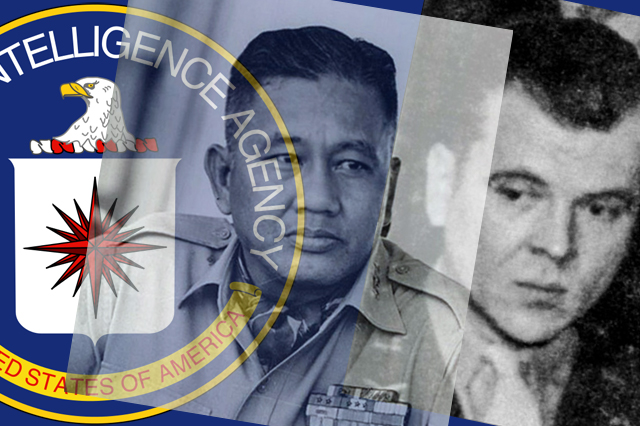
In early October 1963, after months of tensions and failed attempts to unseat Diem, CIA communications with South Vietnamese coup plotters resumed. Lucien Conein, a French-Vietnamese-speaking CIA operative with extensive contacts among the South Vietnamese military elite, was established as the Agency’s main point of contact. Unlike CIA Station Chief John Richardson, whom Ambassador Henry Cabot Lodge Jr. had grown to distrust and eventually sidelined, Conein had Lodge’s confidence. On 2 October, General Duong Van Minh met with Conein and directly sought U.S. assurances that it would not obstruct a coup. Minh presented three possible plans: assassinate Ngo Dinh Nhu and Ngo Dinh Can while sparing Diem, encircle Saigon with military units, or confront loyalist forces in open battle.
Lodge, still navigating Washington’s mixed signals, asked for confirmation on what message Conein should deliver. The State Department’s response was a masterclass in ambiguity: the U.S. should neither actively encourage nor thwart a coup. Conein could review the generals’ plans — except any that involved assassination. A cable to Lodge on 5 October confirmed the official stance: no active encouragement, no overt interference, and any effort to identify alternative leadership had to be “secure and fully deniable.”
Meanwhile, tensions between Lodge and the CIA exploded. Richardson, recalled temporarily to Washington, accused Lodge of bypassing the Agency and managing the Saigon station as a personal political machine. CIA Director John McCone, along with Deputy CIA Director for Plans William Colby, met with Richardson on 7 October. They noted the chaos and compartmentalisation in Saigon, where the ambassador excluded the CIA country team from decision-making. CIA leadership even suspected Lodge of leaking to the press to discredit Richardson and consolidate his grip on policy execution.
At the centre of this turmoil was the question of assassination. Plans to kill Nhu and Can had been discussed openly with CIA operatives since August. In October, these options were back on the table. When Acting CIA Chief of Station David Smith recommended that Washington not “irrevocably” oppose assassination — citing the other alternatives as bloodier — McCone, likely via Colby’s pen, swiftly rebuked him. The United States, he insisted, could not “condone such a course of action” or risk the appearance of complicity. A subsequent cable confirmed that this view had been relayed to Lodge. Whether Conein himself ever received McCone’s directive remains unclear. In testimony to the Church Committee in the 1970s, Colby could not confirm it. As late as 2025, CIA archives remain ambiguous on this point.
Despite these official disavowals, high-level deliberations continued behind closed doors. On 8 October, the Executive Committee of the National Security Council met to evaluate the generals’ coup proposal. Defence Secretary Robert McNamara and McCone urged caution, but President John F. Kennedy expressed qualified support. “If he does it, all right,” Kennedy said of Minh. “If he doesn’t do it, all right. We’re not now going to him and asking him to do it.” It was a classic formulation of plausible deniability: hands off, eyes on.
Conein continued regular meetings with the conspirators. One meeting at a Saigon dentist’s office revealed that the generals were withholding operational details but promised to deliver the plan two days before action. They agreed Conein would be stationed at the Joint General Staff headquarters during the coup to ensure direct communication with Lodge. In a chilling moment, General Tran Van Don volunteered, without prompting, that the Ngo family “had to be eliminated from the political scene.”
Even as the plot advanced, internal doubts lingered. Lodge messaged National Security Adviser McGeorge Bundy on 26 October expressing uncertainty about whether Don “had the iron in his soul” to go through with it. But he reiterated that the only way to stop the coup would be to betray it to Diem — an option firmly off the table. U.S. involvement, he insisted, had been limited to “observing and reporting,” and any financial or military support would come only if success seemed assured.
Washington remained divided. At a White House meeting on 29 October, Joint Chiefs Chairman Maxwell Taylor and McCone warned that the coup could be “disastrous.” Attorney General Robert F. Kennedy questioned whether the risks — failure or further instability — were worth it. Yet Bundy argued that abandoning the plotters now would be worse. Kennedy, though momentarily hesitant, eventually endorsed continued passive support. “The burden of proof,” he said, “should be on the coup promoters to show they can overthrow the Diem government and not create a draw.”
That same day, Lodge reassured Washington that the atmosphere in Saigon had been coup-prone for months, and that the generals remained uninterested in American help — if anything, they preferred minimal contact. Yet, he warned, things could move quickly. With the warning window down to four hours, there would be no time for Washington to intervene once the operation started.
On 1 November 1963, at approximately 1:15pm Saigon time, the coup began. Conein was notified two hours in advance and rushed to the JGS headquarters with five million piastres from a safe in his home — the equivalent of about $60,000 at the time. What happened to that money remains murky. Conein testified to Congress that it went to humanitarian purposes like rice and medical facilities. Colby, however, later said it was used to reward units that joined the coup and to pay insurance to families of the dead. An internal memo unearthed in 2024 reveals that CIA Inspector General Walter Elder considered the accounting “never very frank or complete.”
As the coup unfolded, CIA communications surged. Conein relayed the generals’ demand that Diem resign within the hour or face bombardment. “The ultimatum appears final,” he cabled. The palace was surrounded. That evening, the brothers attempted a quiet escape through secret tunnels but were soon captured. By the next morning, both were dead — shot in the back of an armoured personnel carrier.
Two unresolved questions still shadow the events of that day. First, why was no plane available for Diem’s evacuation, despite requests from the generals and reports relayed to CIA headquarters? Testimony from Conein, Colby, and McGeorge Bundy failed to clarify who blocked the airlift or why. Congressional counsel Rhett Dawson described it as one of the darkest elements of U.S. responsibility in the affair.
Second, what exactly did Conein know — and when? His post-war accounts were contradictory. Before the Church Committee, he claimed he was shocked by the assassinations and had expected a peaceful transfer of power. Yet in a 1971 NBC interview, he admitted he’d pushed the generals to follow through with the assault and had been aware of a “blood oath” to eliminate Diem. General Tran Van Don confirmed in 1981 that the decision to kill Diem was made in advance. The generals, he said, feared a U.S. change of heart and a future reinstatement of the Ngo family.
If any doubt remained about the CIA’s view of Conein’s role, the declassification of his personnel file in 2025 put it to rest. Conein was awarded the Intelligence Star — one of the Agency’s highest honours — for his actions during the coup. Officially, it is granted for “acts of courage under hazardous conditions” or “services rendered with distinction under great risk.” The message is unmistakable: the CIA considered Conein’s involvement neither accidental nor ancillary.
The new documents confirm what decades of rumours, redacted memos, and incomplete testimony only hinted at. The United States did not directly plan Diem’s downfall, but it knew, approved, and shaped its course. The difference between complicity and command may be subtle, but in the annals of covert warfare, subtlety is everything.
As former CIA officer William Colby once told a Congressional committee, “We never said, ‘Go.’ But we never said, ‘Don’t.’” In the language of statecraft, that’s as close to a green light as anyone needs.