
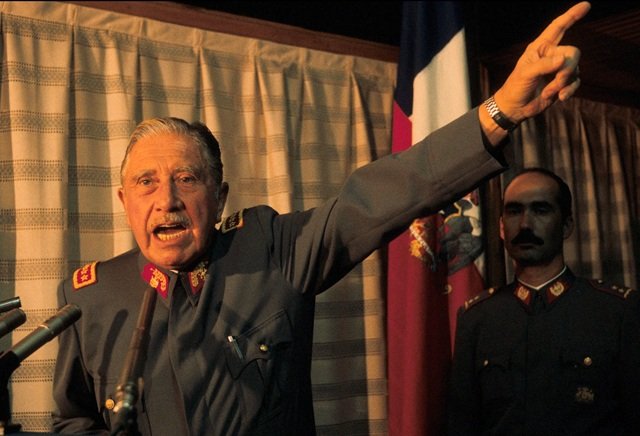
Philippe Sands’s 38 Londres Street is ostensibly an investigation into two notorious men—Augusto Pinochet and Walther Rauff—but its deeper subject is something far more unsettling: the astonishing durability of impunity. Sands has long occupied the rare territory where legal scholarship meets literary investigation, yet this work may be his most provocative because it refuses to allow the reader the comfort of historical distance. The book asks a disquieting question that liberal democracies often prefer not to confront. If international law represents civilisation’s highest moral aspiration, why did two men so closely associated with systematic violence manage to evade meaningful justice for so long? Rather than presenting the Pinochet arrest as a triumphant climax, Sands transforms it into an inquiry into the limits of law itself. The result is neither legal history nor true-crime reportage, but a searching meditation on whether justice is capable of overcoming politics.
The moral architecture of the book is established before its narrative properly begins through Cesare Beccaria’s proposition that “The certainty that there is no place on earth where crimes will go unpunished may be an effective means of preventing them” (p. 30). Sands constructs the entire narrative around testing that proposition and, by the final page, leaves the reader wondering whether it survives intact. The arrest of Pinochet appears initially to vindicate Beccaria’s faith. Jean Pateras’s understated recollection—”‘You are under arrest for murder'” (p. 82)—marks one of the most extraordinary moments in modern legal history. The significance lies not simply in the arrest itself but in the collapse of a political mythology. Pinochet, who “thought he was untouchable” (p. 88), discovered that sovereign power could, under exceptional circumstances, yield to universal jurisdiction. Yet Sands carefully avoids portraying this as an uncomplicated victory. His narrative repeatedly reminds readers that legal breakthroughs often coexist with political compromise.

One of the book’s most compelling achievements is its refusal to reduce Pinochet to a caricature. Sands allows the dictator’s own words to reveal a worldview shaped by ideological certainty and extraordinary self-deception. “I am a soldier,” Pinochet insisted, believing his coup had “saved Chile from communism” (p. 8). Even more revealing is the grotesque assertion, repeated throughout his later years, “I am an angel” (pp. 13, 319–320). These statements are not included merely to expose hypocrisy. Sands uses them to explore how authoritarian violence frequently depends upon moral conviction rather than moral emptiness. Pinochet appears not as a theatrical villain but as a man genuinely persuaded that legality and brutality were compatible. That distinction matters because it complicates simplistic explanations of dictatorship. Evil, Sands implies, rarely recognises itself as evil.
The book becomes considerably darker once Walther Rauff enters the narrative. Here Sands produces what is arguably the work’s most disturbing contribution by demonstrating how bureaucratic precision can become a language of extermination. Rauff’s involvement in refining mobile gas vans, ensuring that “‘occupants’ couldn’t tamper with the pipe’s entry point” (p. 63), and the chilling report that “Ninety-seven thousand have been processed by the three vehicles in service” (p. 64), exemplify administrative language stripped of humanity. The horror lies precisely in the vocabulary. Murder becomes logistics. Victims become “the load” (p. 64). Sands consciously invokes the familiar notion of the banality of evil without ever naming it explicitly. Instead, he reconstructs an administrator whose greatest talent was technical efficiency. The result is profoundly unsettling because Rauff emerges not as a monstrous exception but as a frighteningly competent professional.
Yet 38 Londres Street refuses to leave Rauff imprisoned within the history of the Third Reich. Its most controversial intervention is the argument that Nazi personnel, methods and mentalities did not simply disappear after 1945 but migrated into new political contexts. The revelation that Pinochet personally encouraged Rauff to settle in Chile—”‘Mr Rauff, it’s very lovely with us in Chile, you should move there'” (p. 72)—transforms the narrative. Equally striking is the assertion that the two men “became socially close” through shared anti-communism and “a mutual interest in Nazidom” (p. 72). These passages challenge comforting assumptions that fascism ended with military defeat. Sands instead presents ideological continuity operating beneath the surface of Cold War politics, where anti-communism frequently displaced moral accountability.
Some readers may question whether Sands occasionally allows inference to move ahead of documentary certainty, particularly regarding Rauff’s alleged advisory role within the DINA. Testimonies describing Rauff as “El Chacal” (p. 284), identifying him as the figure who made prisoners “disappear forever” (p. 352), are undoubtedly compelling. Yet Sands generally acknowledges the evidential complexities rather than overstating his conclusions. This restraint ultimately strengthens the argument. Rather than claiming to have solved every historical mystery, he demonstrates how historical truth often emerges through converging fragments rather than a single decisive document. The investigation therefore becomes as much about the methods of historical reconstruction as about its conclusions.
The legal dimensions of the narrative are equally sophisticated. Sands celebrates the House of Lords’ conclusion that “Pinochet had no immunity whatever” (p. 118) as a revolutionary constitutional moment. Yet he refuses to confuse legal principle with political reality. Jack Straw’s later admission—”I wish I had” left the matter to the Spanish courts (p. 366)—combined with suspicions that Pinochet successfully feigned illness, exposes the fragility of judicial victories once they encounter executive calculation. Particularly revealing is the spectacle of a supposedly incapacitated dictator returning to Chile apparently restored to health, “bon pied bon oeil” (p. 314). The legal revolution, Sands suggests, succeeded doctrinally while failing practically. International criminal law proved capable of changing jurisprudence faster than political behaviour.
Perhaps the book’s sharpest criticism is directed not against dictators but against democratic societies that tolerated them. Henry Kissinger’s remark that Pinochet had done “a great service to the West in overthrowing Allende” (p. 9), Margaret Thatcher’s denunciation of the arrest as “outrageous” (p. 4), and the protection afforded to Rauff inside Chile reveal uncomfortable patterns of political selectivity. Sands does not indulge simplistic anti-Western polemics. Instead, he exposes the recurring willingness of liberal democracies to subordinate universal principles to geopolitical convenience. International justice emerges not as an impartial system but as a field constantly shaped by diplomatic interests, ideological alliances and political calculation.

If there is a weakness in the book, it lies in Sands’s understandable proximity to the story. His personal involvement in aspects of the Pinochet litigation occasionally lends the narrative a degree of emotional investment that borders on advocacy. Although this rarely undermines his factual discipline, it sometimes narrows engagement with alternative interpretations of contested legal decisions. Likewise, readers seeking deeper theoretical discussion of universal jurisdiction may find the book’s narrative momentum leaves certain jurisprudential questions underdeveloped. Sands is more interested in demonstrating law in action than interrogating its philosophical foundations.
Nevertheless, these reservations scarcely diminish the book’s achievement. The final pages deliberately resist easy closure. Ariel Dorfman’s lament that Pinochet “had escaped judgment” (p. 321) coexists with Judge Mario Carroza’s conviction that the London arrest empowered Chilean judges (p. 361), while President Gabriel Boric’s reflection that the case “gave hope… that there can be justice” (p. 367) tempers despair with cautious optimism. The final answer to whether Pinochet and Rauff ultimately escaped justice is reduced to a single, devastating word: “Sort of” (p. 378). That ambiguity captures the entire moral force of the book. 38 Londres Street ultimately argues that justice is neither absolute triumph nor complete failure but an unfinished political struggle. Sands has written far more than an investigation into historical crimes. He has produced a profoundly unsettling examination of how democracies remember, how institutions compromise, and how the law continues to wrestle with power long after the crimes themselves have ended.